How Minnesota's top colleges rank for economic diversity

Add Axios as your preferred source to
see more of our stories on Google.
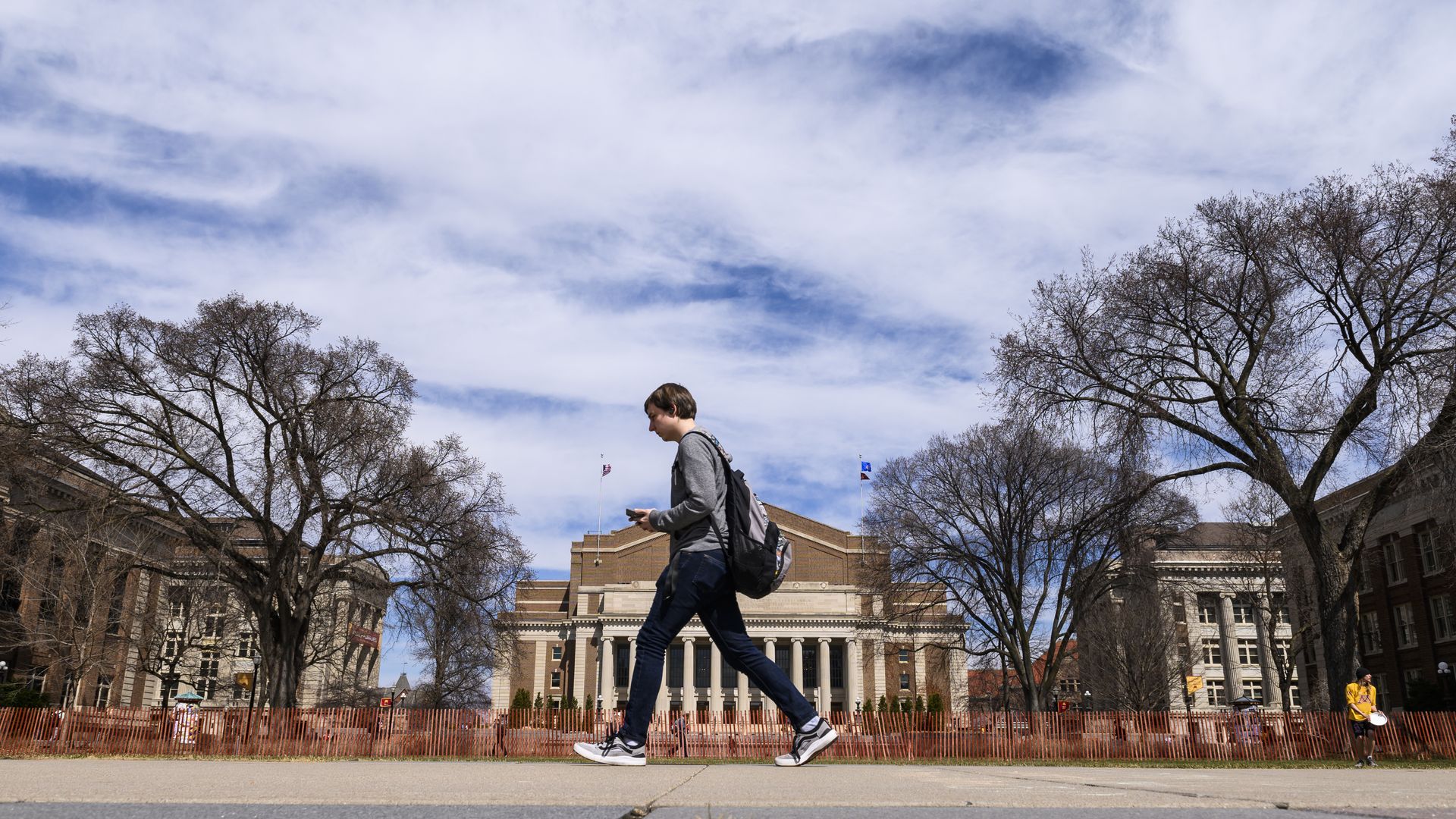
Photo: Stephen Maturen/Getty Images
The University of Minnesota ranks in the bottom half of selective colleges nationwide for economic diversity, per a new analysis from the New York Times.
Why it matters: The data is one way to measure universities' commitment to economic diversity as many schools reevaluate their admissions processes in the wake of the Supreme Court ruling striking down race-based affirmative action.
Driving the news: The Times' College-Access Index looked at the percentage of students receiving federal Pell Grants -- which are made available to low-income families -- at the country's 286 most selective colleges and universities.
- The University of Minnesota came in at 166, with 18% of freshmen receiving the aid — below the national average of 21%.
Plus: The share of Pell freshmen enrolled at U of M declined by 5 percentage points since 2011.
Yes, but: The U beat many colleges on the list in price, with the average cost of attendance for a mid-income student totaling $11,600 once grants and scholarships are factored in.
Of note: The U's Pell share put it on par with elite private institutions such as Princeton, New York University, and Vanderbilt, as well as fellow state schools such as the University of Arkansas, the University of Iowa, and the University of Washington.
What they're saying: U of M spokesperson Jake Ricker pointed out that the analysis is "atypical in that it is entirely predicated on a single variable" and said some institutions will see higher percentages based on their missions and student populations as a result.
- "Our need-blind admissions processes prevent us from specifically admitting students based on Pell eligibility, but we are committed to recruiting and enrolling a diverse student body on each of our campuses," he said.
By the numbers: Ricker said the system counts more than 9,000 Pell-eligible students in any given year across its five campuses, a figure representing about 13% of the total student population.
Zoom out: The Times found that the share of Pell students on campuses across the nation fell over the last decade, a trend it attributed to funding cuts and spending going toward staff and buildings versus student aid.
- Some of the most elite colleges in the nation did see an improvement, though the analysis noted those institutions enroll a "disproportionate share of very affluent students."
Zoom in: Several private colleges in Minnesota fared better than the U — falling at or just above the national average.
- Macalester and Gustavus Adolphus colleges were tied for 71st, with 25% of freshmen on Pell Grants, and St. Olaf College ranked 100, with 22%.
Carleton College, meanwhile, came in just behind the U, at 186th, with 17%.