Minnesota tax credit for historic rehab projects in limbo

Add Axios as your preferred source to
see more of our stories on Google.
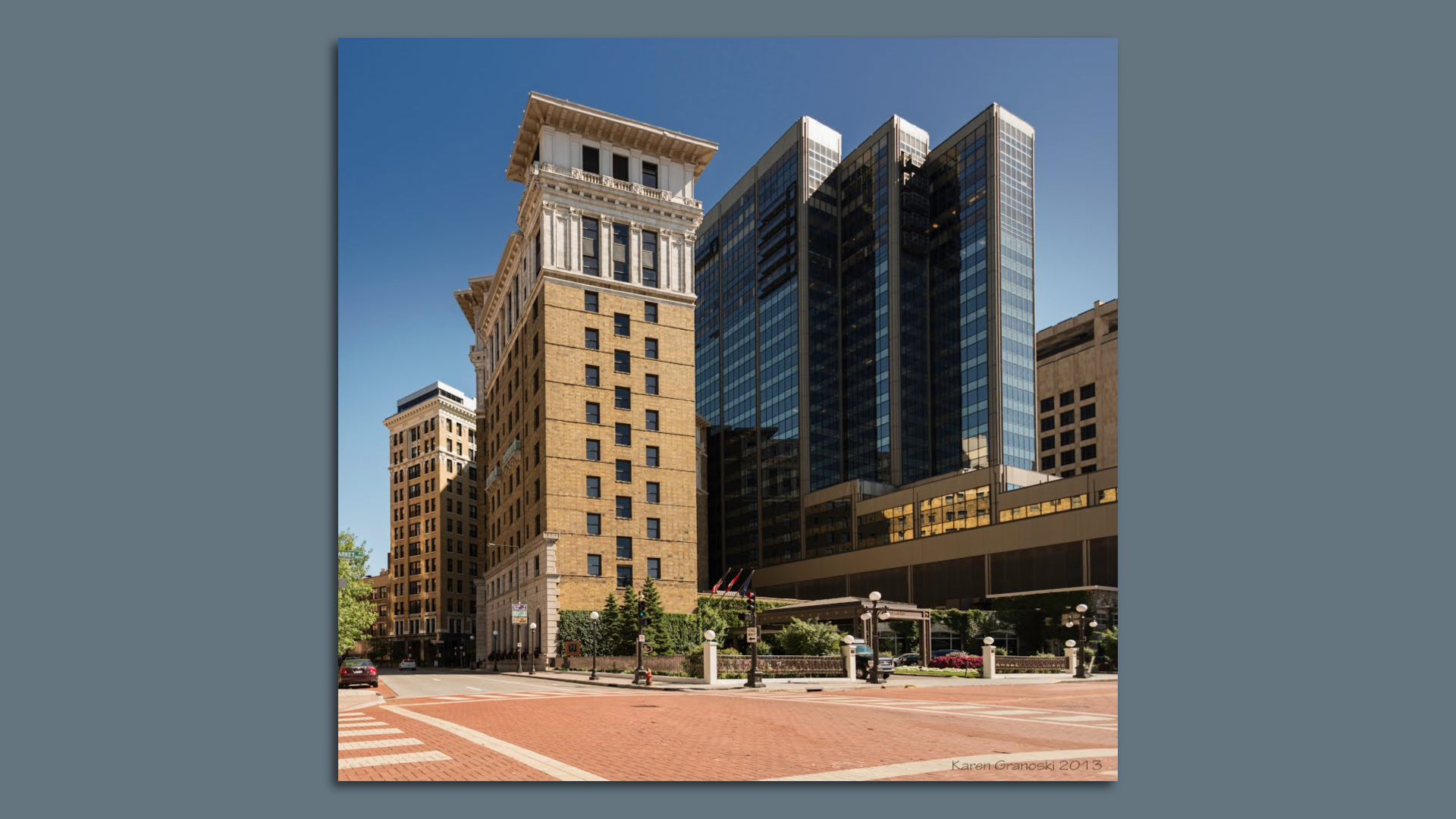
A conversion of St. Paul's Landmark Tower into apartments is held up. Photo courtesy of CBRE Minneapolis
Plans to preserve and repurpose a slew of historic buildings in Minnesota are at risk of being held up if the state Legislature doesn't approve a tax bill in a special session.
What's happening: The state has been providing a 20% tax credit to redevelopers of qualified historic buildings since 2010, but that offering will sunset on June 30 without any action.
Why it matters: Many of these projects are converting old office buildings, schools and warehouses into housing at a time when we have a shortage of homes in the state.
- While some already have approvals and can get their credits, others will be paused or perhaps canceled.
- One, for example, is a plan to convert office space in St. Paul's Landmark Tower into 186 apartments. Developer Chris Sherman told Axios the project will be halted without the extension.
How it works: Let's say a developer is going to convert an old warehouse into 30 units of housing at a cost of $10 million. The developer would receive a state tax credit of $2 million on top of a federal tax credit of $2 million.
- It costs a lot to preserve old buildings, and the credits are often the difference between a project happening or not, said Meghan Elliott, principal of New History, a historic building reuse consulting firm.
More than 130 buildings, from urban to rural Minnesota, have been rehabbed with the help of the tax credit since 2011, at a cost of about $30 million per year, according to MinnPost.
- Elliott pointed out that most of the North Loop was redeveloped using the credits.
- The $350 million Dayton's Project in downtown Minneapolis is still awaiting approval on some additional work beyond the larger renovation that took place in recent years.
What they're saying: The line in the omnibus tax bill that would have extended the credits in perpetuity has bipartisan support.
- "There is no controversy on this proposal," said GOP Sen. Carla Nelson, chair of the Senate Taxes Committee. "It's proven to be highly successful."
- "For every dollar spent there's at least $9 returned in economic development," said Rep. Cheryl Youakim (DFL-Hopkins), who carried an extension bill in the House.
Between the lines: The prospect of a special session is far from certain.
- While talks could resume this week, a Senate GOP spokesperson told Axios that the caucus' position that spending and policy decisions unresolved by the adjournment deadline can wait until next year hasn't changed.