Tax cuts and school spending stall as Minnesota Legislature session wraps up

Add Axios as your preferred source to
see more of our stories on Google.
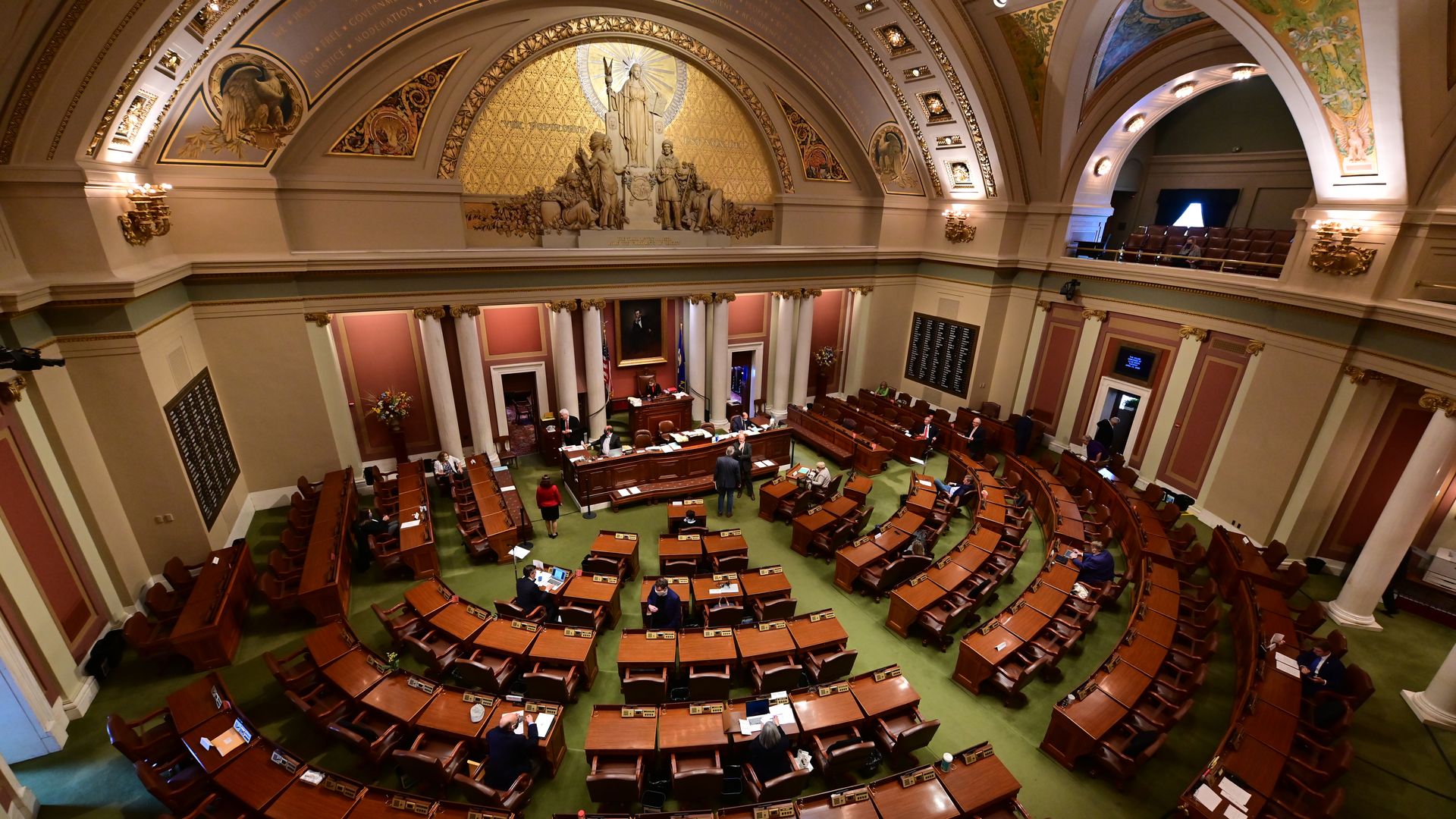
Photo: John Autey/MediaNews Group/St. Paul Pioneer Press via Getty Images
Proposals to use Minnesota's surplus to cut taxes and give schools and other areas of state spending a boost stalled amid partisan gridlock at the divided Legislature over the weekend.
The big picture: A midnight Sunday deadline for passing bills by the end of the regular session came and went, with some of the biggest pieces of a deal to spend more than $8 billion of the state's projected surplus unfinished.
State of play: Leaders said overnight that they got close on a number of key spending areas, including schools and transportation, but remained far apart on others.
- A bipartisan agreement to pass a $4 billion tax package that negotiators say is the biggest cut in Minnesota history was put on hold until those other issues could be resolved.
What got done: Both chambers approved an agriculture spending bill that includes more than $18 million for drought relief and $210 million in broadband investments. A last-minute compromise on mental health funding also passed.
- Plus: On Friday, lawmakers approved liquor legislation that allows more breweries and distilleries to sell their products directly to customers. Gov. Tim Walz signed that into law Sunday.
What didn't: Spending and policy bills on other major issues, including schools, public safety and health and human services.
The intrigue: Blowing the deadline doesn't mean the bills are dead for the year. Talks could continue and, if all sides agree, Walz could call a special session once details are locked in.
Where they stand: House Speaker Melissa Hortman told reporters that some areas are within a day or two of agreement and could be resolved before Memorial Day.
- But Senate Republican Leader Jeremy Miller expressed skepticism that a short special session would do much good: "If we couldn’t get there now, with a real deadline at midnight, how the heck are we going to get there?"
Walz, who just a month ago said he wouldn't call lawmakers back, said he now does want a special session given how close they are to finalizing the deal.