What Jensen Huang's return means for San Francisco's AI boom

Add Axios as your preferred source to
see more of our stories on Google.
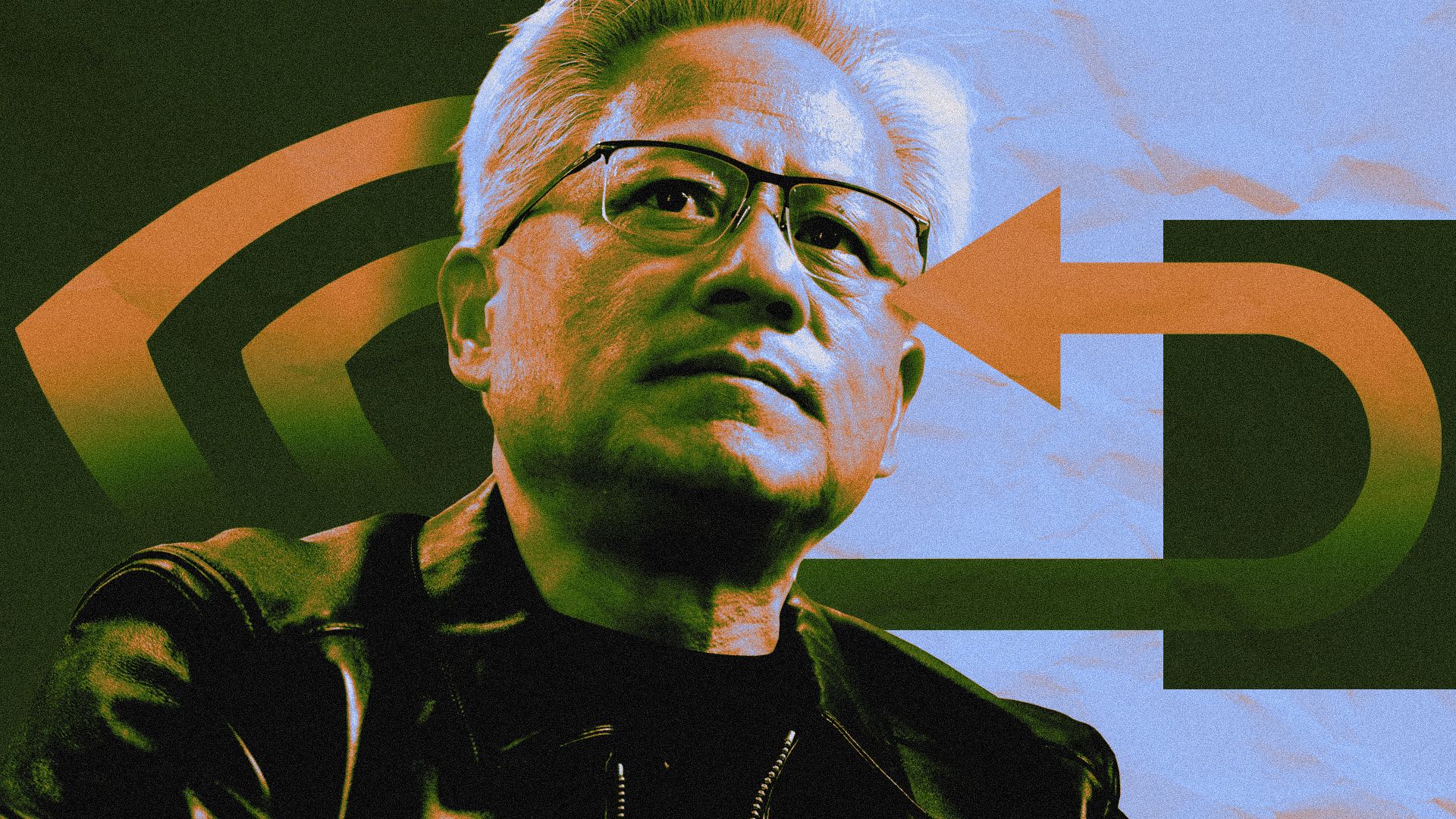
Photo illustration: Sarah Grillo/Axios. Photo: Jose Sarmento Matos/Bloomberg via Getty Images
Jensen Huang is back at Nvidia's helm, but his dramatic return Monday doesn't mean it's business as usual for San Francisco's booming AI industry.
Why it matters: Nvidia has become more than a chip supplier. It's also a major investor in AI startups, giving local companies a significant stake in the direction Nvidia takes under Huang's renewed leadership.
Driving the news: Nvidia's board reinstated Huang as CEO Monday, following his departure earlier this month amid revelations about multiple extramarital affairs, including one with a woman U.S. officials believe to be a Chinese spy.
- The reversal came after President Trump personally pressed Nvidia's board to bring back Huang.
- His return hasn't ended the scrutiny. Lawmakers are still demanding answers about national security concerns and Nvidia's compliance with restrictions on chip exports to China.
"Nothing compares to this," Bob O'Donnell, president of the consulting firm TECHnalysis Research, told Axios. "Every person you talk to in the tech industry is just shaking their heads. They can't believe it."
What they're saying: Huang's reinstatement could ease the worries of local AI companies concerned about Nvidia's financial commitments, O'Donnell said.
- But he cautioned that the relief may be temporary, with questions remaining about Nvidia's investment strategy, ongoing government investigations and accountability following the board's abrupt reversal.
- The episode also exposed Nvidia's dependence on Huang, underscoring the need for stronger succession planning and leadership beyond its founder, O'Donnell said.
- "I don't think people are going to think of the company in the same way," he added.
Zoom out: Nvidia was already facing growing competition before the scandal erupted.
- Major customers including Google, Amazon and Microsoft are developing competing AI chips, a shift that could threaten Nvidia's dominance and gain more momentum, Tomasz Tunguz, general partner at the venture capital firm Theory Ventures, told Axios.
- Unless Nvidia continues innovating aggressively, Tunguz added, it risks becoming one of several major chipmakers rather than the industry's undisputed leader.
Reality check: It also remains unclear whether Nvidia will continue investing in AI startups as heavily.
- Tunguz estimated that Nvidia accounted for roughly 15% of all U.S. venture capital investment this year, highlighting how closely the AI industry's growth has become tied to its financial backing.
- He said Nvidia was already signaling a more selective approach to financing AI companies, raising questions about whether smaller startups will continue receiving the same support.
The big picture: Despite the uncertainty surrounding Nvidia, neither expert expects the scandal to derail the AI boom.
- Any slowdown would more likely stem from Nvidia scaling back its financial support for startups than from the leadership controversy itself, they said.
The bottom line: Huang's return may have restored some stability to Nvidia, but it won't resolve the deeper challenges facing the chipmaker or slow an AI industry that's increasingly finding alternatives to Nvidia's technology.