San Francisco moves to restore neighborhood-based schools

Add Axios as your preferred source to
see more of our stories on Google.
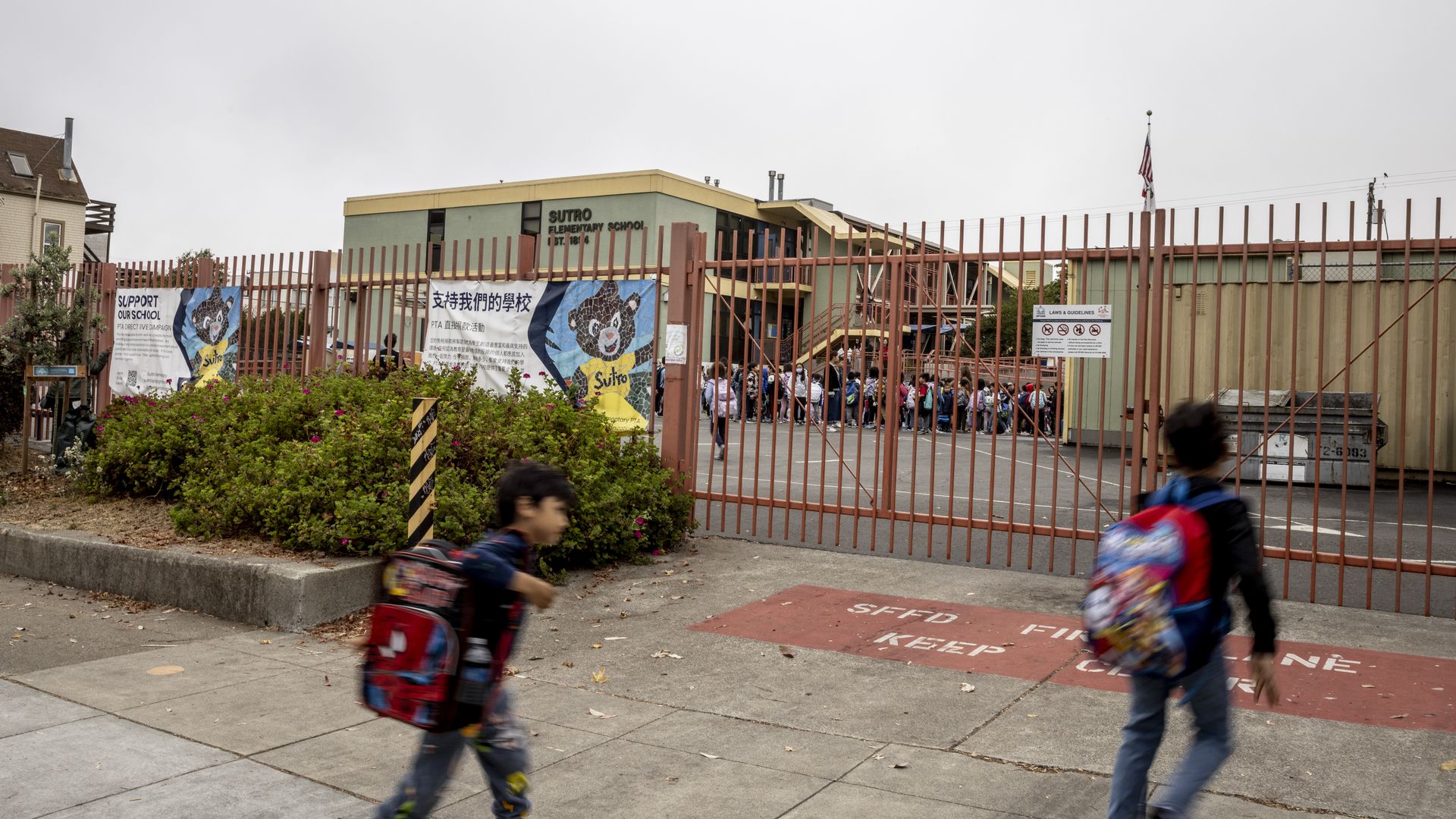
Children walk toward the gate at Sutro Elementary School in the Richmond. Photo: Stephen Lam/San Francisco Chronicle via Getty Images
San Francisco is moving to dismantle its decade-old school lottery system in favor of neighborhood-based enrollment, changing how thousands of families navigate public elementary school admissions.
Why it matters: The change would move the San Francisco Unified School District toward a system that promises greater predictability but raises concerns about whether a child's ZIP code will determine the quality of their education.
Driving the news: The San Francisco school board voted 5-2 this week to replace its controversial school lottery with a neighborhood-based enrollment system for its 72 public elementary schools, various news outlets report.
Catch up quick: The current lottery, introduced in 2011, allows families to rank schools across the city, with assignments determined by an algorithm that weighs factors including home addresses and siblings.
- The system was designed to increase diversity, reduce socioeconomic segregation and address racial disparities, but has since struggled to deliver on that promise.
- Affluent families with the time, resources and knowledge to navigate the complicated process have often had an advantage or chosen to enroll their kids in private school, while under-enrolled schools in disadvantaged neighborhoods continued to struggle.
- The district pledged to overhaul the lottery in 2018, but the effort stalled for years.
Between the lines: The new system would take effect in October 2027, automatically assigning incoming elementary students to schools in their neighborhoods beginning with the 2028-29 school year.
- Some students may still apply elsewhere for language immersion or specialized programs.
The other side: Critics worry the change could trap lower-income families in under-resourced schools.
- The board also rejected a more flexible alternative that would've allowed families to apply to any school with available seats — an option that received substantially more parental support.
What's next: The district must redraw attendance boundaries, address uneven school capacity and determine how to distribute resources more equitably prior to the change taking effect.
- A final vote is expected April 13.