Throwback Thursday: The San Francisco landmarks built over forgotten graves

Add Axios as your preferred source to
see more of our stories on Google.
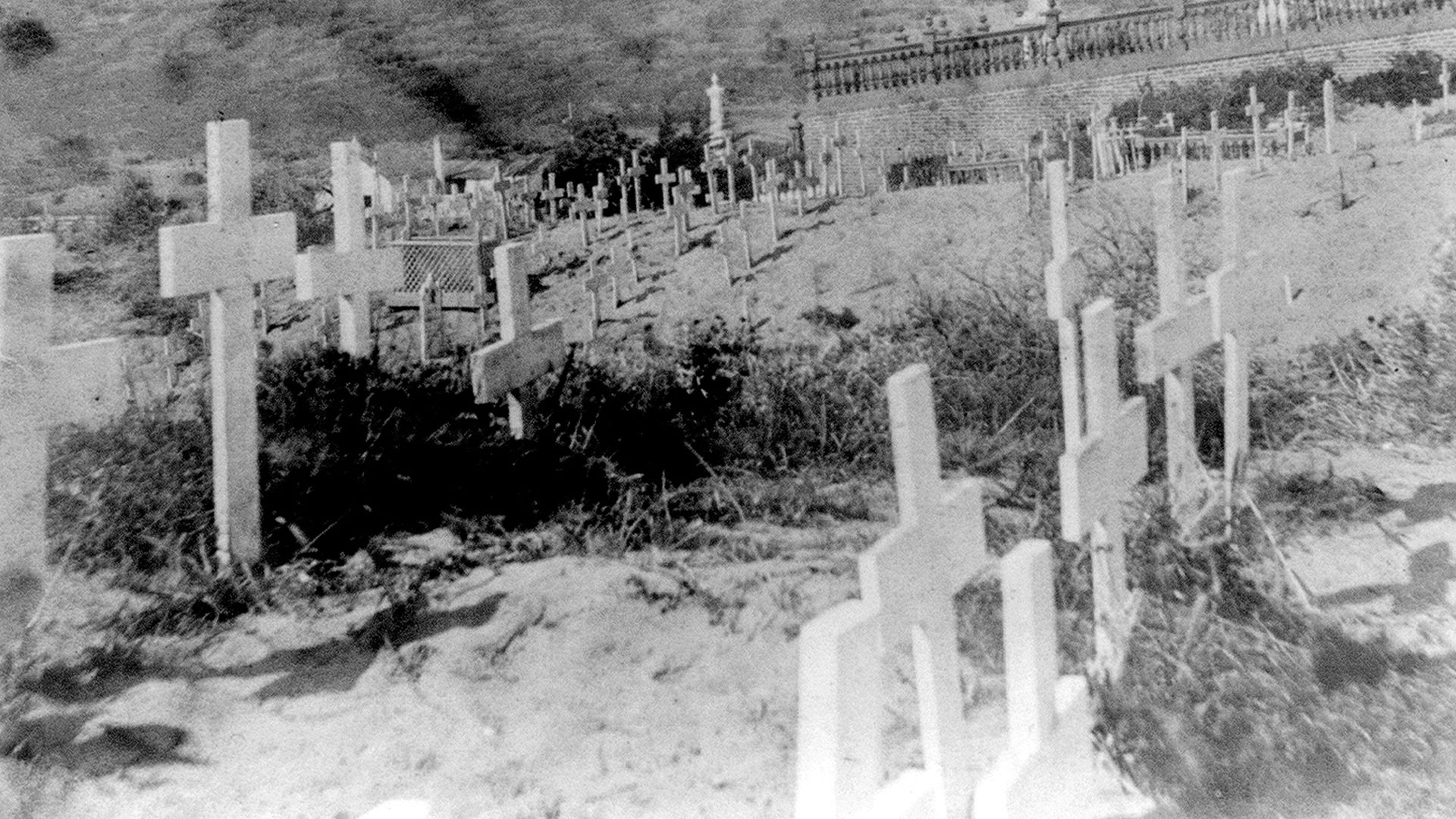
Protestant burying ground from the Catholic Cemetery at Lone Mountain, San Francisco circa 1866. Photo: HUM Images/Universal Images Group via Getty Images
San Francisco is famously short on cemetery space today, but that wasn't always the case.
The big picture: Before parks, homes, museums and college buildings filled much of the city, people were buried across San Francisco — sometimes beneath places we now visit without a second thought. And some of them might still be there.
Catch up quick: As San Francisco grew in the late 1800s, development began closing in on cemeteries once located on the city's edges.
- City officials approved an ordinance in 1900 barring additional burials beginning the following year. Public health was cited as a concern, while the city's increasingly valuable land was also seen as better used for housing the living, according to the Colma Historical Association.
- The city pushed most of its cemeteries out as neighborhoods expanded westward over the following decades.
- Roughly 130,000 people were eventually disinterred from the four large Lone Mountain cemeteries at Laurel Hill, Calvary, Masonic and Odd Fellows and moved to Colma, per KQED. Many were reburied in mass graves.
Yes, but: Not everyone made the trip south.
By the numbers: Historian Beth Winegarner, author of "San Francisco's Forgotten Cemeteries: A Buried History," estimates more than 50,000 forgotten graves remain across the city.
Some of the former burial grounds are places you've probably visited.
🪦 Lincoln Park and the Legion of Honor: City Cemetery once covered roughly 200 acres near Land's End. About 10,000 to 19,700 burials may remain beneath Lincoln Park today, according to the National Park Service.
- Construction of the Legion of Honor unearthed human remains in the 1920s, while an additional 750 or so bodies were uncovered during a 1993 renovation.
🏛️ Civic Center: Yerba Buena Cemetery, San Francisco's first city-run burial ground, once occupied land around today's UN Plaza, Main Library and Asian Art Museum. Thousands were buried there beginning in 1850 and human remains have since been uncovered in the area, per Atlas Obscura.
🎓 USF and Lone Mountain: Parts of today's campus sit atop the former Masonic Cemetery. At least 200 bodies were discovered during construction of Gleeson Library in 1950 and more remains have surfaced during later projects, KQED reports.
🌳 Dolores Park: Before it became prime picnic territory, the land held two Jewish cemeteries. Roughly 8,000 people were eventually relocated before the site became a park, per SF Heritage.
Between the lines: Some gravestones never really left San Francisco. Unclaimed markers were repurposed for public works, including seawalls and gutters. Pieces have also since resurfaced at Ocean Beach, per the SF Chronicle.
The intrigue: The Presidio's San Francisco National Cemetery, established in 1884, survived the city's removal of the dead because it sits on federal land.
- Today, it's closed to new burials, though eligible family members may still be buried in existing gravesites when space allows, per the National Cemetery Administration. Plus, there's a pet cemetery that visitors can still explore in the Presidio today.
💀 The bottom line: Next time you're picnicking, museum-hopping or strolling through San Francisco, remember: The dead may be closer than you think.