San Francisco overhauls how it contracts for homelessness services

Add Axios as your preferred source to
see more of our stories on Google.
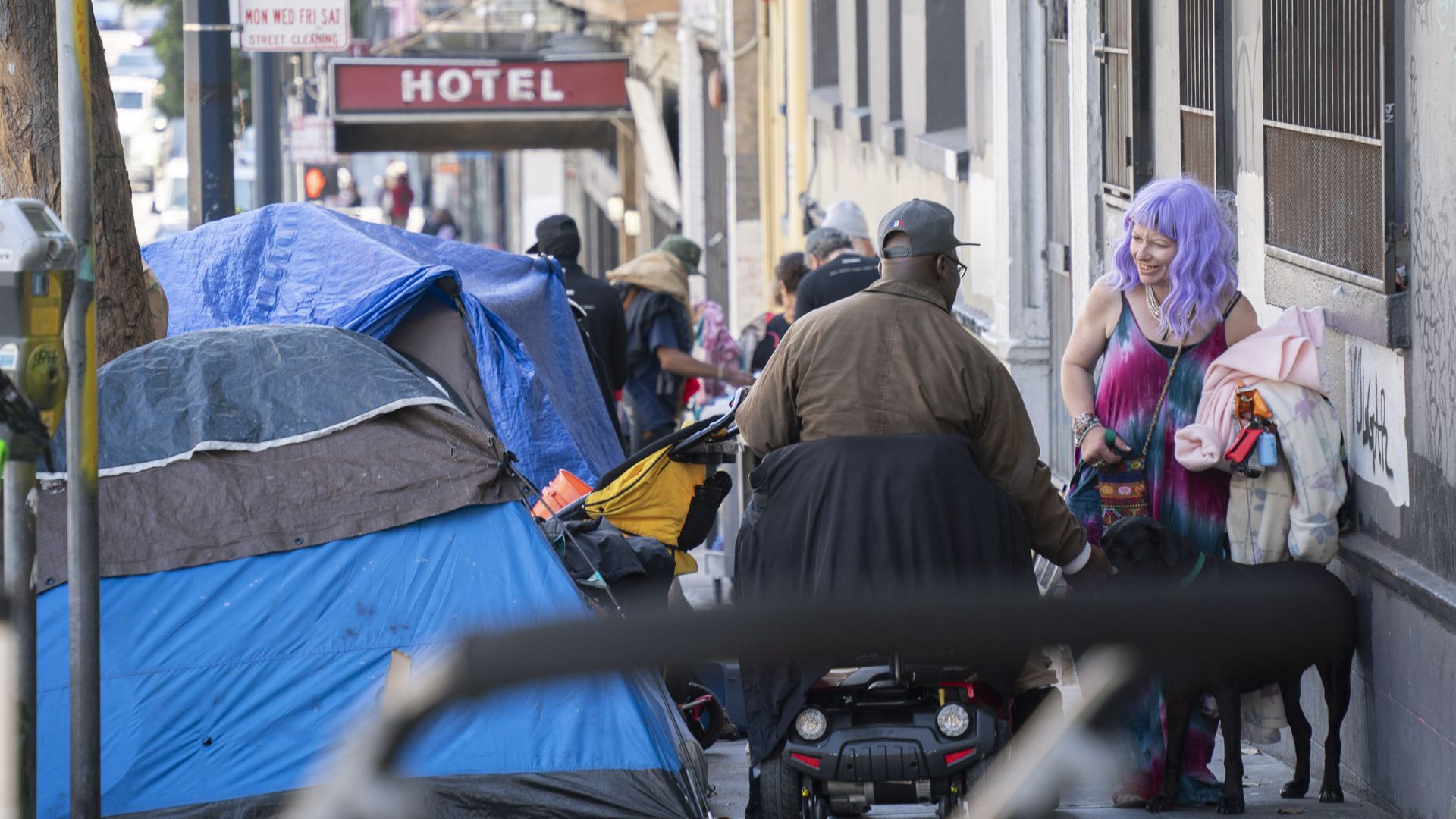
Another day in the Tenderloin. Photo: Liu Guanguan/China News Service/VCG via Getty Images
San Francisco is overhauling every contract it uses to provide homelessness services, putting more focus on whether the city's programs are effective in helping people move toward stable housing.
Why it matters: The city spends hundreds of millions of dollars annually on homelessness, but officials and critics have long questioned whether that money is translating into better outcomes.
- A recent SF Chronicle investigation found that the city has often measured activity — like how many people a program serves — rather than whether those programs are effectively changing lives for the better.
Driving the news: Mayor Daniel Lurie announced Monday that the Department of Homelessness and Supportive Housing will competitively re-award its full portfolio of homelessness service and housing contracts through May 2029. The city spends more than $500 million in annual grants and contracts.
How it works: The idea is to move toward outcomes-based contracting to improve accountability, meaning the city would build clearer performance expectations into its agreements with nonprofits and other providers.
- SF is now gathering ideas from providers, advocates, people who have experienced homelessness and other community members before it develops the new contracts.
- Under the new model, the city says it wants to define what success looks like for different kinds of programs — from homelessness prevention to shelter to permanent supportive housing — and direct public money toward approaches that show results.
- That could mean very different benchmarks depending on the service. HSH director Mike Levine told the Chronicle that criteria for a shelter would not necessarily make sense for a permanent supportive housing program.
Zoom out: The overhaul comes after a rough stretch of scrutiny for HSH and the nonprofits it funds.
- A June San Francisco civil grand jury report found that the department was not doing enough to evaluate whether its homelessness programs were effective or safe.
- The report also criticized the city's use of administrative metrics and said its oversight systems rarely resulted in meaningful consequences for providers that fell short.
"This is a reset of how San Francisco funds and delivers homelessness services," Levine said in a statement. "We will build contracts with a clear purpose, stronger measures of success, and the resources and flexibility providers need to do their best work to move our clients out of homelessness."
What's next: Lurie is hoping a new contracting model will produce better results from the city's homelessness services.
- The harder question will be whether the city can agree on meaningful measures of success and how to enforce them.