Scott Wiener's AI chatbot controversy, explained

Add Axios as your preferred source to
see more of our stories on Google.
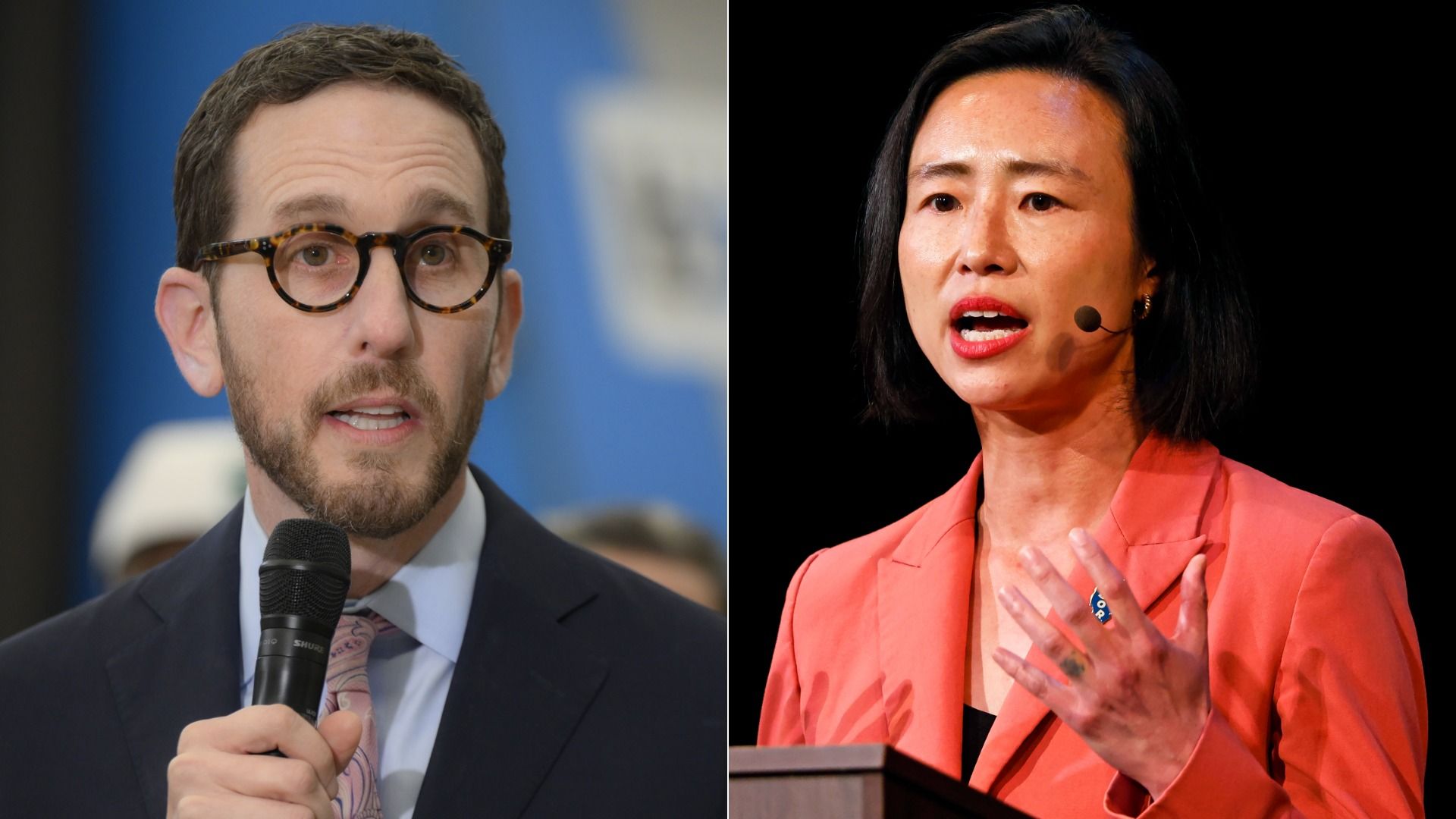
Left: Scott Wiener. Photo: Tayfun Coskun/Anadolu via Getty Images; Right: Connie Chan. Photo: Carlos Avila Gonzalez/San Francisco Chronicle via Getty Images
State Sen. Scott Wiener's AI chatbot targeting congressional rival Connie Chan was meant to turn her record into an interactive campaign attack.
- Instead, it's become a case study in what happens when campaigns hand a generative AI system an opponent's identity and then promptly lose control over what it says.
Why it matters: The controversy is the latest flash point in the increasingly heated battle to succeed Rep. Nancy Pelosi — putting questions about race, gender and AI's political risks into one of San Francisco's most closely watched elections.
- Recent polling suggests Wiener's once-comfortable lead has narrowed since Pelosi endorsed Chan in May.
How it worked: The Claude-powered chatbot generated answers posing as Chan designed to criticize her policy record. Wiener's campaign says it fielded more than 5,000 questions over 27 hours.
State of play: Wiener took down ConnieChan.ai and the billboards promoting it last week after Pelosi and other prominent Democratic leaders denounced it as a misuse of AI that demeaned Chan, a Chinese woman from Hong Kong who emigrated to the U.S. as a teenager.
- Critics said the bot's generated responses invoked stereotypes, including remarks about her accent and citizenship.
- Wiener initially defended the campaign stunt as a "parody" meant to highlight what he called Chan's "awful record" on housing, transit and other issues. He then accused her staffers of bombarding the bot with "malicious" questions about her race, accent, gender and citizenship to provoke an offensive response, per a statement shared with Axios.
- His campaign said the chatbot rejected those attempts and argued the controversy was manufactured. Chan denied allegations that her campaign orchestrated the prompts and condemned the use of AI in the race.
In announcing its removal last Friday, Wiener acknowledged in a statement that the experiment "missed the mark" and apologized, adding that "innovation means trying new things and it also means being honest when something doesn't land the way you intended."
The big picture: David Evan Harris, a lecturer at UC Berkeley's Haas School of Business, sees an uncomfortable contradiction: Wiener has been a prominent voice on AI policy, yet his campaign deployed a technology whose potential for biased outputs is already well documented.
- "Impersonating a candidate with AI, whether as a deliberately deceptive deepfake or as a high-tech parody, is not a healthy way to engage in political discourse," Harris told Axios.
- Harris said AI systems have repeatedly demonstrated racial and gender bias, making the possibility of offensive outputs something campaigns should anticipate — not simply chalk up to hostile users.
- "It's disappointing to see a chatbot deployed in a manner that has reportedly made predictably offensive statements," he added.
The bottom line: Campaigns are likely to keep experimenting with AI, but giving voters a chatbot that purports to be an opponent creates a much bigger and less predictable political liability.