Business Brief
How California is preparing for AI workforce disruption

Add Axios as your preferred source to
see more of our stories on Google.
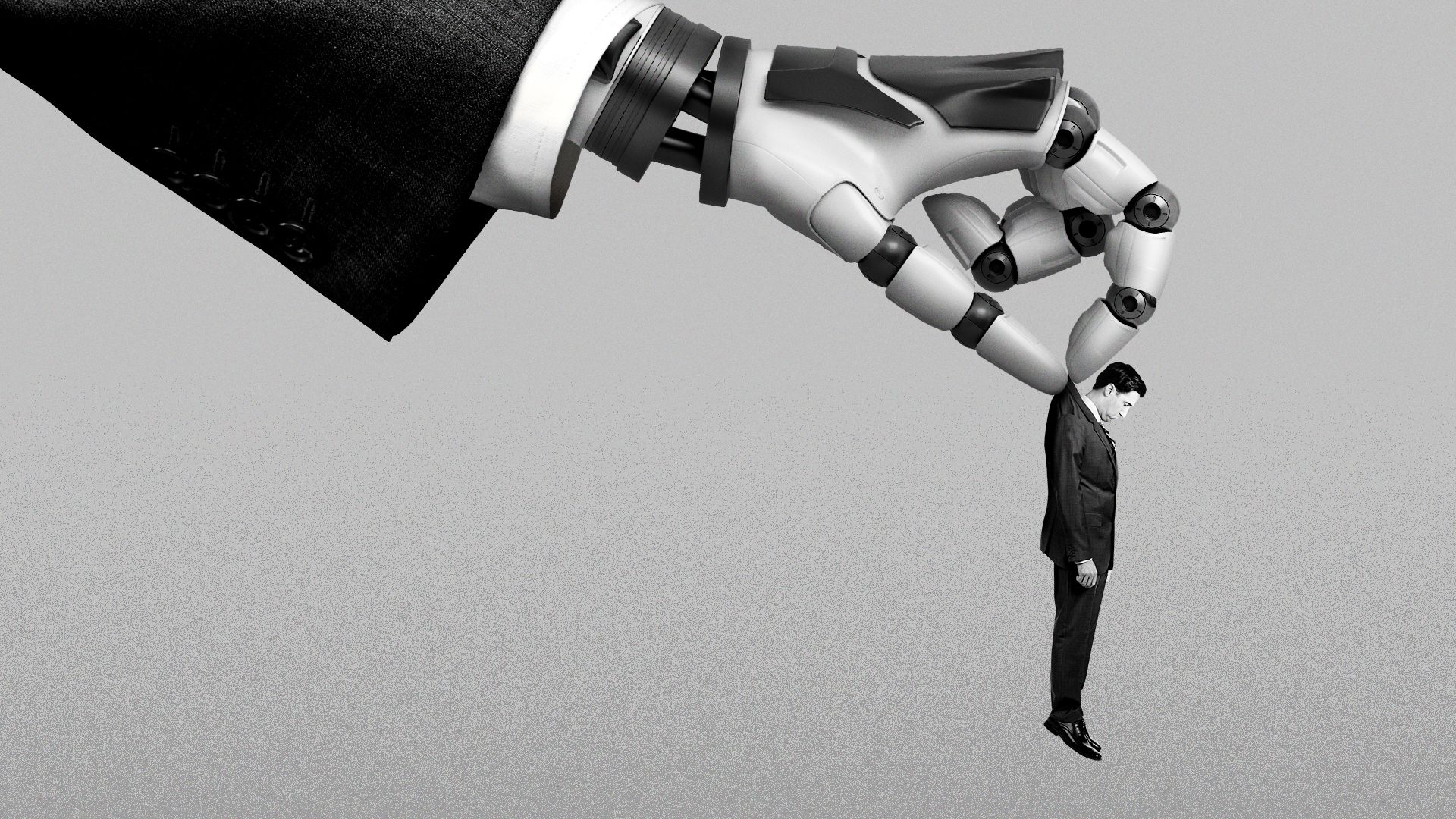
Illustration: Allie Carl/Axios
Gov. Gavin Newsom's executive order last month directing state agencies to study how AI is reshaping work reflects a growing challenge for policymakers: preparing workers for labor market changes as the technology accelerates and anxiety about job losses grow.
Why it matters: California is home to many of the world's leading AI companies, making it both a driver of rapid growth and a potential ground zero for any workforce disruption that follows.
State of play: Newsom has billed the order as a first-in-the-nation effort to help California get ahead of AI-driven workforce disruption through data collection, employment trend monitoring and worker safeguards like retraining programs and severance pay.
The big picture: AI adoption is rapidly spreading, but what it ultimately means for workers remains an open question.
- Though there have been high-profile layoffs linked to AI, labor market data has yet to show widespread job losses directly attributable to it, Michael Bernick, former director of California's Employment Development Department (EDD) and an employment and labor lawyer at Duane Morris LLP, told Axios.
- "We just don't know" AI's effects on jobs yet, he said. "We need a far broader understanding of what's really going on."
The EDD has begun collecting and analyzing workforce data to identify whether losses are emerging and which occupations could be most exposed.
- "It's largely at this stage studying it, which I think is the right approach," Bernick added.
Between the lines: Newsom's order arrives amid growing public concerns over AI's economic consequences.
- Stanford's 2026 AI Index shows that nearly two-thirds of Americans believe AI will lead to fewer jobs in the coming decades.
- "There isn't any policymaker that we're talking to that isn't thinking about this issue," Drew Spence, a policy program manager at Stanford's Institute for Human-Centered Artificial Intelligence, told Axios. "What we need more of is data to understand where some of the workforce changes are going to be the most profound."
Occupations that could be affected include software development, manufacturing, health care, customer service and certain administrative roles.
- But Spence cautioned that the evidence remains preliminary and often points to a more complicated reality.
The intrigue: While some employers may eventually need fewer workers for certain tasks, others are using AI to make employees more productive, rather than replace them altogether.
- That distinction — augmentation versus replacement — is becoming central to discussions about AI and the future of work, Spence said.