Lurie pushes a budget plan built for leaner years ahead

Add Axios as your preferred source to
see more of our stories on Google.
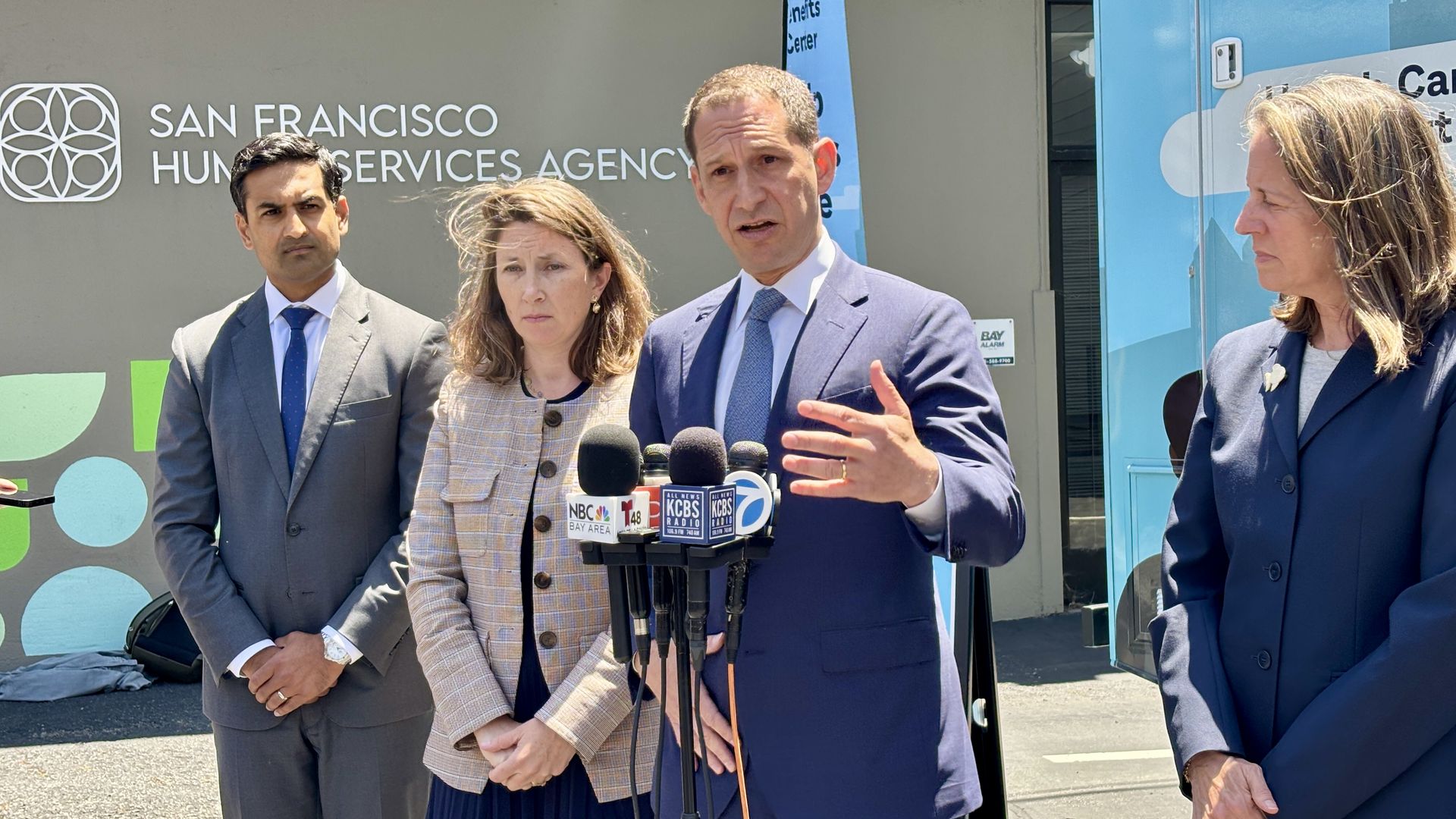
Mayor Daniel Lurie speaks alongside city officials at a Human Services Agency center in the Mission. Photo: Nadia Lopez/Axios
Mayor Daniel Lurie's $16.9 billion budget plan is built around a simple argument: San Francisco can no longer afford to govern the way it did before.
State of play: Facing a projected $643 million deficit over the next two years, Lurie is proposing to eliminate 550 vacant city positions, cut millions in grants to nonprofit providers and consolidate city functions.
- Meanwhile, he's spending more in areas central to his political agenda — policing, homelessness response, public safety and street conditions — aimed at continuing the city's economic recovery.
- The police budget alone would rise by roughly $33 million to nearly $883 million to cover officer raises and retention incentives.
- The budget also dedicates $120 million to keeping families housed and sets aside $100 million in reserves to cushion potential federal cuts to housing programs.
The big picture: For years, San Francisco responded to its biggest challenges by creating new programs, expanding services and building a vast network of nonprofit partners that now deliver much of the city's social safety net. Lurie's budget — released Monday — suggests that era is ending.
- Following last year's $15.9 billion budget, the mayor is doubling down on his argument that City Hall must focus on a narrower set of priorities while scaling back elsewhere.
- "Under my administration, we will not fall back on temporary fixes that force deeper cuts year after year," Lurie said during Monday's budget briefing. "No one outside San Francisco is coming to save us — we're going to do it ourselves."
Yes, but: The city still faces a potential $1 billion budget gap by 2029.
Between the lines: Lurie argues the city must focus its limited resources on what it considers the most essential services as San Francisco braces for the loss of $300 million in federal funding. The budget includes $34 million to help residents stay enrolled in Medi-Cal and CalFresh benefits.
The other side: Advocates argue that cutting funding from community organizations weakens the network residents rely on to access housing, healthcare and other services.
- Lurie is funding public safety priorities "at the direct expense of immigrant services, senior programs, youth healthcare, and our entire safety net," Anya Worley-Ziegmann, a coordinator at The People's Budget Coalition, which represents 150 community-based groups, told Axios.
- The budget asks vulnerable residents to absorb the consequences of a fiscal crisis they did not create while preserving spending in areas the administration views as politically essential, Worley-Ziegmann added.
- The Human Services Agency alone faces $10.7 million in reductions to community grants, including programs serving seniors and people with disabilities.
What's next: The Board of Supervisors is expected to take its first vote July 14, with final approval scheduled for July 21.