Why San Francisco wouldn't be the same without its wild parrots

Add Axios as your preferred source to
see more of our stories on Google.
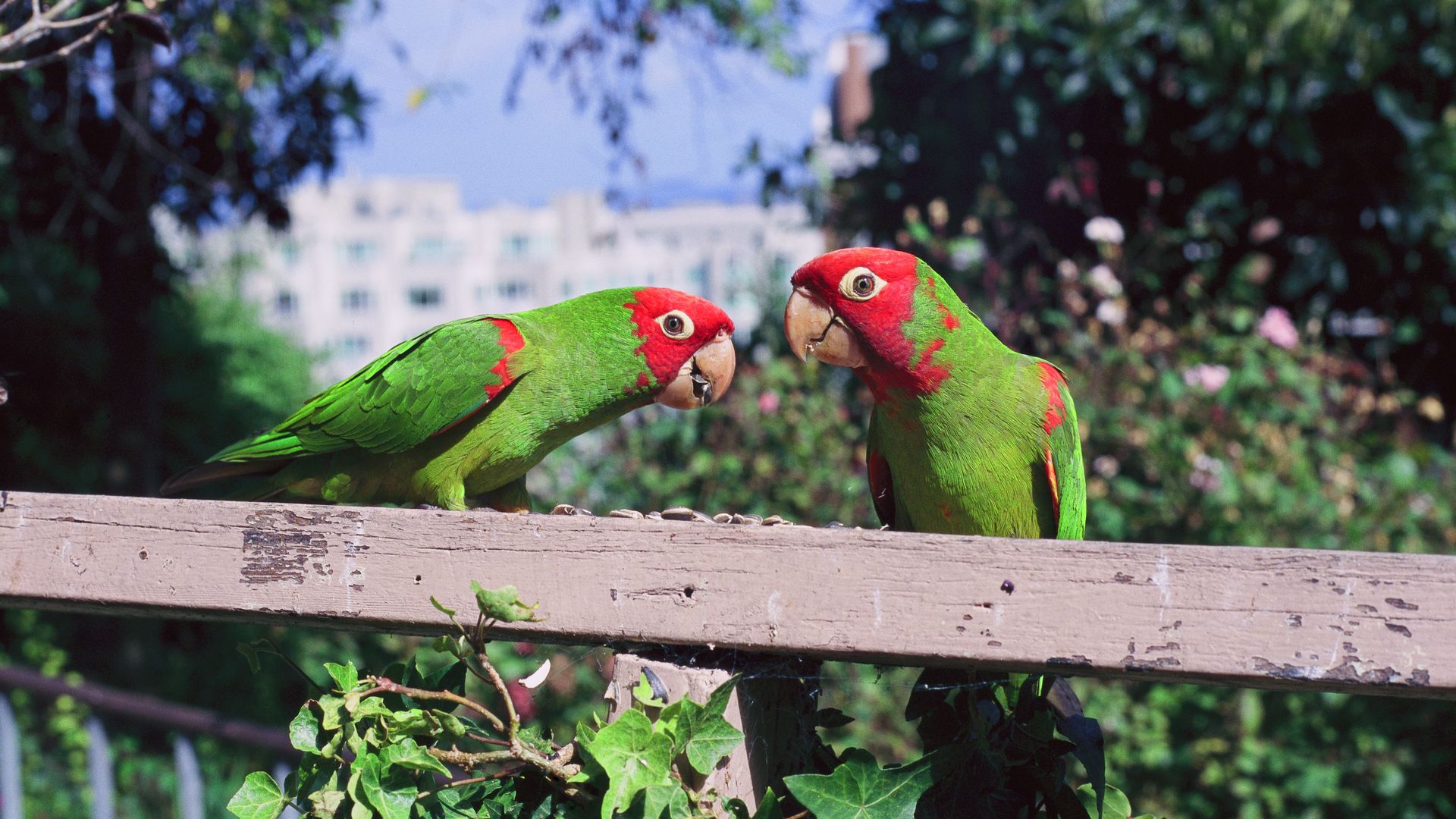
The birds' origins have been linked to the days of the US exotic pet trade. Photo: Courtesy of Pelican Media.
No one can fully agree on where San Francisco's wild parrots came from, but decades after arriving, they've become one of the city's most defining symbols.
The big picture: The noisy green flock — now estimated to number roughly 300 citywide — has been widely seen flying over Telegraph Hill, North Beach and the Embarcadero and is recognizable to almost any longtime local.
Catch up quick: While their origins remain uncertain, the parrots are thought to have likely escaped or been released after being imported to the city in the 1980s.
- The flock is predominantly made up of cherry-headed conures native to Peru and Ecuador, but many of San Francisco's parrots today are believed to be hybrids of multiple parakeet species.
- These feisty birds are less known for mimicking human speech than for their loud personalities, communicating through cacophonous screeches and a distinct dialect of calls.
Mark Bittner is best known for helping make the city's tropical birds into international celebrities.
- He documented his unique friendship with the birds in his book "The Wild Parrots of Telegraph Hill," which became the basis for filmmaker Judy Irving's 2003 documentary of the same name and made the parrots famous.
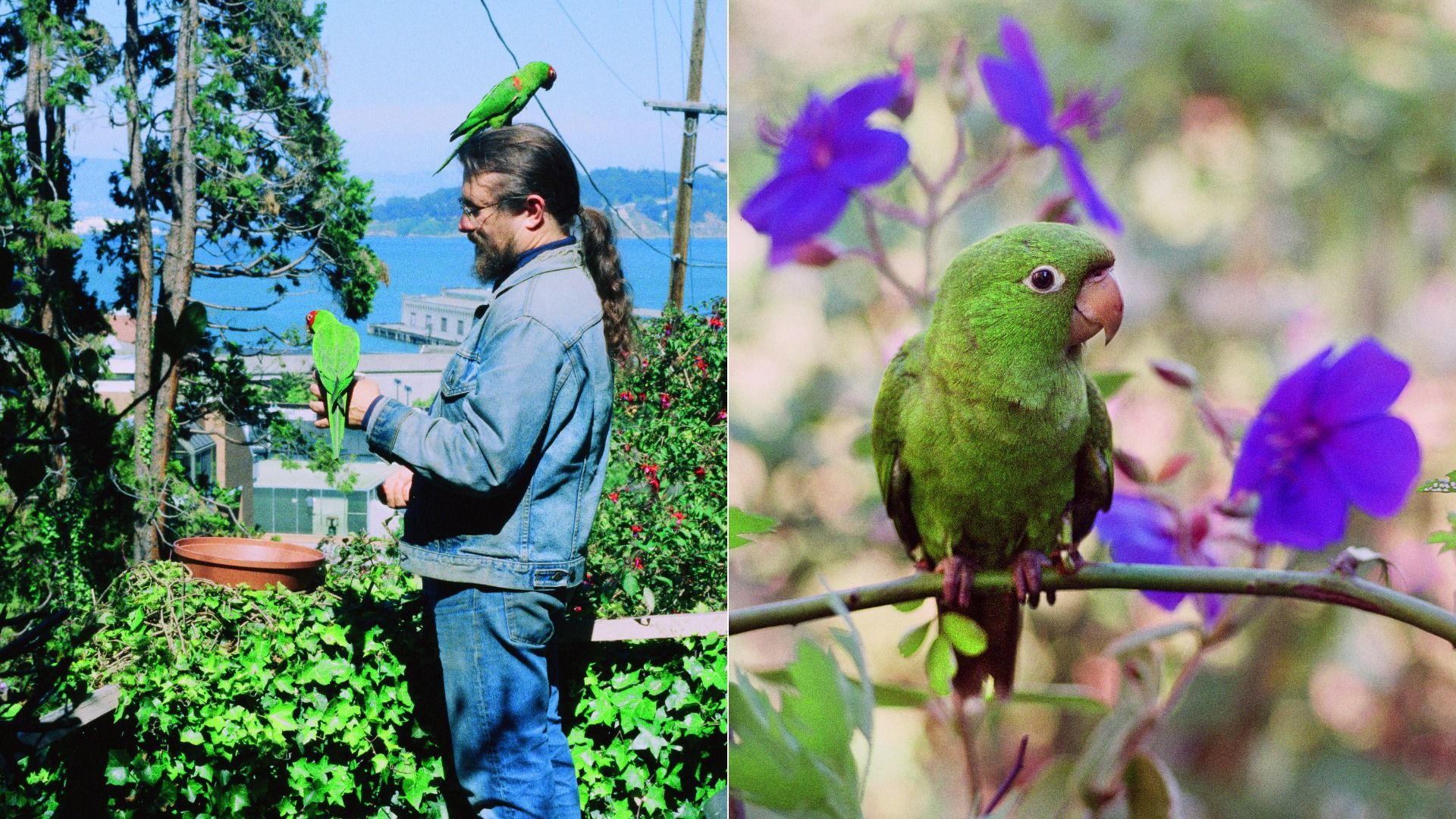
What they're saying: "I'm proud of the film, and it's because of Mark that it did so well," Irving, who was married to Bittner for 25 years, told Axios. "This is my offering to the city and to the world, and it makes me feel good that so many people have seen it."
Between the lines: Bittner — a writer, musician and self-described bohemian — spent roughly 15 years living on the streets and squatting around the city before settling into a cottage on Telegraph Hill.
- He first started feeding the parrots because, as he later joked in interviews, it was an easy way to make friends. The relationship quickly evolved into something much deeper, with Bittner learning individual birds by personality and behavior and recognizing social hierarchies and relationships within the flock.
- Bittner, who died in March, described the parrots less as pets and more as a parallel society operating inside the city. He became a fierce advocate for them, opposing public feeding efforts because he believed the birds needed to remain truly wild.
What's next: A bronze plaque honoring Bittner will be installed near his former home off the Greenwich Steps within the next six months, Irving said.
- The plaque, which is currently in the approval and design process, will include photos, a QR code linking to the film and book and recognition of the parrots becoming San Francisco's official animal.
- "I'm pleased that they are here to stay," she said. "They're doing well and hopefully that's a good metaphor for the rest of San Franciscans."