Inside San Quentin's effort to redefine prison life

Add Axios as your preferred source to
see more of our stories on Google.
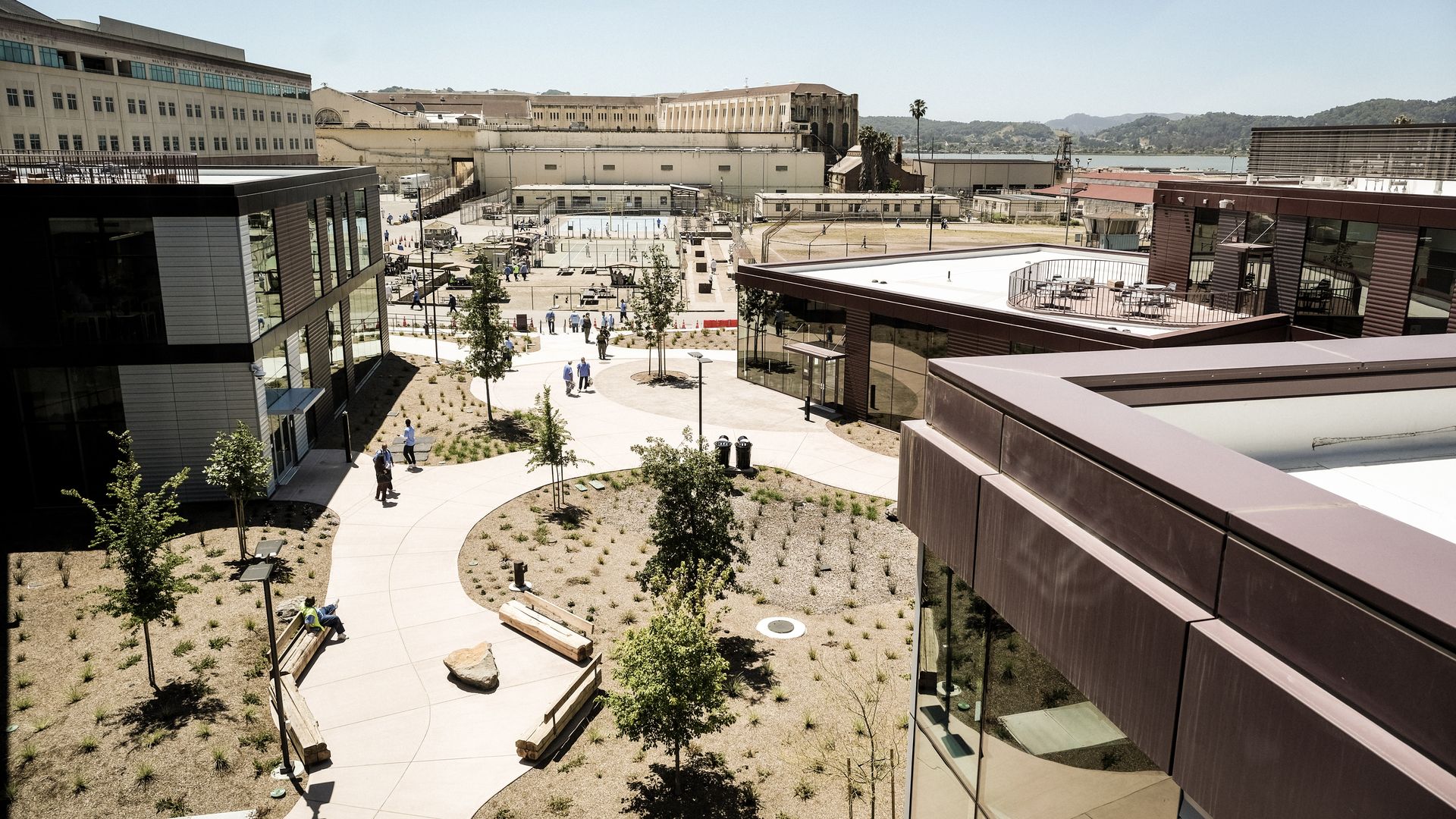
The new learning center, completed in February, was built over 18 months. Photo: Courtesy of Matthew Kadi
For decades, San Quentin stood as a symbol of America's harshest era of incarceration, housing California's death row and many of the state's most dangerous offenders.
The big picture: But now, in a transformation that would have sounded implausible even a decade ago, the state's oldest prison is trying to reinvent itself as something closer to a Scandinavian-style rehabilitation facility — one centered on education and second chances.
- Axios recently toured the facility, which opened in February.
Driving the news: On the edge of San Quentin's prison yard sits a newly opened, $239 million, 81,000-square-foot learning complex, where incarcerated men study coding, journalism, service dog training, filmmaking, digital media and skilled trades.
- It's made possible through The Last Mile — a nonprofit that helps incarcerated people prepare for life after prison through education, job training and reentry support.
What was once one of California's most notoriously violent prisons now resembles, in some ways, a college campus more than a correctional facility.
- Former death row cells are being converted into more humane housing, incarcerated students move between bright classrooms and correctional officers talk openly about mentorship instead of punishment.
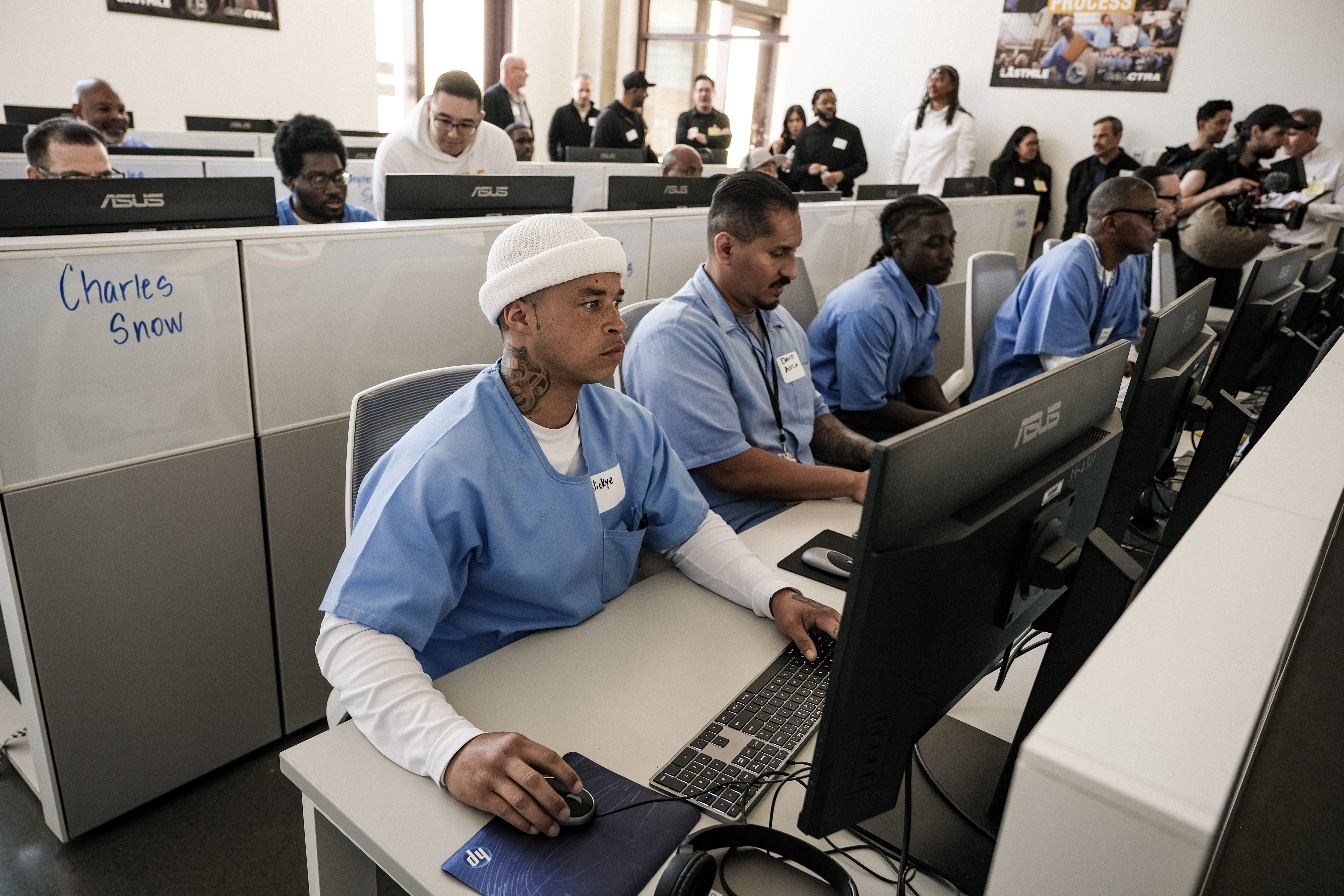
Zoom in: During my recent visit, inmates wearing blue t-shirts and Levi's jeans sat at computer stations learning coding and AI skills.
- Others edited films, produced audio projects and wrote news articles for the prison's paper, the San Quentin News. Outside, a small orchestra of performers rehearsed as service dogs in training walked across the yard.
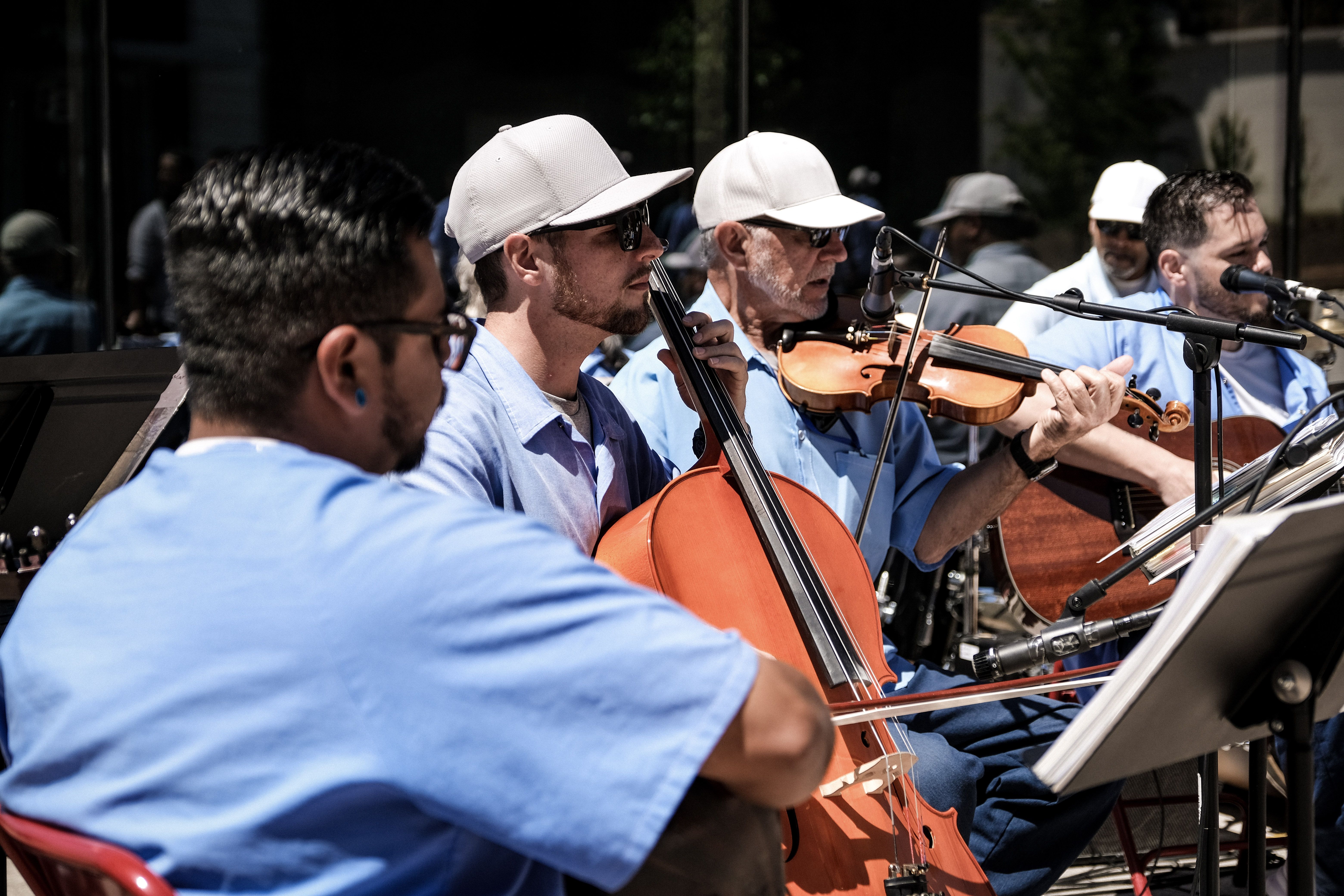
- "This place has given me the opportunity to just be my authentic self," Marque Thompson, an inmate who is part of The Last Mile's coding program after spending roughly 20 years incarcerated, told Axios. "We are more than our worst mistake."
Catch up quick: California — which has the second-largest state prison population in the country — launched an ambitious overhaul of San Quentin in 2023 after Gov. Gavin Newsom announced plans to redesign it into a rehabilitation center, inspired by Norway's correctional model.
- Norway's recidivism rate is 20% — among the lowest in the world — compared to roughly 60% of formerly incarcerated people in the U.S. who are rearrested within three years of release.
- The effort included shutting down death row and building the new learning center.

Between the lines: The San Quentin Rehabilitation Center is one of the country's most ambitious prison reform experiments and a direct challenge to decades of punitive incarceration policy.
- Incarcerated people who participate in education programs have a 43% lower chance of returning to prison than those who do not, per the nonpartisan research organization RAND.
- The Last Mile — which has hosted more than 1,600 incarcerated students and roughly 1,000 formerly incarcerated participants across nine states — notes its graduates have a recidivism rate below 8%, and a 75% employment rate after release, made possible through partnerships with employers and prison-to-workforce programs.
San Quentin's transformation comes amid a broader debate in California over punishment versus rehabilitation in the criminal justice system.
- Critics of rehabilitation-focused reforms argue education and therapy can't fully address repeat violent offending and question whether victims' families see enough accountability in programs centered on opportunity and self-development.
- Supporters argue the old model failed both incarcerated people and public safety.
- "We used to send people out with no education, with really nothing," Warden Chance Andes said. "Now we're giving them degrees, trades, but most of all just some humanity."
For Louis Sale, a student in the film program, the classes gave him a renewed sense of hope.
- He recalled struggling with alcoholism for years after being discharged from the military, which ultimately led to a drunk driving incident in which he crashed his vehicle and killed a man.
- "Before I came here I didn't see my life as a filmmaker," Sale told Axios. "Now, I can't see my life without being a filmmaker. I really feel like I have a purpose."