Big drop in speeding fuels demand for more cameras

Add Axios as your preferred source to
see more of our stories on Google.
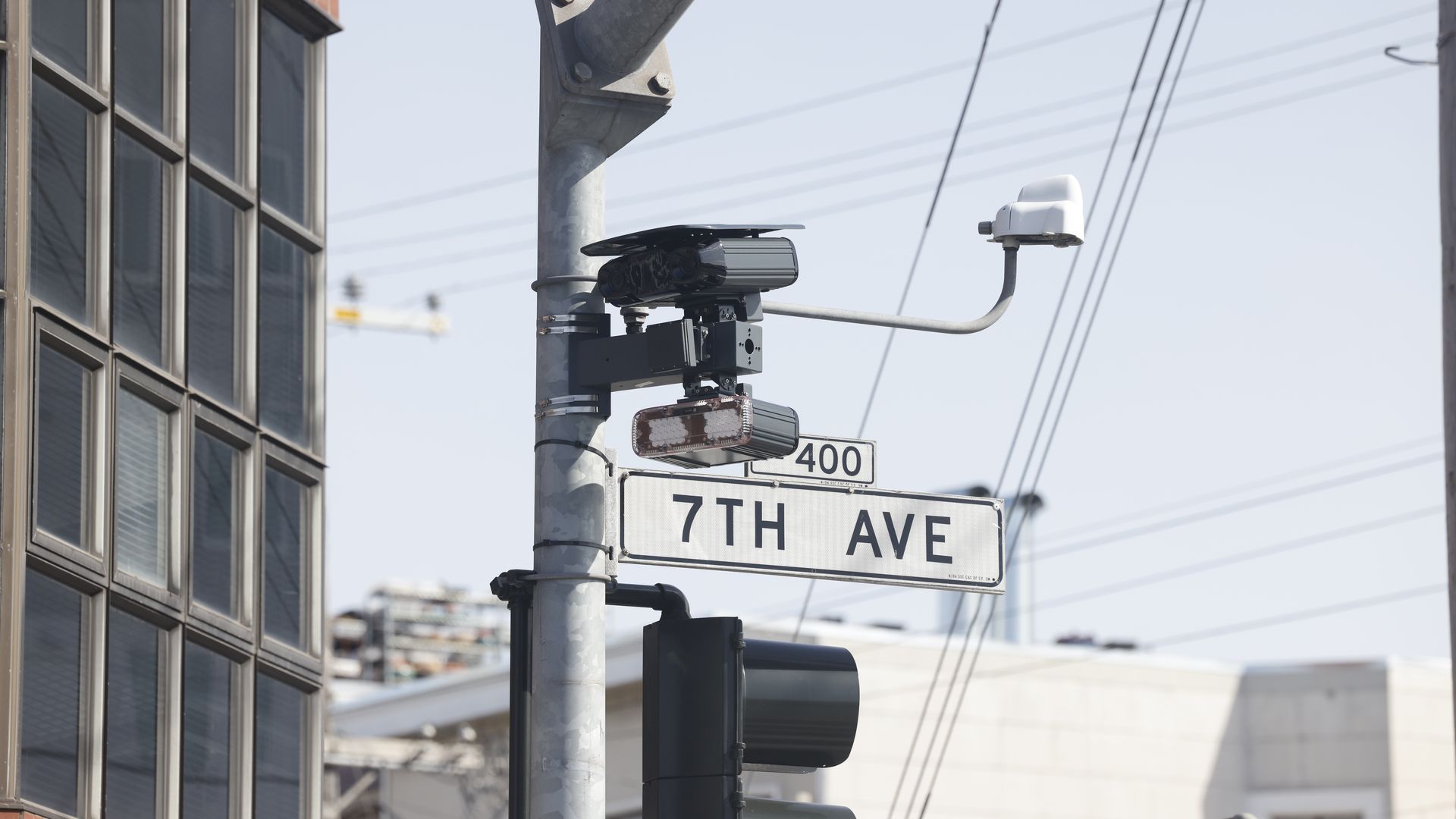
Speed cameras seem to be making an impact in San Francisco, new data shows. Photo: Lea Suzuki/San Francisco Chronicle via Getty Images
San Francisco's 33 speed cameras have led to a nearly 80% reduction in the share of drivers traveling at least 10 mph above the speed limit since launching in March of last year, per SFMTA data released Wednesday.
Why it matters: Critics have long expressed concern over privacy, surveillance and racial equity issues. But now that the numbers are in, some are shifting the debate from whether the cameras should exist to how fast they can scale.
Driving the news: Incidents of dangerous speeding fell from over 45,000 in the months before implementation to about 5,700 in February this year.
- 65% of vehicle owners who received notice of a violation didn't receive a second one.
- Just 2% of drivers at the 33 locations are exceeding the speed limit by 10 mph, SFMTA's February analysis shows.
The most drastic declines in speeding were seen at:
- Columbus Avenue from Lombard Street to Greenwich Street, near North Beach Library (98% drop against a 20 mph speed limit).
- Alemany Boulevard from Farragut Avenue to Naglee Avenue, near Cayuga Playground (96% drop against a 30 mph speed limit).
- Geneva Avenue from Prague Street to Brookdale Avenue, in front of Crocker Amazon Park (94% drop against a 30 mph speed limit).
What they're saying: Proponents, including Mayor Daniel Lurie, Supervisor Matt Dorsey and SFMTA transportation director Julie Kirschbaum, point to the figures as evidence of gains and are calling on the California Legislature to authorize broader deployment.
- "Speed cameras are getting drivers to slow down, respect our neighborhood and make people safer," Rudy Corpuz, executive director of the violence prevention and youth development organization United Playaz, said at a press conference Wednesday. "You can really feel the difference on SoMa streets."
- San Francisco is one of five California cities piloting speed safety cameras under AB 645, which was co-sponsored by local lawmakers like Assemblymembers Phil Ting and Matt Haney.
The other side: Civil rights groups like the ACLU California Action and Human Rights Watch say these kinds of programs risk perpetrating mass surveillance and over-policing in communities of color.
Between the lines: A recent string of traffic deaths has pushed San Francisco's streets safety crisis back into the spotlight.
- Speed is the leading cause of severe injuries and fatalities on San Francisco streets, according to Walk San Francisco executive director Jodie Medeiros, who also supports more cameras.
- The demand for more cameras comes as city officials grapple with concerns over traffic enforcement failures, surges in unsafe driving behaviors and a budget deficit that could affect street redesign projects.
What's next: Dorsey is introducing legislation next week to reaffirm the city's commitment to strengthening the program, which will require state approval.