What San Francisco learned from the 1906 earthquake

Add Axios as your preferred source to
see more of our stories on Google.
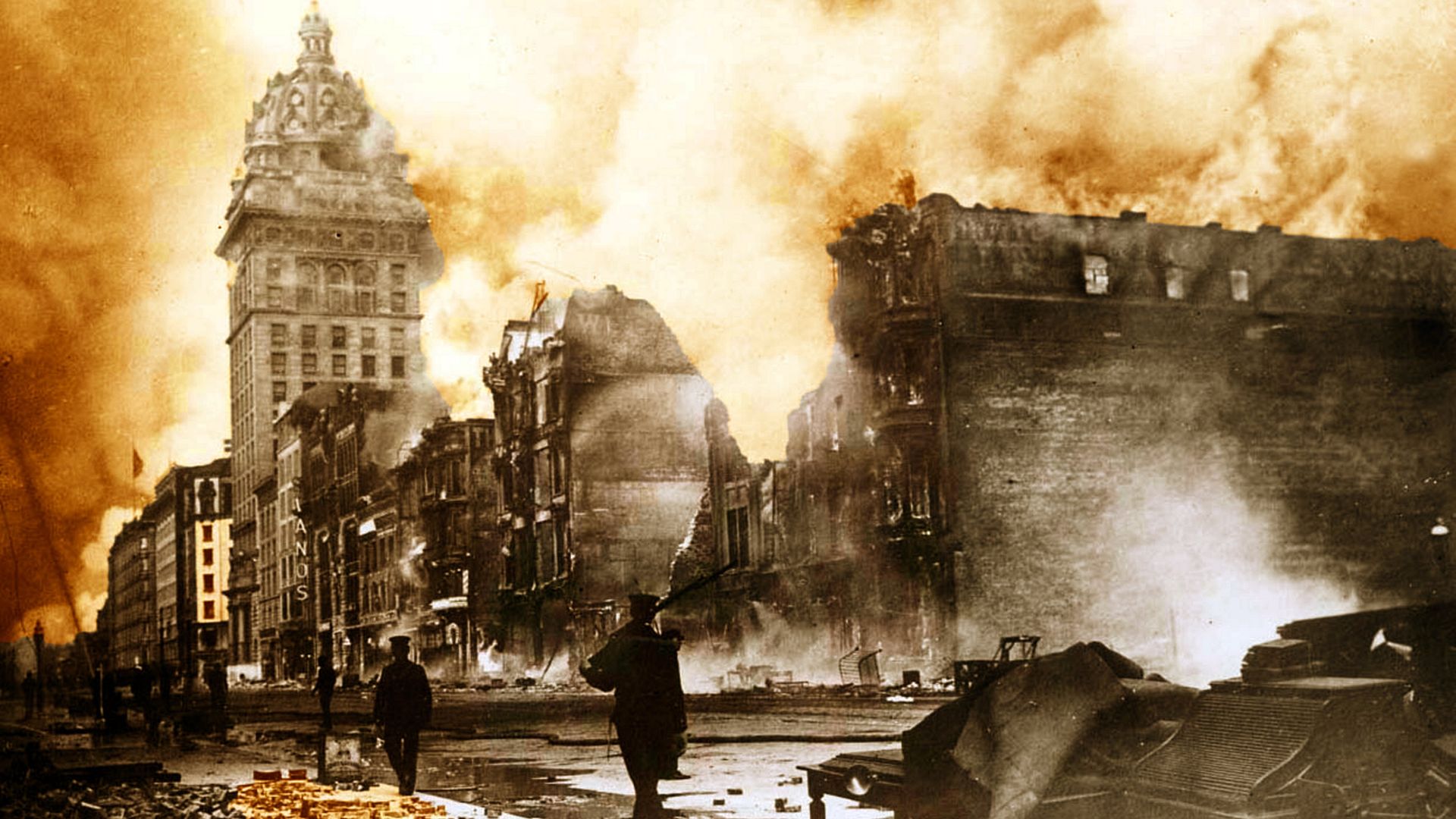
A colorized black-and-white photograph details the 1906 earthquake's aftermath. Photo: Universal History Archive/UIG via Getty images
It's difficult to imagine San Francisco today engulfed in flame, ash and ruin — but 120 years ago, disaster forever reshaped the city.
The big picture: At 5:12am on April 18, 1906, a 7.9-magnitude earthquake struck, becoming one of the worst natural disasters in U.S. history.
- An estimated 3,000 people died and 200,000 others were left homeless.
- More than a century later, the lessons of that day still shape how the city prepares for the next "Big One."
Catch up quick: The 1906 earthquake didn't just level buildings — it exposed widespread vulnerabilities and set the blueprint for how cities prepare for disasters today.
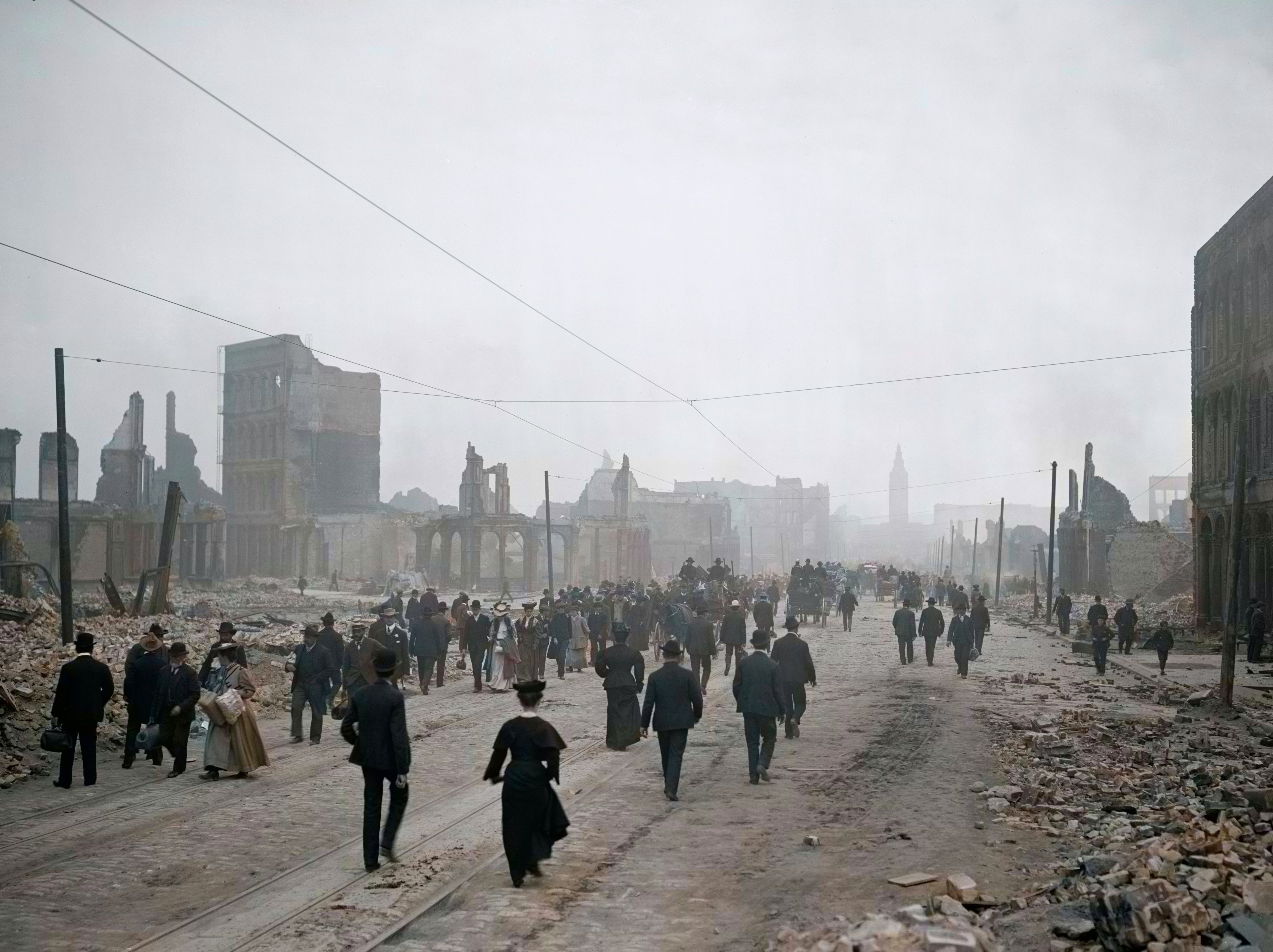
The breakdown of basic infrastructure turned a natural disaster into a citywide catastrophe.
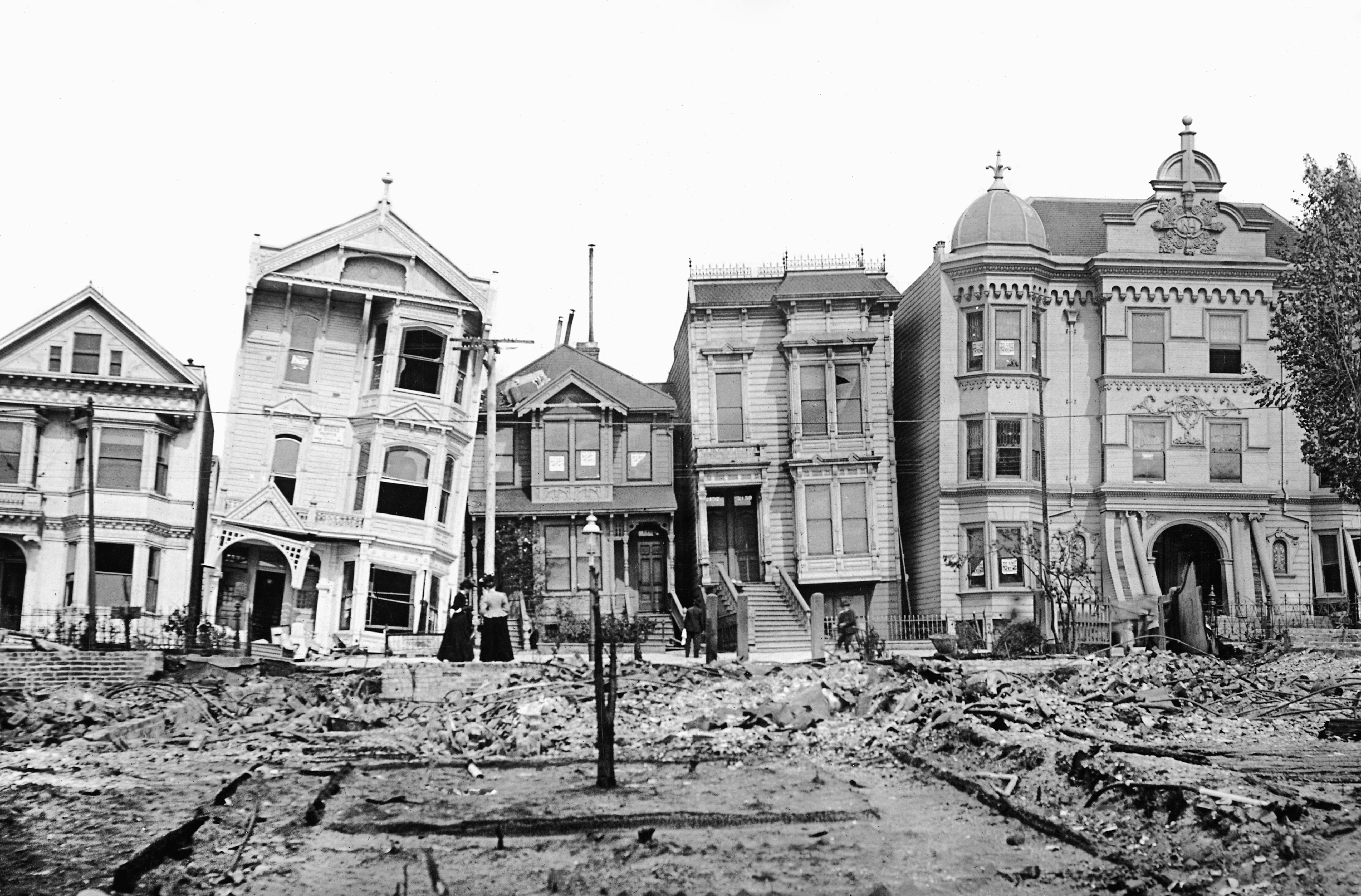
- Within minutes, buildings crumbled, gas lines ruptured and water mains snapped.
- Then came the fires. Dozens of small blazes ignited across San Francisco, merging into a firestorm that burned for three days and destroyed 80% of the city.
Between the lines: The quake also reshaped science.
- There was no consensus at the time that earthquakes were caused by faults slipping because most don't leave visible surface breaks, Greg Beroza, a professor of Earth sciences at Stanford, told Axios.
- But the crack left along the San Andreas Fault helped confirm that earthquakes are driven by fault movement — a breakthrough that still underpins how experts assess seismic risk today, he said.
San Francisco in 2026 is far more prepared for such a quake, both structurally and operationally, Mary Ellen Carroll, the city's emergency management director, told Axios.
- San Francisco has a specialized emergency firefighting water system, with underground cisterns capable of holding up to 75,000 gallons of water, fireboats to access the Bay's water and unique high-pressure hydrants designed to fight fires after earthquakes, SFFD Lt. Mariano Elías said.
- "We are the only department in the United States who has that," he added.
- The city also developed the Neighborhood Emergency Response Team program in the aftermath of the 1989 Loma Prieta earthquake, which trains residents in first aid and search and rescue.
Engineering has also advanced, with modern buildings better designed to absorb and withstand shaking.
- San Francisco has made major progress retrofitting older buildings, including about 97% of its soft-story apartments and reinforcing non-ductile concrete buildings, said Heidi Tremayne, executive director of the Earthquake Engineering Research Institute.
- "We don't think all earthquakes have to be a disaster. ... It's just choosing to implement and investing in those changes," she added.
While the city is more prepared these days, the devastation of a future quake will still depend on how residents respond in the first hours after the tremors subside, experts say.
- A major earthquake could still knock out power, water, transportation and online communications all at once.
- Heavy reliance on technology that may not function in a disaster could leave residents cut off from critical information and from one another. And while emergency response has improved, Carroll said, the public's level of preparedness — especially in a region that hasn't seen a major quake in decades — remains a critical weak point.
- "Earthquakes create multiple cascading failures across systems, and it's the kind of event we haven't been tested by in a long time," she said. "Our emergency response structure — all of our first responders — we are ready. But I think that the general public has some work to do."
What's next: Residents should have a go-bag and supplies to get through 72 hours. People should also know how to shut off gas lines and remember to check on neighbors, since help may not come right away, Elías said.
- "As firefighters, we say it's not if, it's when," he added. "So it's important to know the history, how to prepare yourself and your family, and how to get some kind of plan in place."