Marcus Books is still writing its story


Add Axios as your preferred source to
see more of our stories on Google.
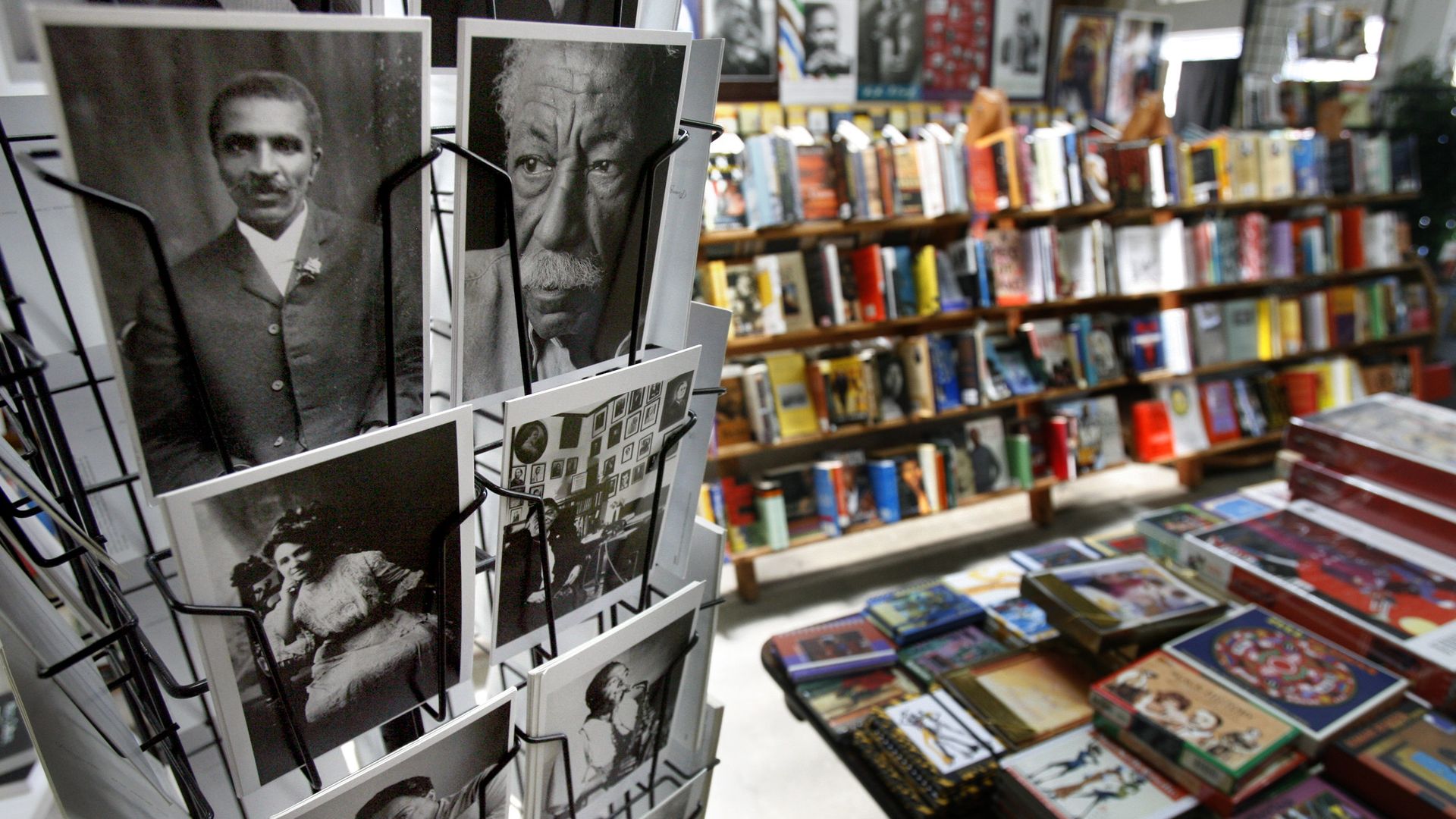
Marcus Books in Oakland. Photo: Paul Chinn/The San Francisco Chronicle via Getty Images
Marcus Books, America's oldest Black-owned independent bookstore, got its start in San Francisco. Now, it's part of a growing, albeit fragile, national comeback.
Why it matters: As public schools and libraries remove books by Black authors — from "Beloved" to The 1619 Project — Black-owned bookstores like Marcus Books are increasingly serving as places where readers can access contested titles and authors' full bodies of work — and gather in community to discuss them.
- Today, 306 Black-owned bookstores exist across the U.S., up from 54 just a decade ago, per the first State of the Black Bookstore report.
What they're saying: "Our mission, intent and resolve are not, and have never been, dependent upon the sometimes racist whims of the federal government," Marcus Books manager Blanche Richardson told Axios via email. "The truth cannot be rewritten nor erased anyway."
Flashback: Richardson's parents, Raye and Julian Richardson, opened Marcus Books (named after political activist Marcus Garvey) in 1960 after moving to the Fillmore District.
- They "wanted to create a space" where the community could come together and access information about their history and culture, according to Richardson.
- The store resurrected books that had gone out of print, published works by independent authors and poets and served as a central hub for the development of cultural revolutions like the Black Power movement.
- After San Francisco displaced thousands of Black families during the 1960s urban renewal, Marcus Books opened a second location in Oakland to serve the people of color who resettled there.
Reality check: Financial challenges, such as high operating costs and competition from big online booksellers, forced the San Francisco location to close in 2014.
- "There are no other Black bookstores in San Francisco, and now there is no Marcus Books, either," Richardson said.
- Equitable financial and institutional support are key to sustaining such businesses, according to Richardson.
- "This is not rocket science and there are many precedents to follow," she added. "But first, there must be a desire to maintain a vibrant Black community in the city."
State of play: The nationwide uptick in Black-owned bookstores masks economic fragility, a reality many owners say is forcing bookstores to evolve beyond traditional retail.
- "We're in a climate right now where our history is being erased and debated in schools and libraries," Jill Gibson, CEO of the National Association of Black Bookstores, said. "It points to a need more than ever for visibility into our voices, our stories and our history."
- 90% of Black-owned bookstores report annual revenue under $250,000, while 36% operate without a permanent brick-and-mortar location.
- 14 states have no Black-owned bookstore at all, and sales of books by Black authors declined 14% even as overall print sales slightly rose.
Zoom out: Black-owned bookstores — from Pittsburgh to Seattle — are leaning into curation, programming and partnerships to diversify revenue and deepen community ties.
- Marcus Books most recently hosted a screening of the documentary "John Burris: Godfather of Police Litigation" and will partner with Black Girls Write to hold a literary salon this Saturday.
The bottom line: The resurgence of Black-owned bookstores shows renewed demand for Black literature and identity-focused spaces, but many owners say survival now depends on becoming more than just retail.