Yosemite drops reservations amid mounting environmental, traffic concerns

Add Axios as your preferred source to
see more of our stories on Google.
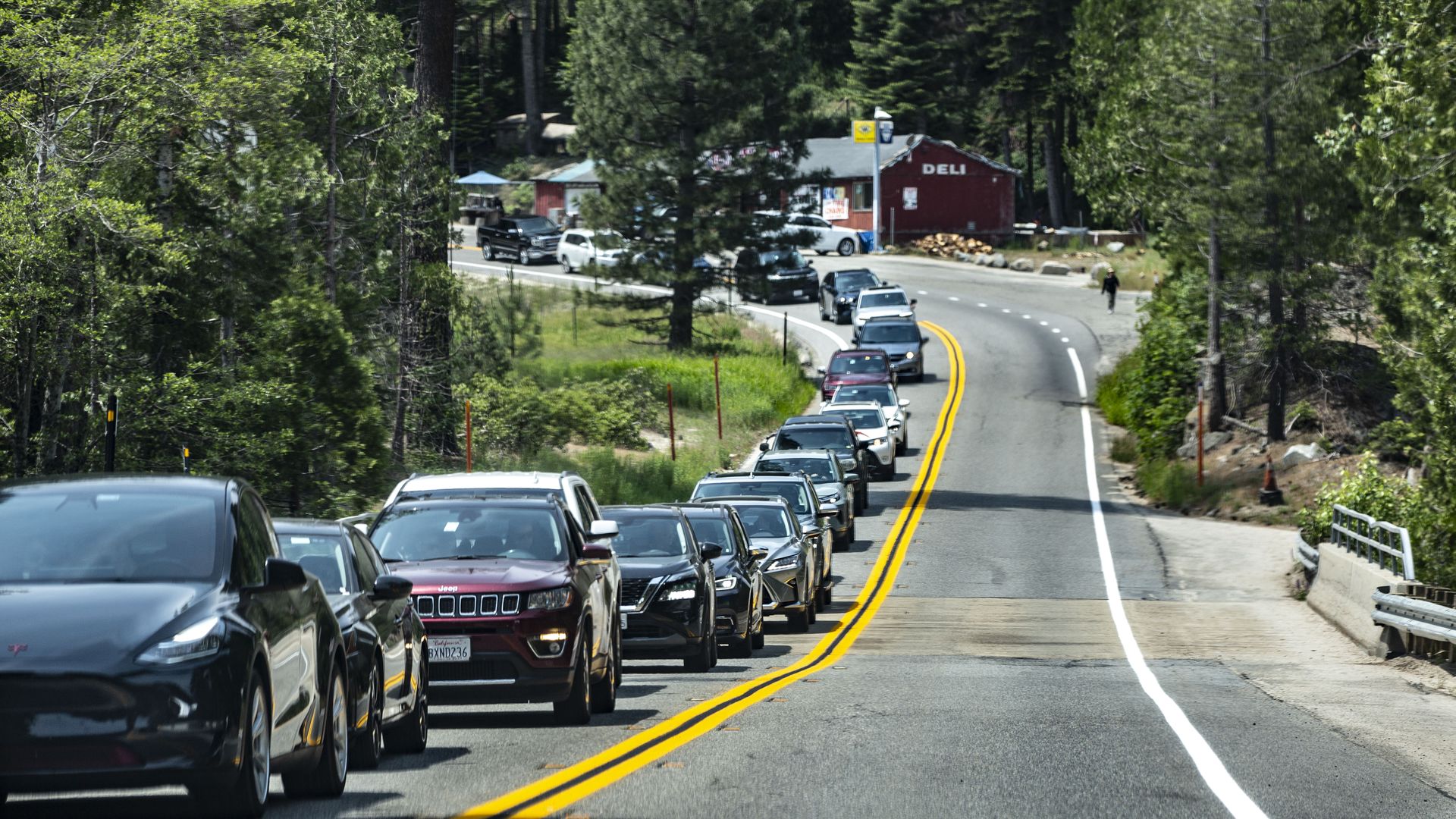
Long lines form along the western Highway 41 entrance of Yosemite National Park. Photo: George Rose/Getty Images
Bay Area campers planning a trip to Yosemite National Park this summer may need to brace for bigger crowds — the park is scrapping its reservation requirement for 2026.
Why it matters: The policy shift marks a departure from when timed-entry reservations were used to manage overcrowding at one of the nation's most popular parks, known for its stunning waterfalls and granite cliffs.
- It opens the gates to heavier peak-season traffic amid a nationwide campaign to expand access to national parks.
The big picture: The move is part of a broader trend where some national parks are rolling back entry fees and reservation systems as the Trump administration pushes to prioritize visitor services.
- Yosemite Superintendent Ray McPadden said in a statement this week that park officials conducted a "comprehensive evaluation" to determine the change and said the park "will continue active traffic management strategies to ensure a great visitor experience."
Yes, but: Without entry caps, environmentalists argue Yosemite could see more traffic jams that strain roads, natural ecosystems and the visitor experience.
- "Discontinuing this program is so disappointing for both the park and also for the visitors who are going to have a very different experience moving forward," said Cassidy Jones, a senior visitation program manager at the National Parks Conservation Association, a nonpartisan advocacy group.
State of play: Overcrowding isn't just about traffic — it also poses environmental and safety risks, Jones said, including:
- Worsening pollution and noise from idling cars. When parking lots fill, drivers spill onto road shoulders, damaging vegetation and creating pedestrian hazards.
- With fewer rangers for education and enforcement, more human-wildlife encounters and vehicle collisions could occur.
- Packed trails can create heavily trodden paths and some hikers could veer off course, harming sensitive habitats. In alpine meadows, foot traffic can crush fragile wildflowers.
- Bathroom facilities can only handle so much volume, while graffiti and overflowing trash or litter could increase.
Between the lines: The rollback comes as the National Park Service faces steep staffing losses, with roughly a quarter of its permanent national workforce laid off.
- While the agency says it plans to increase staffing at congested intersections in Yosemite this summer to mitigate crowds, critics question how feasible that is given those losses.
- Seasonal hires are limited in their abilities without the guidance of experienced supervisors. Many longtime staffers — those familiar with Yosemite's traffic choke points, wildlife patterns and enforcement needs — are no longer there, Jones added.
Flashback: Yosemite introduced reservations during the pandemic before dropping the system in 2023 — when summer wait times stretched to nearly three hours — before reimplementing them the following year as a crowd-control measure.
By the numbers: Yosemite visitation soared by roughly 81.7% over four years — from about 2.2 million visitors in 2020 to 4.1 million in 2024, per the National Parks Service database.
What's next: Park officials are encouraging visitors to plan their visits early, consider weekday trips and go to other areas for outdoor recreation outside of Yosemite Valley.