How the NFL will watch for Super Bowl concussions

Add Axios as your preferred source to
see more of our stories on Google.
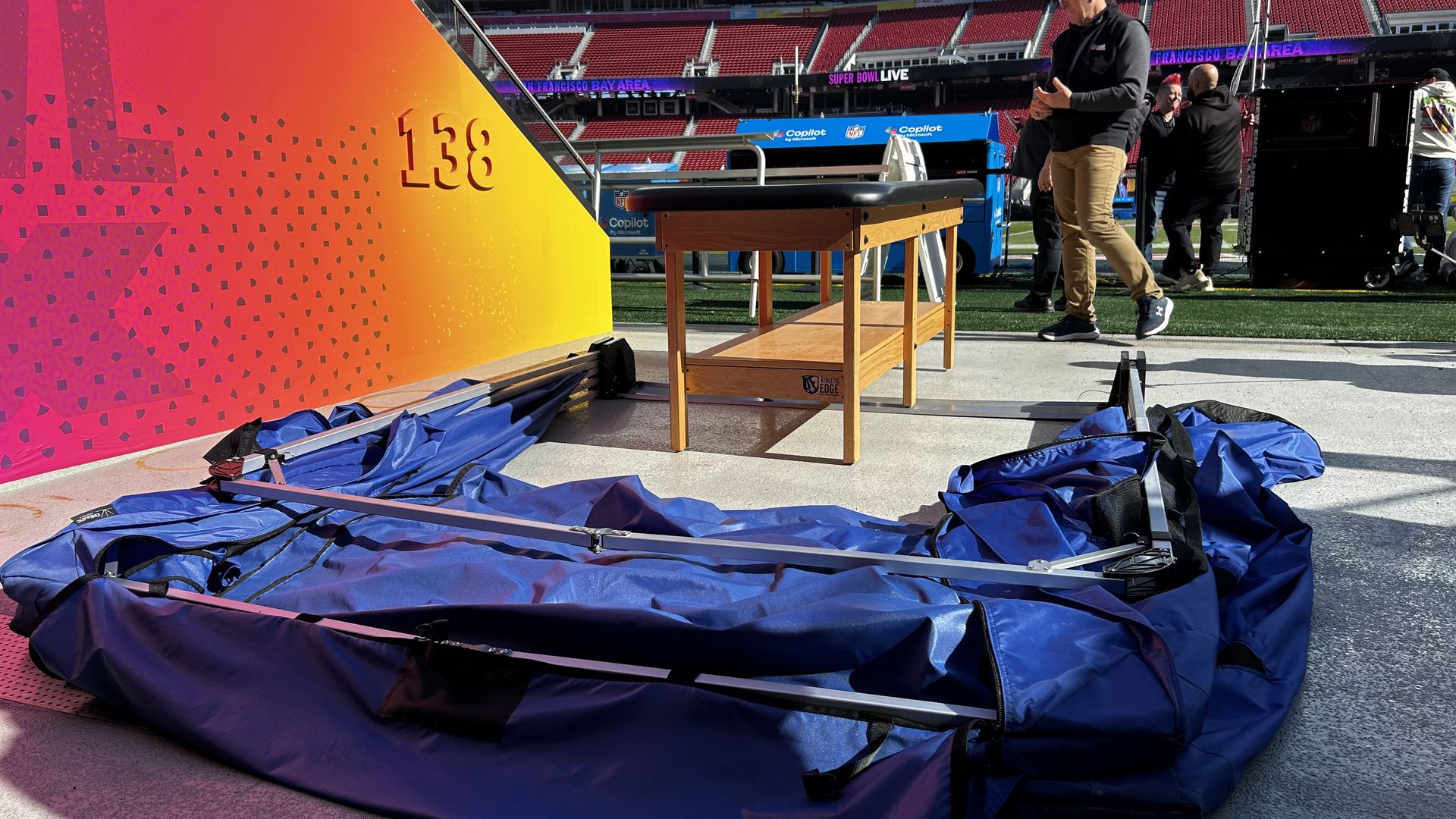
The blue tent for medical examinations on the sidelines at Levi's Stadium. Photo: Shawna Chen/Axios
When the Super Bowl kicks off Sunday, a constant scanning for injury will unfold off the field.
Why it matters: Amidst the NFL's ongoing reckoning with head injuries and continued scrutiny of the long-term consequences of concussions, watching out for player wellbeing has become a complex and multifaceted operation on game days.
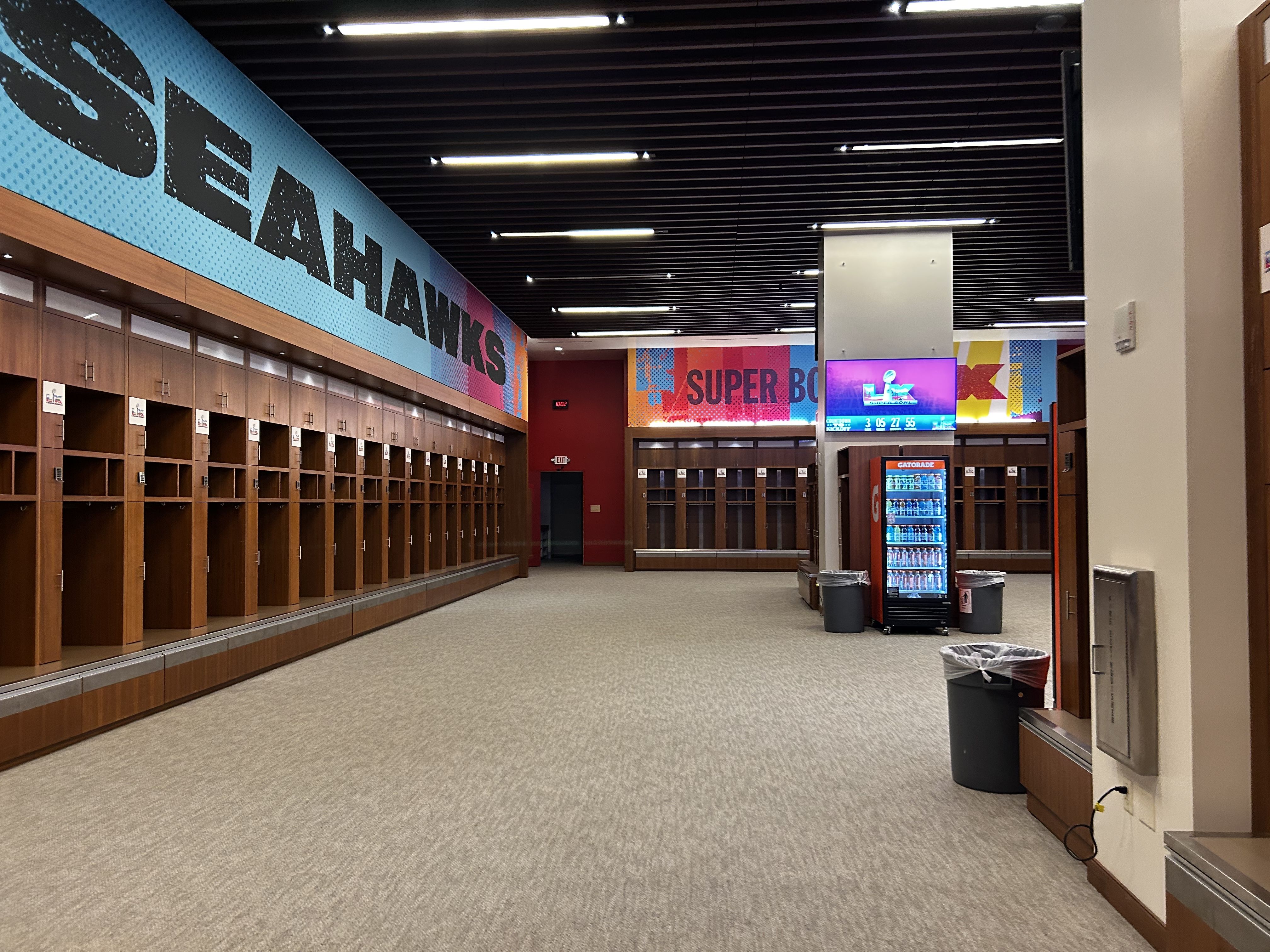
State of play: Every NFL game requires roughly 30 medical professionals on site. These include team doctors and athletic trainers, but also emergency response physicians, airway specialists and independent neurotrauma consultants, NFL chief medical officer Allen Sills told reporters during a tour of Levi's Stadium Thursday.
- Athletic trainers serve as spotters in video playback booths overlooking the stadium, while technicians support them down on the sidelines.
- The medical staff are all trained to treat football players for specific issues — airway doctors practice inserting a tube through uniforms, for instance, and CPR is performed on mannequins in gear.
Behind the scenes: The infamous blue tent comes into play when a blow to the head or neck results in injury behavior, such as shaking the head repeatedly, stumbling or looking dazed.
- The player is herded into the tent — which easily pops up and collapses — for private sideline concussion evaluations conducted by a team doctor and independent neurotrauma consultant.
- If they can't reach a consensus, they tend to go with the conservative diagnosis and consider him concussed, according to Sills.
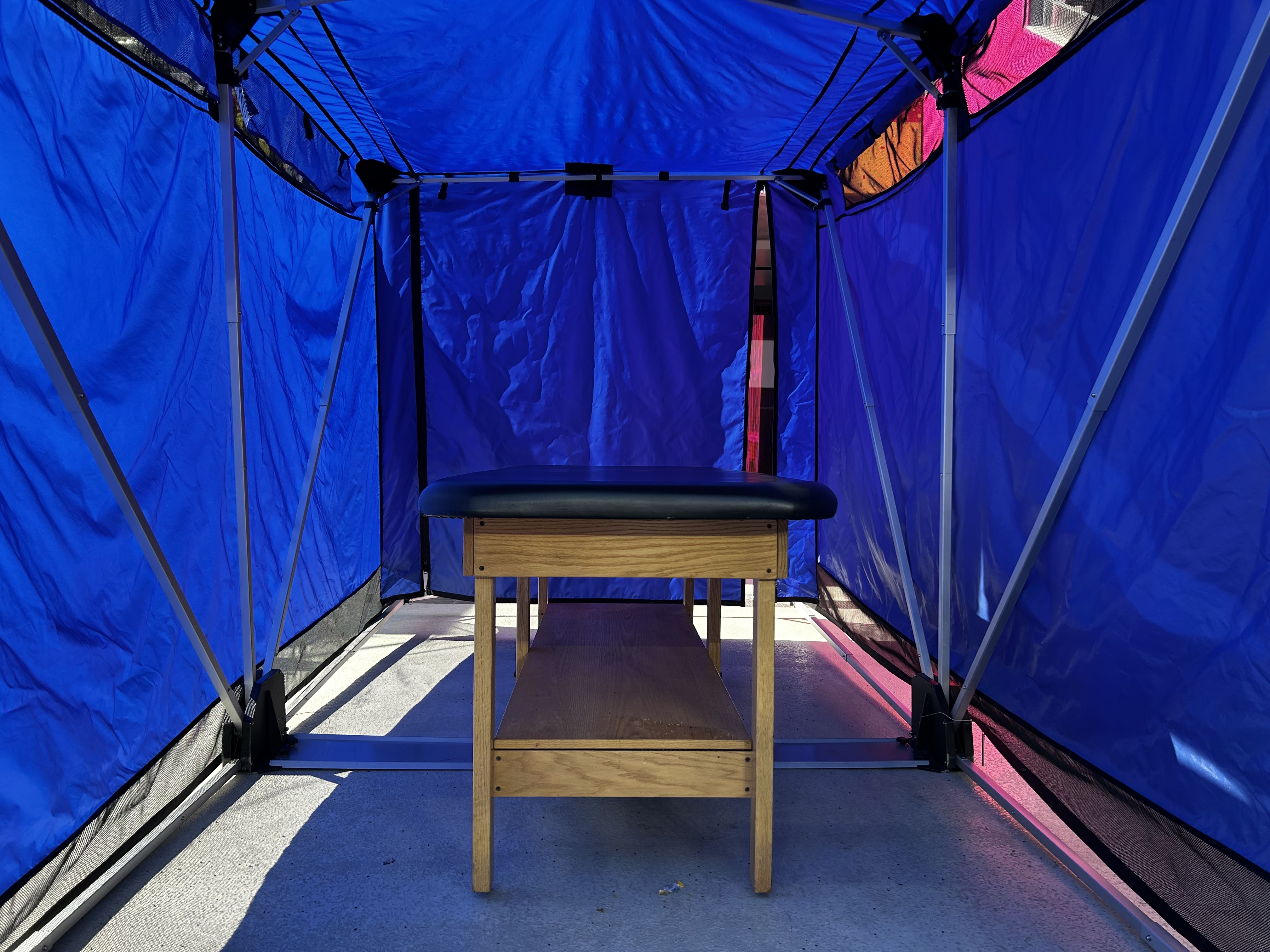
Pro tip: The tent is used for all types of injuries, but if you see a player going into it with someone wearing a red hat, that's a concussion evaluation "100% of the time," Sills said.
- If the player is cleared, they're allowed to return to the game but must complete a mandatory evaluation 24 hours later.
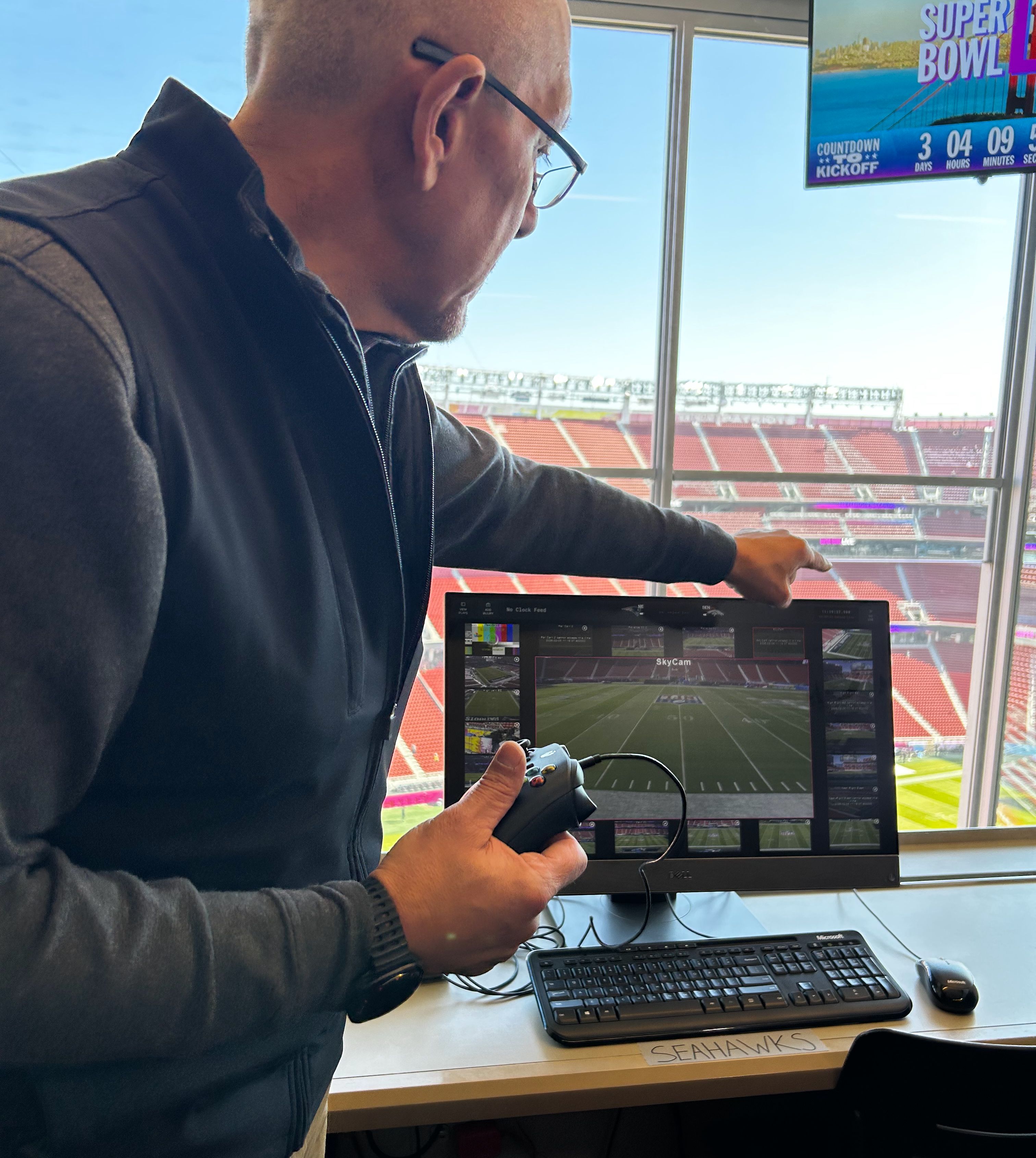
Inside the room: The spotters' booth in the stadium's upper suites uses the computer vision system Hawk-Eye to access every camera in the stadium. Spotters work in tandem with video technicians to make calls on medical timeouts.
- "It's not just one person now that's responsible for seeing everything," Sills noted.
Yes, but: A 2023 study found that cumulative force to the head — not diagnosed concussions — is the best predictor of future brain disease such as chronic traumatic encephalopathy (CTE).
- Focusing only on concussions may miss the point of how harmful an accumulation of such impacts can be, the study's authors wrote.
Between the lines: While league officials have worked with the NFL Players Association (NFLPA) over the years to develop strict protocols for medical evaluations, NFLPA leaders have said more can be done.
- The union has advocated for the league to provide natural grass surfaces for all NFL stadiums (about half are artificial turf), saying natural grass causes less wear and tear on the body over time.
What's next: The NFL is considering using video review to evaluate penalties for player safety-related violations overlooked by officials.