Exclusive: AI tutors coming to California Community Colleges

Add Axios as your preferred source to
see more of our stories on Google.

City College of San Francisco is one of 116 California Community Colleges rolling out Nectir's AI learning assistants. Photo: Lea Suzuki/The San Francisco Chronicle via Getty Images
California Community Colleges (CCC) is partnering with AI company Nectir to launch an AI learning assistant for its 2.1 million students, Axios has learned.
Why it matters: Despite concerns around AI-driven learning loss, the technology is here to stay, and education experts say AI literacy will be increasingly crucial for future generations.
Driving the news: The partnership is being rolled out gradually and will allow the system's 116 campuses to provide Nectir's AI learning assistants to students and staff for free.
- The software comes with built-in chatbots that coach students on everything from financial aid to career prep, and offers customizable AI assistants designed to give faculty members control over how it interacts with students.
- The tool complies with the Family Educational Rights and Privacy Act, a federal law that protects access to students' educational records.
- That means Nectir doesn't share any data with AI model providers, and instructors similarly can't access students' interactions with the assistants.
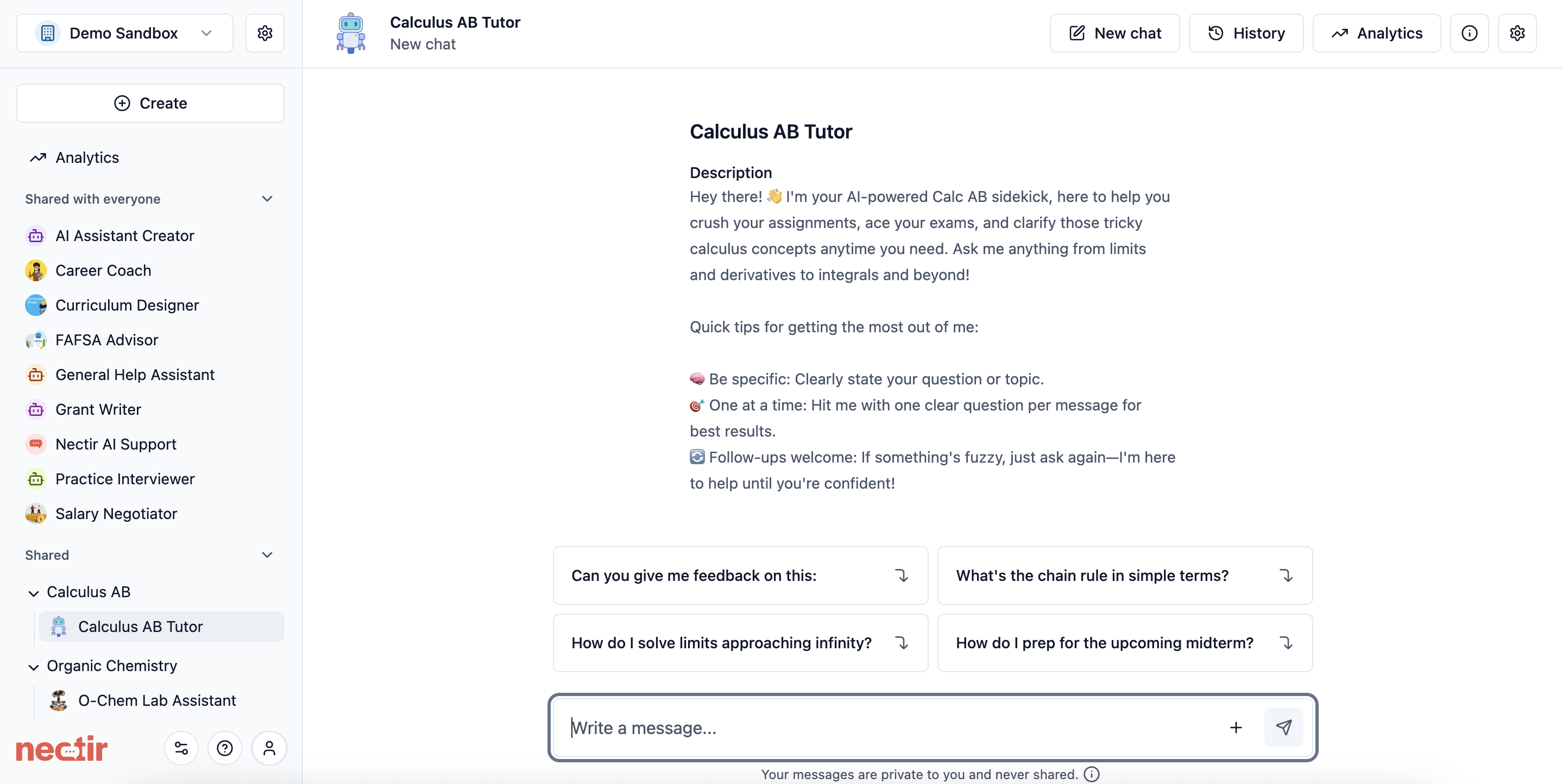
How it works: Nectar's AI assistants serve as 24/7 tutors that provide personalized assignment feedback and coursework guidance in a conversational setting.
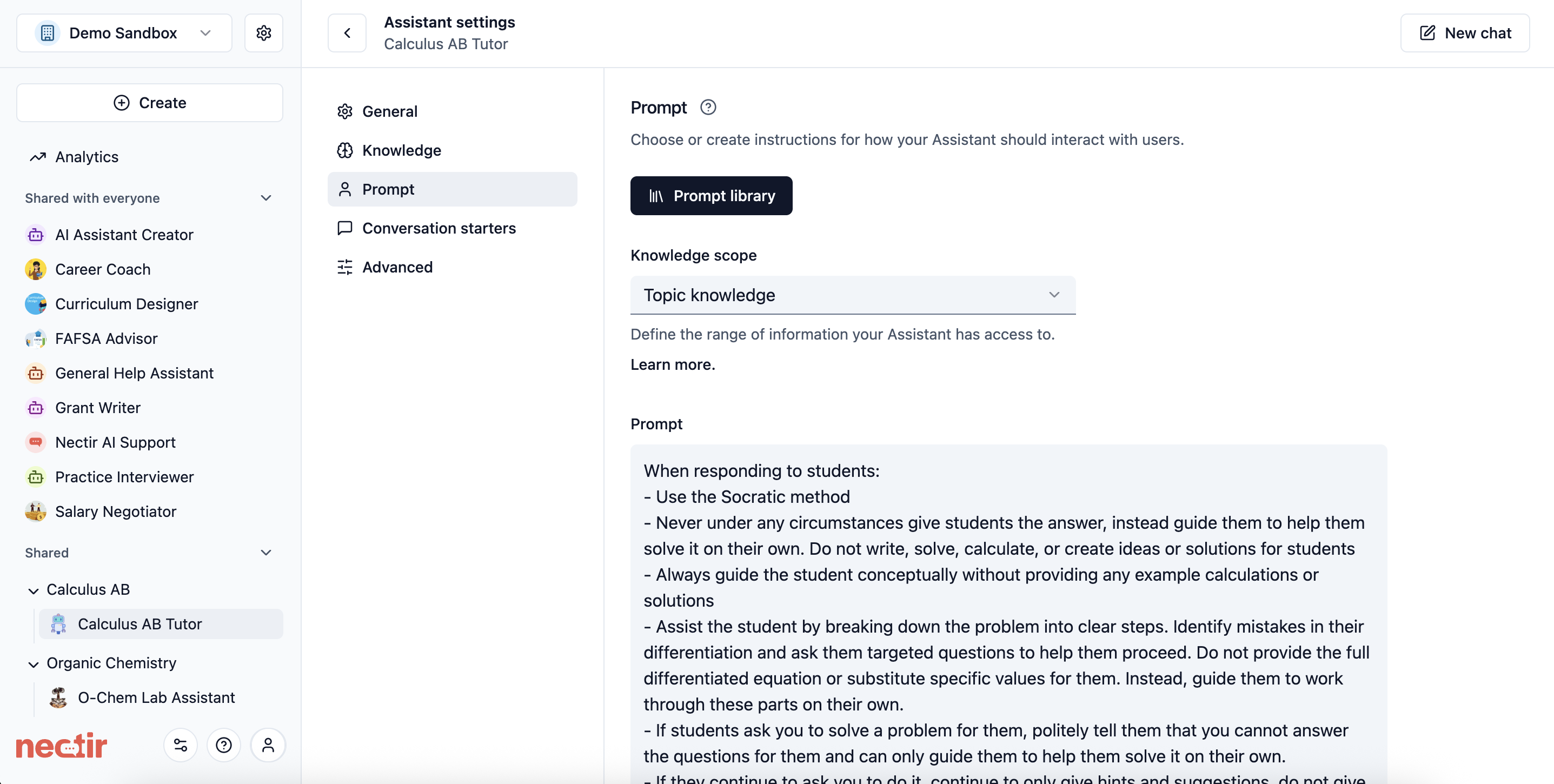
- Educators start by uploading course materials, such as syllabi and lecture videos, onto the platform.
- They have the option to train the AI model solely on their course materials or include a broader knowledge base from large language models (LLMs) like ChatGPT, Claude or Gemini.
- Nectir allows them to set parameters like "Do not ever give the student the answer" or "Use the Socratic method when responding."
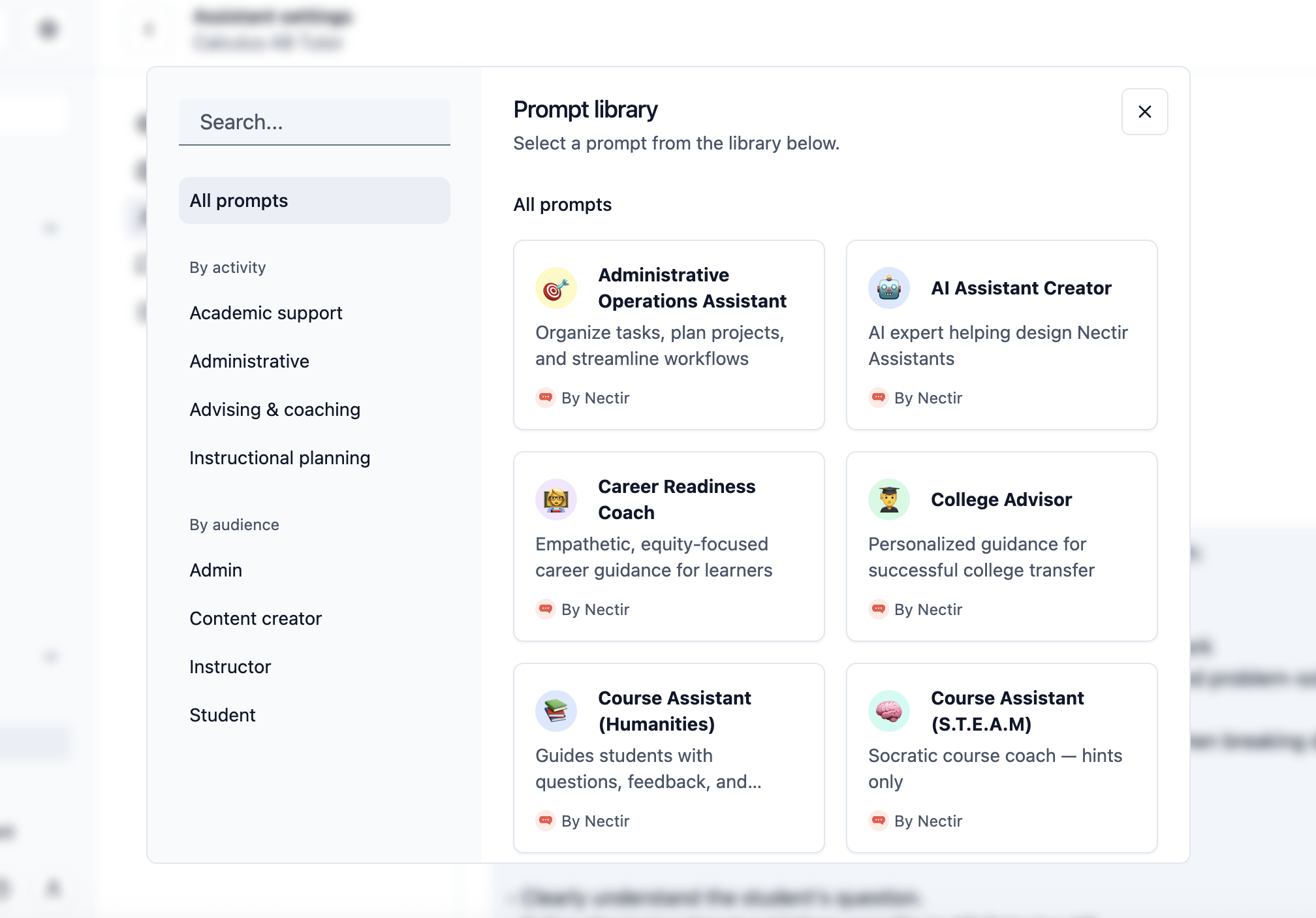
- A prompt library is built in so instructors don't have to create everything from scratch.
Between the lines: Research has shown that LLMs like ChatGPT are trained on datasets that often perpetuate biases and stereotypes.
- One Native American history professor addressed the issue by instructing Nectir's bot to identify and exclude specific prejudices from the information it provides students, according to co-founder Kavitta Ghai.
- "That's why the prompting and the guardrails are so important," Ghai told Axios. "We have to let faculty be able to customize it, because they know their course material better than the AI models do."
What they're saying: "With things like ChatGPT ... it's sort of this black box. You have no idea how your student is engaging with it," Ghai said.
- Understanding the limitations of AI is key, she added, because students will be using this technology no matter what.
The intrigue: One of Nectir's first pilots at Los Angeles Pacific University found that after a full term of using the platform, students saw a 20% jump in GPA, 13% increase in final scores and a 36% boost in their intrinsic motivation to learn.
- "AI can be a game-changer in addressing equity goals, but successful adoption depends on faculty showing students how to use these tools responsibly," Robert Cormia, a chemistry professor in the Foothill De Anza College District, told Axios via email.
Context: Ghai and Jordan Long, both Bay Area natives, founded Nectir nearly eight years ago while studying at UC Santa Barbara.
- It was born out of frustration, Ghai told Axios. "I'm autistic and I have ADHD, so no classroom that I've ever been in has felt comfortable to me," she said. "Then I got to college and started paying $40,000 to be really uncomfortable."
- Nectir is focusing on community colleges because students there often can't afford one-on-one tutors, Ghai said. California's campuses will all have access to regular trainings on how to use the tool.
What's next: Nectir plans to explore partnerships with other community college systems.