California bill takes aim at Trump's masked ICE raids

Add Axios as your preferred source to
see more of our stories on Google.
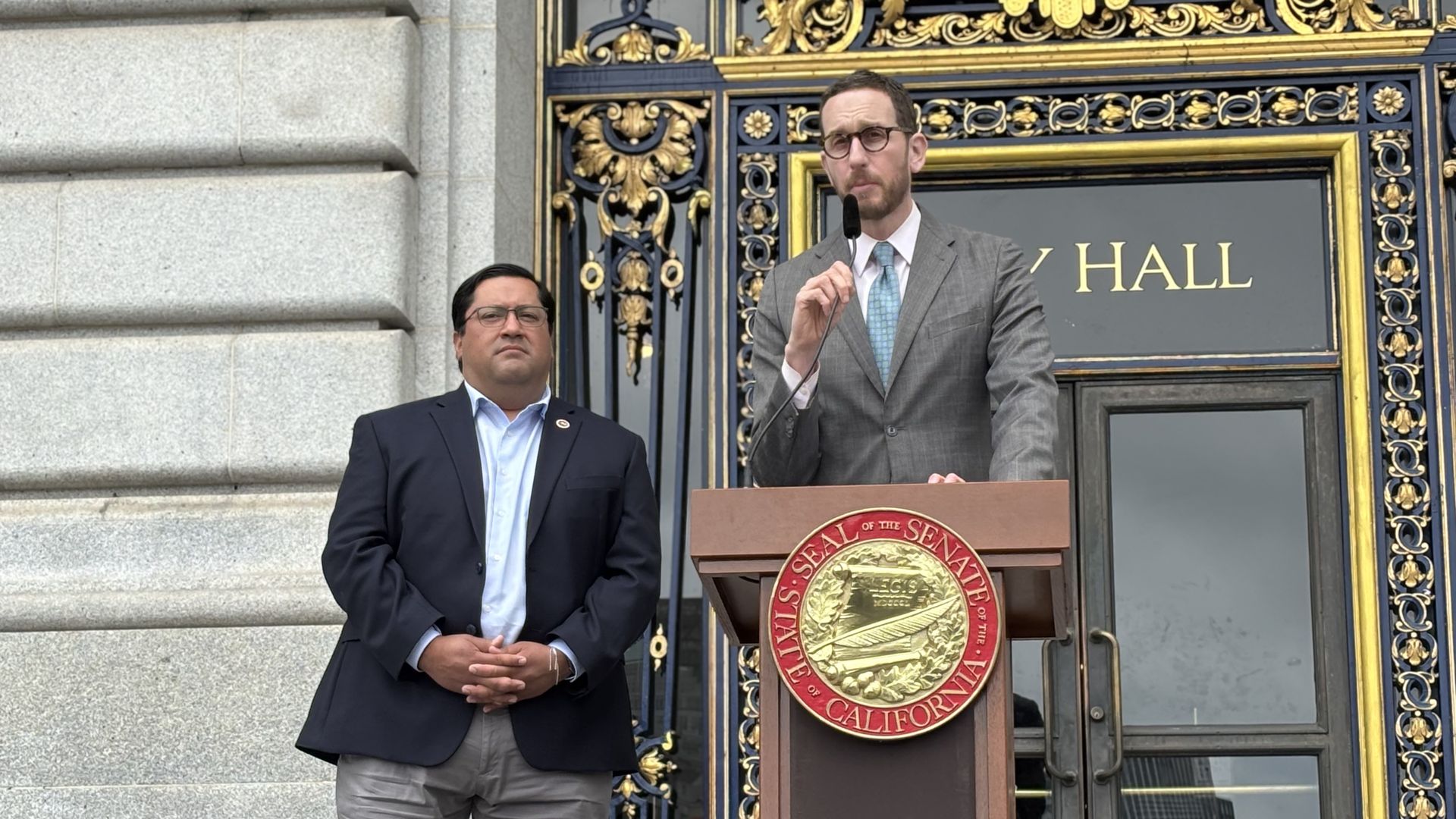
State Senators Scott Wiener (center) and Jesse Arreguín speak at a news conference at San Francisco City Hall. Photo: Nadia Lopez/Axios
California is challenging President Trump's masked immigration raids with a bill banning law enforcement officers from operating anonymously.
Why it matters: The proposal responds to a surge in U.S. Immigration and Customs Enforcement sweeps amid the federal administration's aggressive deportation push.
State of play: SB 627, introduced by state Senators Scott Wiener (D-San Francisco) and Jesse Arreguín (D- Oakland) on Monday, would require local, state and federal officers in California to reveal their identities — via nametags, badge numbers or other visible markers — and prohibit face coverings.
What they're saying: "They're grabbing people off of our streets and disappearing people and it is terrifying," Wiener said at a Monday press briefing.
- "This law is really rooted in two principles: to protect the safety of California's communities and ensure that there's transparency and accountability for law enforcement," added Arreguín.
Between the lines: The bill follows reports of federal agents conducting masked raids in cities like San Francisco, Los Angeles and San Diego, often without disclosing their agency or purpose.
- Violations would be criminalized as a misdemeanor.
Yes, but: SWAT teams and officers wearing medical or smoke-protection masks under health or emergency protocols would be exempt, as would military personnel such as the National Guard troops deployed in Los Angeles. Law enforcement contractors must comply.
The other side: The bill could very likely face opposition from law enforcement and has already drawn the ire of some Republicans, including U.S. Justice Department attorney Harmeet Dhillon, who said that "states can't regulate what federal law enforcement wears."
Context: The bill aims to target instances of ICE officers dressed in plainclothes or police-labeled attire — actions that have misled the public, caused widespread fear and eroded trust between local police and communities in sanctuary cities, Wiener said.
- The new legislation also seeks to prevent impersonations.
The big picture: The measure comes as nationwide protests erupt over the administration's immigration agenda and tensions escalate between Trump and California's Democratic leaders.
The intrigue: Mayor Daniel Lurie, who's been reluctant to weigh in on Trump, did not respond to Axios' request for comment on whether he supports the legislation.
What's next: The bill is expected to be heard in committee within the next month. If passed, the law would go into effect in January.