The long haul gull: Hitching an 80-mile truck ride to find food

Add Axios as your preferred source to
see more of our stories on Google.
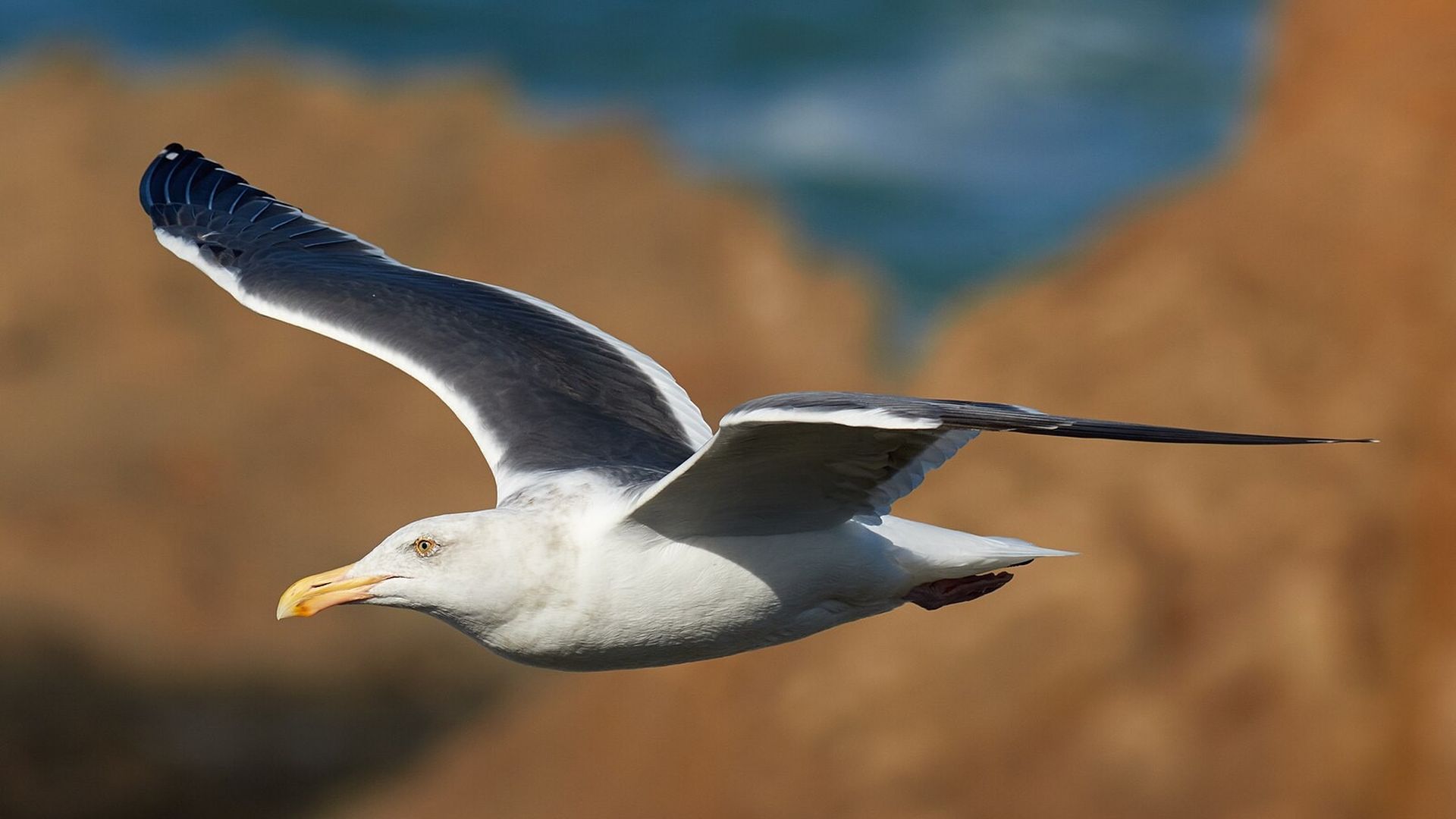
Courtesy of The Waterbird Society/ Frank Schulenburg
Sometimes, we could all use a ride — even the ones among us that fly.
State of play: In a quirky first, a GPS-tracked seagull was discovered hitching a ride on a long-haul garbage truck from a waste transfer station in San Francisco to an outdoor compost facility in the Central Valley, according to a recent study published by The Waterbird Society.
- As foragers, western gulls from the nearby Farallon Islands are known to travel towards San Francisco's beaches, landfills and recycling centers in search of food — an occurrence happening more often in recent years due climate-induced reductions in ocean prey.
Yes, but: This is the first time researchers observed a seagull using a vehicle for transportation — and twice in one week — to arrive at a predictable food source.
The intrigue: "It was surprising and comical, so much so that we wanted to look closely into this one individual's behavior to understand how this happened," Megan Cimino, a researcher at the Institute of Marine Sciences at UC Santa Cruz and lead author of the study, told Axios.
- One other possible explanation for the truck rides could be that the seagull got stuck in the truck while feeding on garbage scraps, though it remains unclear what the bird's intentions were, Cimino added.
Between the lines: Both times, the seagull rode in an 18-wheeler truck for at least an hour and a half for about 80 miles, crossing the San Francisco-Oakland Bay Bridge from the Recology Sunset Scavenger center in the city's Bayview district to arrive at Blossom Valley Organics near Modesto before flying back to its colony on the Farallons.
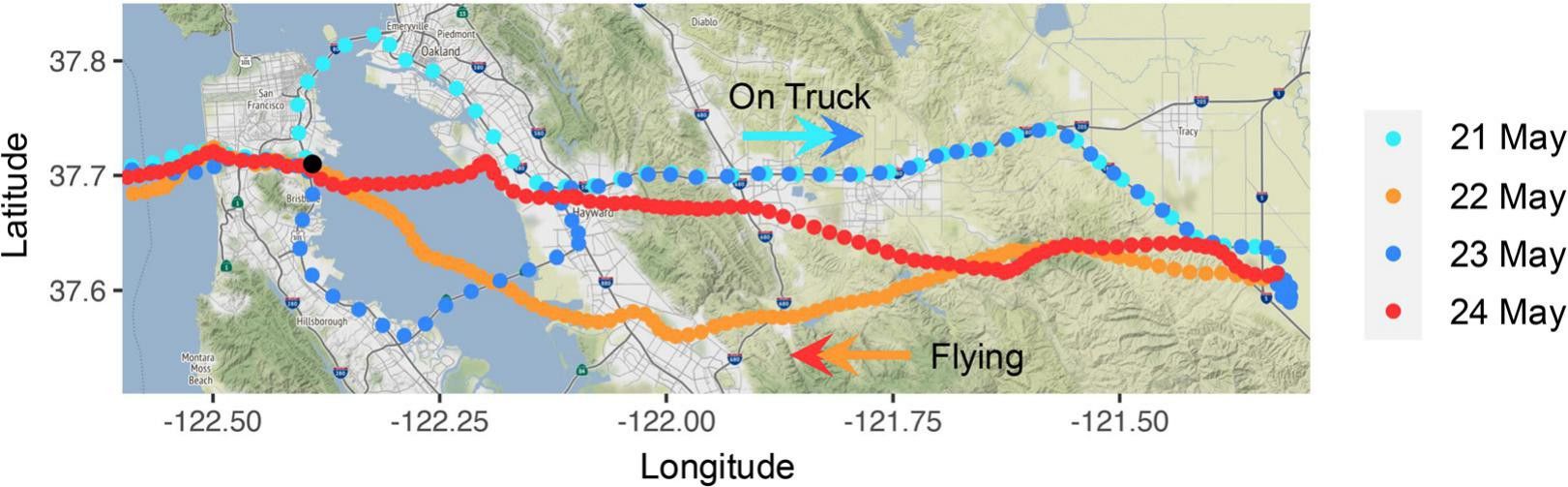
Stunning stat: These two foraging trips took an average of about 14 to 18 hours longer and were 59 to 80 miles farther from the colony than the other eight trips taken during the week-long tracking period, the study shows.
The bottom line: Though unusual, such behavior could become more common as climate-driven shifts cut into food supplies at sea and gulls learn how to adapt, the researchers note.
Editor's note: This story has been updated with additional comments from Megan Cimino.