State Farm's Titanic-like financial crisis, explained

Add Axios as your preferred source to
see more of our stories on Google.
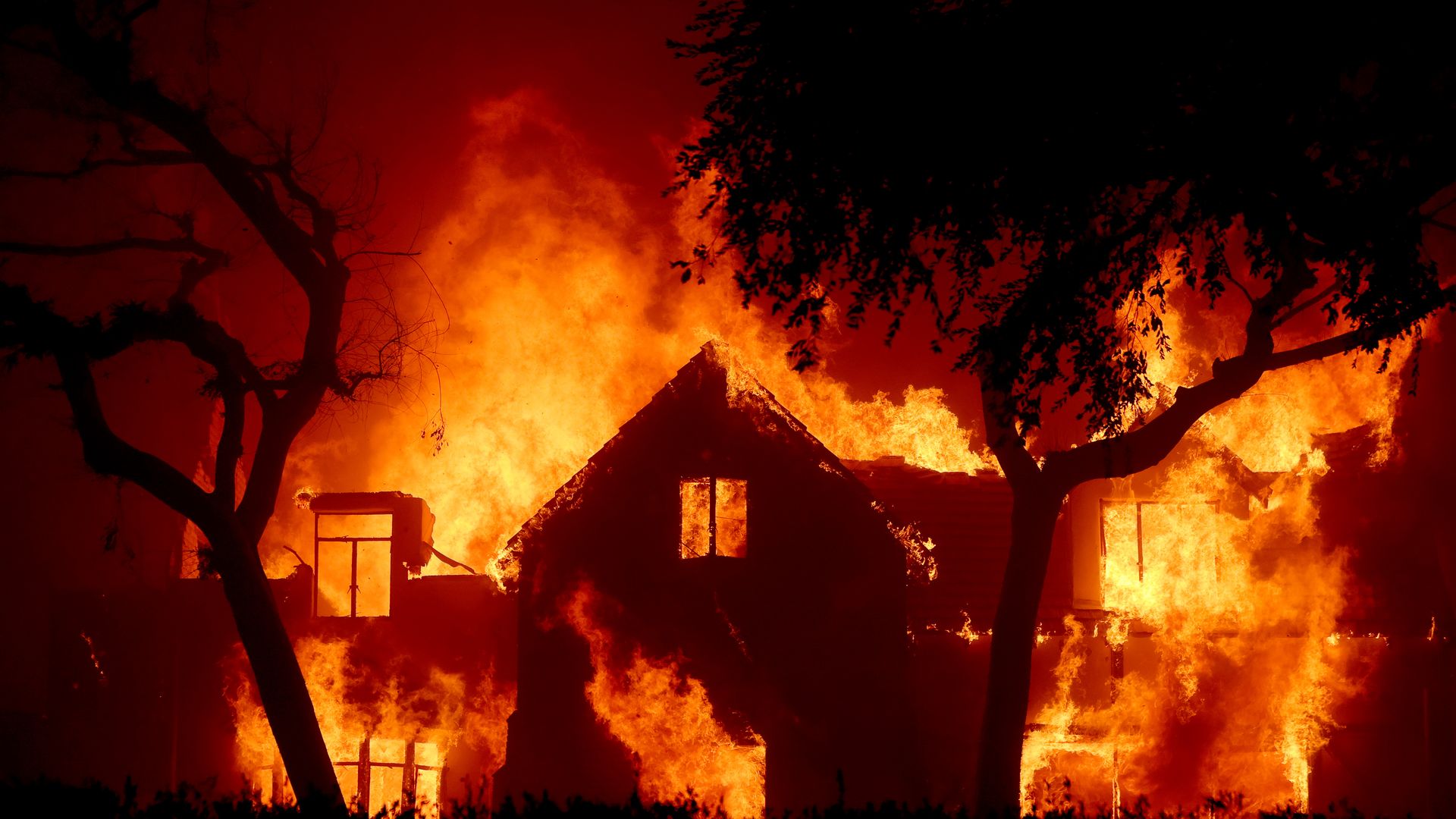
Fire engulfs a home as the Eaton Fire moves through Altadena. Photo: by Justin Sullivan/Getty Images
State Farm, California's largest home insurer, is facing an unprecedented financial crisis following the destructive blazes in Los Angeles, which cost the company $7.6 billion in losses.
Why it matters: Though the state's insurance commissioner has approved major reforms to expand coverage options and account for the rising cost of wildfires, the rollout has been slow as the state reviews how to implement the new regulations.
How it works: The reforms allow companies like State Farm to use forward-looking models instead of historical data and pass down reinsurance costs to customers.
- The new catastrophe models must go through an approval process before insurers can base rates on them.
State of play: State Farm, which has already paid $1.75 billion on 9,500 claims from the fires as of March, is seeking a 17% emergency rate increase for homeowners — down from 22%, its previous request.
- The insurer also wants to raise premiums by 15% for renters and 38% for rental dwellings. It's asking for $400 million in funding from its parent company if the rate hike is approved.
Threat level: The state's Department of Insurance has supported the company's request — pending further evidence — even equating State Farm to the Titanic in a recent hearing.
What they're saying: The insurer's strained financial outlook poses no surprise to many industry experts, who have said that California has long needed to make reforms to its outdated regulations, said Janet Ruiz, a spokesperson at the Insurance Information Institute.
- If State Farm doesn't adjust rates, the company risks being downgraded by rating bureaus, affecting its ability to meet mortgage requirements, Ruiz said.
Friction point: Consumer Watchdog, a consumer advocacy group, has been fighting to stop the rate increase, which executive director Carmen Balber said could "unfairly burden consumers without resolving the insurer's financial issues."
The big picture: Climate change has made California more vulnerable to wildfires, a risk that has led many insurers, including State Farm, to drop thousands of policies or pull out of the market altogether.
- The FAIR Plan, the state's insurer of last resort, is absorbing that demand — offering some protection for homeowners at the expense of its own financial condition.
- The LA fires further strained the state's volatile insurance market as one of the costliest wildfire events in U.S. history, with estimated damages reaching up to $131 billion.
Between the lines: Homeowners are also shouldering the costs after the FAIR plan requested a $1 billion bailout to keep it solvent. It will be collecting that money from private insurance companies that are allowed to pass on half of that cost to its policyholders.
- It's yet another toll on the consumer, Balber said, adding that it sets a bad precedent if companies can continue to pass down assessment costs in the future.
What we're watching: The advocacy group is suing to prevent the consumer surcharge — a move that has triggered staunch opposition from the industry.
- Denni Ritter, a spokesperson at the American Property Casualty Association, called the lawsuit "a reckless and self-serving stunt that threatens to make California's insurance crisis even worse."
What's next: The judge in the State Farm case is expected to make a decision in the coming weeks on the premium increase before going to the insurance commissioner for final approval.
- If granted, California consumers could see their policies increase as soon as June.
- State Farm did not respond to Axios' requests for comment.