Documentary exposes gap between Bay Area's ideals and reality in housing

Add Axios as your preferred source to
see more of our stories on Google.
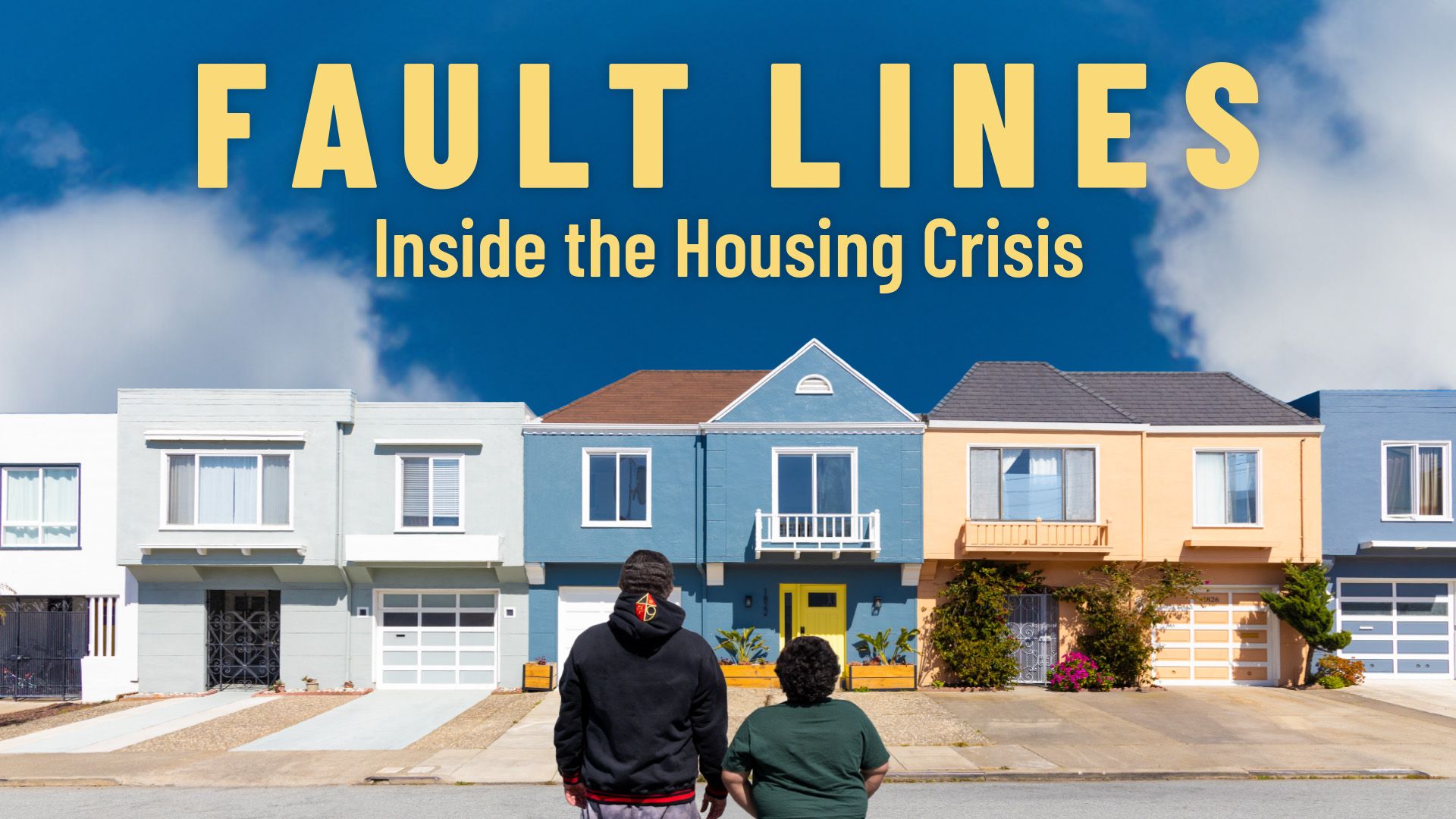
Photo courtesy of "Fault Lines"
A new documentary puts the spotlight on the Bay Area's housing crisis and calls on progressive cities like San Francisco to live up to their ideals.
Why it matters: Housing affordability remains a severe problem in this region while chronic homelessness has increased as progress is stalled by policy debates and bureaucracy.
Driving the news: "Fault Lines," directed by Nate Houghteling and Yoav Attias, explores the root causes of California's housing shortage while positioning San Francisco as a cautionary tale for the rest of the nation.
- The 80-minute film follows three primary storylines: a single father seeking stable housing in an overwhelmed system, an activist fighting for a 2022 ballot initiative to fast-track construction and a neighborhood group blocking new development.
- It also features interviews with former San Francisco Mayor London Breed and state Sen. Scott Wiener (D-San Francisco).
What they're saying: "The housing crisis can be this abstract thing for people that's hard to parse apart," Attias told Axios. "When there is that kind of confusion ... there can be a kind of helplessness that sets in."
- "What we tried to do is distill it down to its primary pieces, make it digestible for people and give them some sense that there are solutions ... within reach."
Zoom in: Houghteling and Attias began making the film in 2020, wanting to weave together expert voices with the lived experience of people caught in the crosshairs to give audiences a better understanding of where we're headed.
Case in point: Carlos Rojas, the father in the film, is a "very representative story of homelessness in San Francisco," Houghteling told Axios.
- A native San Franciscan who lost his job and relationship before getting kicked out of his home, Rojas fell into homelessness after couch surfing for two months.
- Despite concerns about drug markets attracting visitors and driving homelessness, research shows Rojas' situation is reflective of the vast majority of people without shelter, said Houghteling, who grew up in Oakland and now lives in San Francisco.
The intrigue: The directors say they were careful to not vilify the neighborhood group blocking development.
- "In this NIMBY coalition, it's not all people with the exact same viewpoints," Houghteling said. "There are some people that are like, 'Kill this housing project.' Some are like, 'No, we just want to change it a little bit.'"
- The more they got attacked or ignored, however, "the more siege mentality set in," pushing them into the extreme, he noted.
- "Our hope is that showing the human side of the housing crisis ... will allow for that nuance to come through and provide opportunities for more common ground," he said.
Reality check: "The underlying problem is just the math doesn't work out," according to Houghteling. "There aren't enough beds, supportive housing [and] homes for people who need them at that socioeconomic level."
- People first need to be more open to building more multi-family housing and apartment buildings, Attias noted. "Adding that kind of supply is really the only way that we're going to see any kind of movement."
The big picture: The documentary premiered at the Big Sky Film Festival in February and is now holding screenings in select cities across the country.
- GLIDE's Center for Social Justice hosted a screening Thursday that included a panel discussion with Houghteling, Wiener and GLIDE Memorial Church CEO Gina Fromer.
- Most of the Board of Supervisors has seen the film, according to the directors.
- "It's not a hopeless problem," Attias added. "It's just a matter of putting the pressure at the right places."
What's next: "Fault Lines" will be released on Amazon nationwide on April 1.