San Francisco is growing despite leading U.S. in population losses


Add Axios as your preferred source to
see more of our stories on Google.

Immigrants are driving growth in the Bay Area, but not yet enough to make up for pandemic-era population losses, according to new U.S. Census Bureau data.
Why it matters: An exodus of city dwellers rocked many U.S. metros like San Francisco during the COVID-19 pandemic, but most are clawing back residents (and their productivity, creativity and tax dollars), driven largely by foreign immigration.
Driving the news: The number of people living in U.S. metro areas increased by almost 3.2 million from 2023 to 2024 — a gain of about 1.1% — the Census Bureau said last week.
- By comparison, the total U.S. population rose 1% during that time.
Zoom in: The San Francisco-Oakland-Fremont metropolitan area has seen modest gains between April 2020 to July of last year, fueled largely by international migration.
The intrigue: The number of people moving to the Bay Area from abroad is making up for losses due to domestic migration.
Yes, but: The metro area's population as of last July was still down 2.1% from when the pandemic began in 2020 — the largest percentage drop among the nation's most populous areas.
Between the lines: Although the population grew from 2023 to 2024, those numbers are still down relative to 2020.
- The San Francisco metro area's population increased by about 0.9% between July 2023 and July 2024 — equivalent to 39,000 or so residents over the course of that year — to a total of 4.65 million people.
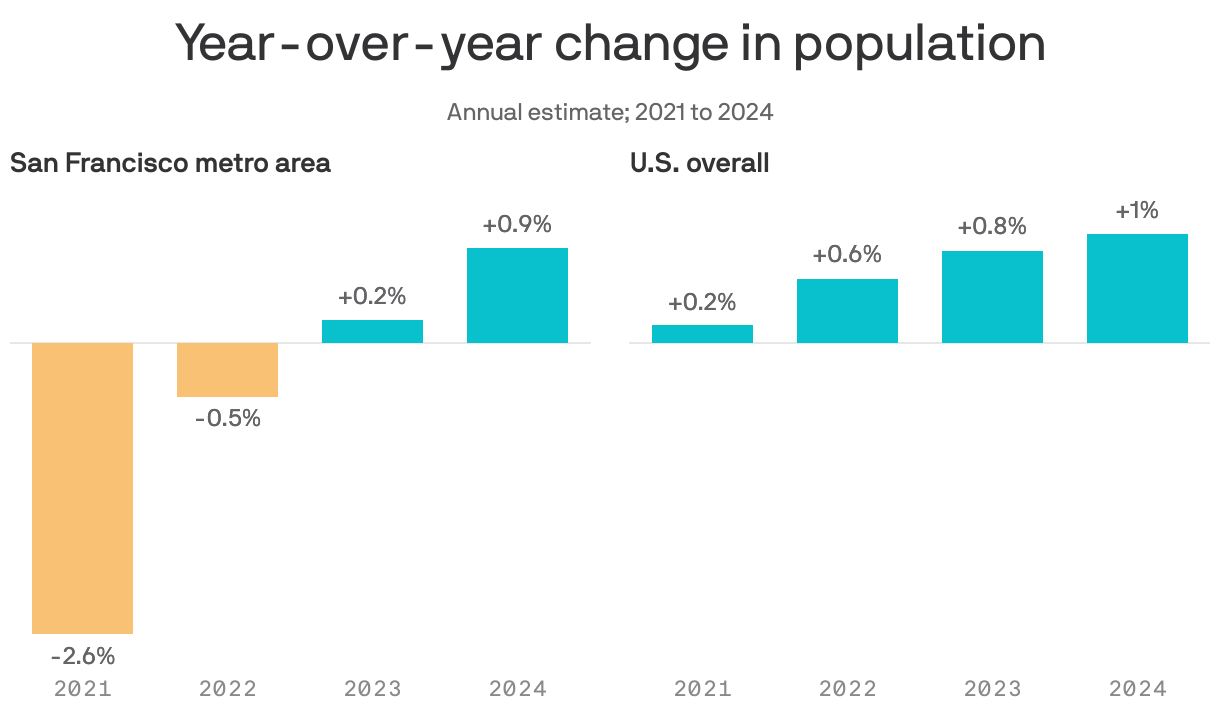
By the numbers: Domestic migration decreased the metro area's population by about 326,600 people from April 1, 2020, to July 1, 2024, though the population grew by about 179,000 in international migrants over that same time period — amounting to a net loss of around 147,000 people.
- Natural change — that is, births minus deaths during that time — added about 48,000 more people.
The big picture: The exodus of people from San Francisco and much of the surrounding region during the pandemic was driven by the rise in remote-work, mass layoffs and high cost of living.
- Though the area's modest growth is occurring at a slower pace relative to other metros, it's an indicator that the region is making a recovery despite remaining below pre-pandemic population levels.
The bottom line: The bureau bases these estimates on current data for births, deaths and migration, all of which affect the overall population.
What's next: Demographers and other researchers will closely monitor how Trump administration policies might affect immigration levels.