How SF has designed its emergency response operations

Add Axios as your preferred source to
see more of our stories on Google.
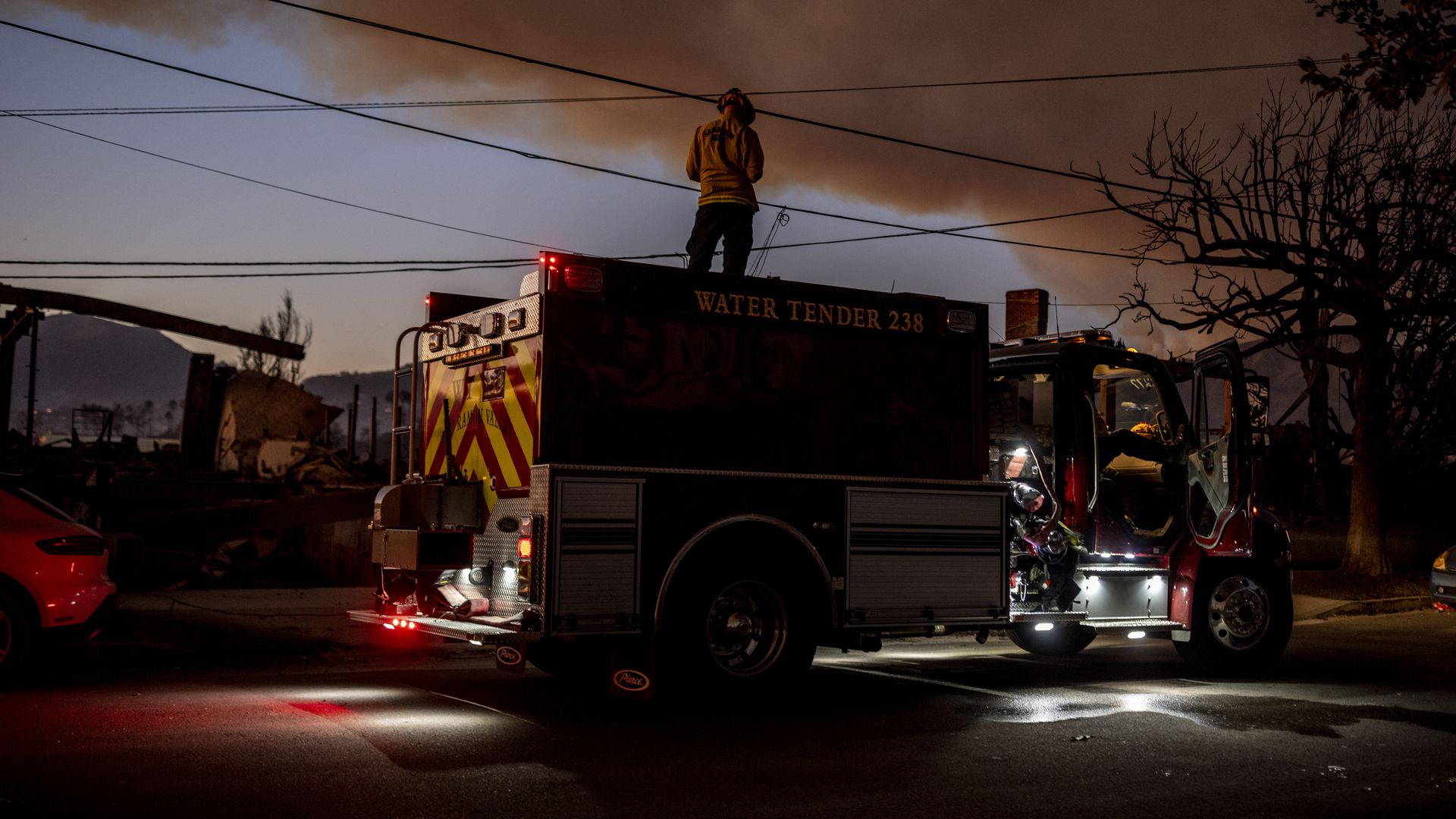
Firefighters respond to the Palisades Fire in on Jan. 10. Photo: Stephen Lam/San Francisco Chronicle via Getty Images
The ongoing Los Angeles wild fires have caused San Francisco to ask itself: How well are the city and its residents prepared to deal with a similar sized emergency?
Why it matters: Disaster management has grown increasingly complex over the last two decades as extreme weather and climate disasters become more frequent and intense, according to Mary Ellen Carroll, executive director of the San Francisco Department of Emergency Management.
State of play: Carroll was appointed to her role about six years ago, but says the job is now "completely different." The pace of the "acceleration of scope and type and severity of disasters is head spinning," she told Axios.
- That's forced people in her line of work to contend with the possibility of multiple disasters happening across the country at the same time and their impact on available resources and funding.
- "We used to just worry about the occasional storm, a potential earthquake, maybe even a terrorist event," she added. "Now we have 25 other things that are on our list, and that list grows longer every year."
- The threat of misinformation is also increasingly on their radar, noted Carroll. "Not only does it put people's safety [at risk] because they hear things that are not true, but it also pulls resources because you have to deal with that misinformation."
By the numbers: Carroll's team coordinates operations with several city agencies, including San Francisco's Fire Department (SFFD), to dispatch first responders and assess situational awareness in cases of disaster. SFFD employs about 1,800 uniformed staff; more than 300 firefighters are on duty daily.
- San Francisco's emergency firefighting water system consists of a 135-mile high-pressure pipeline network and allows fireboats to inject bay water into the city's pipelines.
- SFFD also operates 200 cisterns across the city — each containing about 75,000 gallons of water — and two pump stations that can take in water from nearby reservoirs ranging from San Mateo County to Hetch Hetchy.
- "That's 12 million gallons of water sitting on hills in the city for immediate use," Darius Luttropp, SFFD's deputy chief of operations, told Axios.
Yes, but: A 2019 civil grand jury report found that the fire department's emergency firefighting water system, which had been built after the 1906 earthquake, primarily covers northern and eastern city neighborhoods, leaving other areas more vulnerable.
- There have also been concerns about firefighters' response time, which from January 2022 to January 2025 failed to meet its department-set criteria 27% of the time, and the ongoing shortage of 911 dispatchers.
The latest: In line with recommendations from the 2019 report, SFFD built its potable emergency firefighting water system into the Outer Sunset and is currently planning the expansion process into the Richmond.
What they're saying: "When there's an event of that magnitude, a 911 call will not necessarily bring a fire engine that day," Luttropp said, referring to the L.A. fires. "So we need to kind of institutionalize some better disaster preparedness."
What's next: "They're seeing all sides of the current disaster," he added when asked about the roughly 40 SFFD personnel aiding efforts in southern California. "When they return, we'll have longer conversations about the things they saw."
Go deeper: How to help victims of the Los Angeles fires