Why San Francisco's home owners face insurance troubles

Add Axios as your preferred source to
see more of our stories on Google.
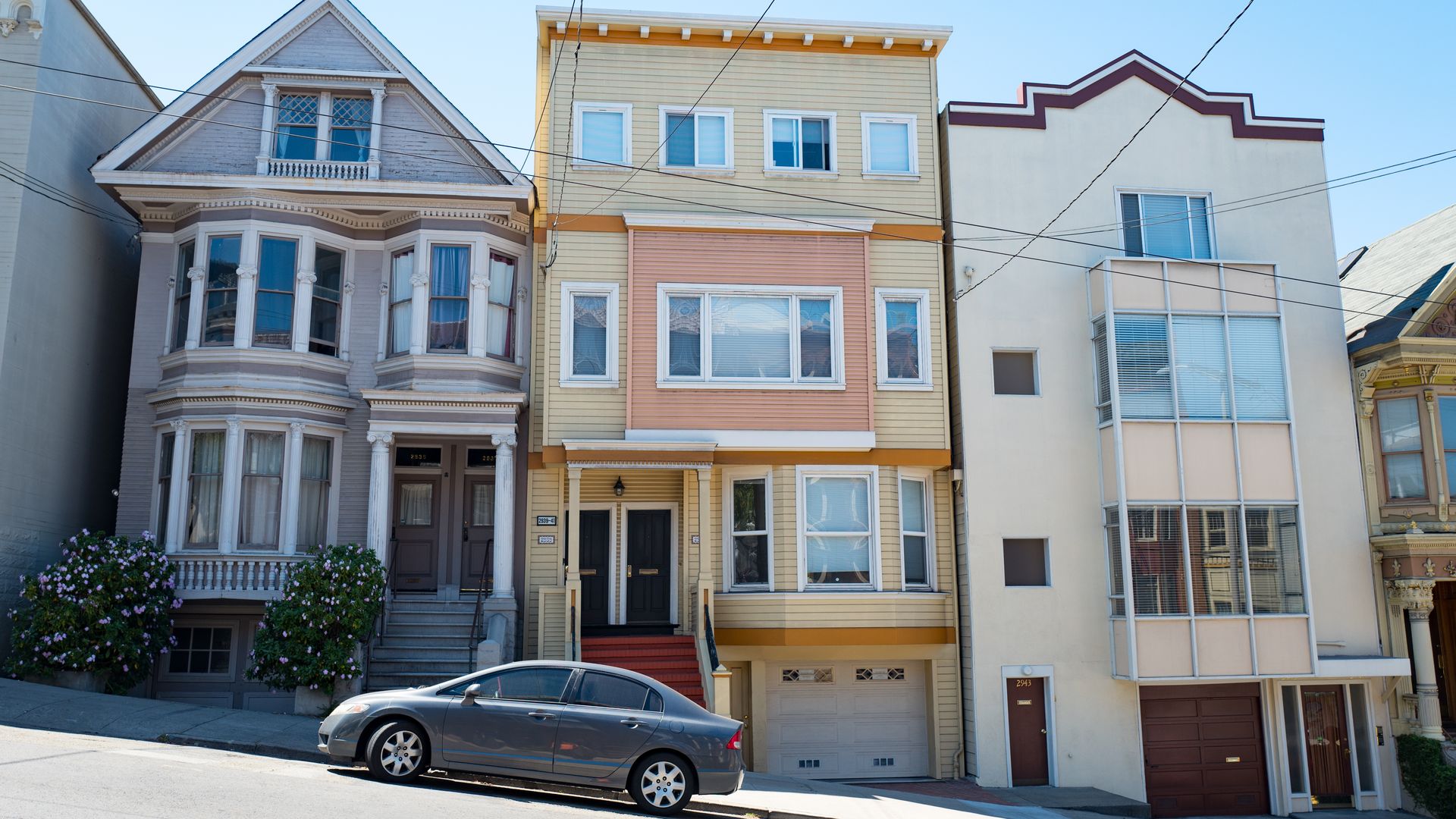
Homes in San Francisco's Cow Hollow neighborhood are pictured. Photo via Smith Collection/Gado/Getty Images
San Francisco's aging houses have become more difficult to insure amid a statewide crisis that's upended the home insurance market.
Why it matters: Despite having lower wildfire risk, homeowners in the city are still being dropped by their carriers if they fail to make substantial and costly renovations to their homes.
What they're saying: Older homes are often harder and costlier to insure because of the risks posed by outdated electrical systems and roofs, according to Jerry Becerra, president of Bay Area-based Barbary Insurance Brokerage.
By the numbers: As of 2023, about 44% of the homes in the city were constructed prior to 1940, according to U.S. Census Bureau data.
Between the lines: In addition to maintenance issues, other factors have also led to an uptick of San Francisco homeowners being dropped by their insurance carrier.
- The city's concentration of high-value properties, which often amount to more than $1 million to rebuild, has led to capacity constraints for insurers.
- Densely-built areas and semi-brush zones near Golden Gate Park are considered fire risks by insurers, even though they may not be traditionally thought of as wildfire-prone, Becerra noted.
Catch up quick: Insurance companies have become increasingly wary about their risk exposure after suffering major losses in recent years due to a spate of destructive wildfires that wiped out a decade worth of profits.
- Since 2022, seven of the 12 largest insurers have reduced or restricted coverage in California.
- Several insurers have specifically stopped offering policies for buildings constructed before a certain year. Farmers Insurance issued non-renewals for mulit-unit structures, including townhomes, apartments and condominiums built before 1925, while Safeco stopped writing new coverage for homes built before 1976 with older electrical wiring.
The latest: The devastating fires in LA could further exacerbate the state's insurance problems.
- Some experts are predicting the fires could be the costliest in U.S. history as insured losses are projected to exceed $20 billion, according to a report released last week by JPMorgan Chase.
- The fires are expected to test the state's new reforms letting insurers raise rates that factor in future losses and reinsurance costs in exchange for offering more coverage in wildfire zones.
Yes, but: It's very likely insurance premiums will still go up to cover the ever-growing cost of risk– even for people who don't live in wildfire areas and as more insurance becomes available.
- In the meantime, many homeowners who were dropped may be forced to find a policy through the state insurer of last resort – the FAIR plan – or a surplus line carrier, an unregulated insurer that charges far more than a traditional policy.
The bottom line: "Rates will be higher than they were before, but they won't be the kind of rates that people are being gouged for in surplus line markets," Becerra said. "We are seeing fairly high rate increases from companies, but I'd take a 45% premium increase over a 300% increase any day."
Read more: California fires could worsen insurance woes