4,000 UCSF health care, research workers vote to go on strike

Add Axios as your preferred source to
see more of our stories on Google.
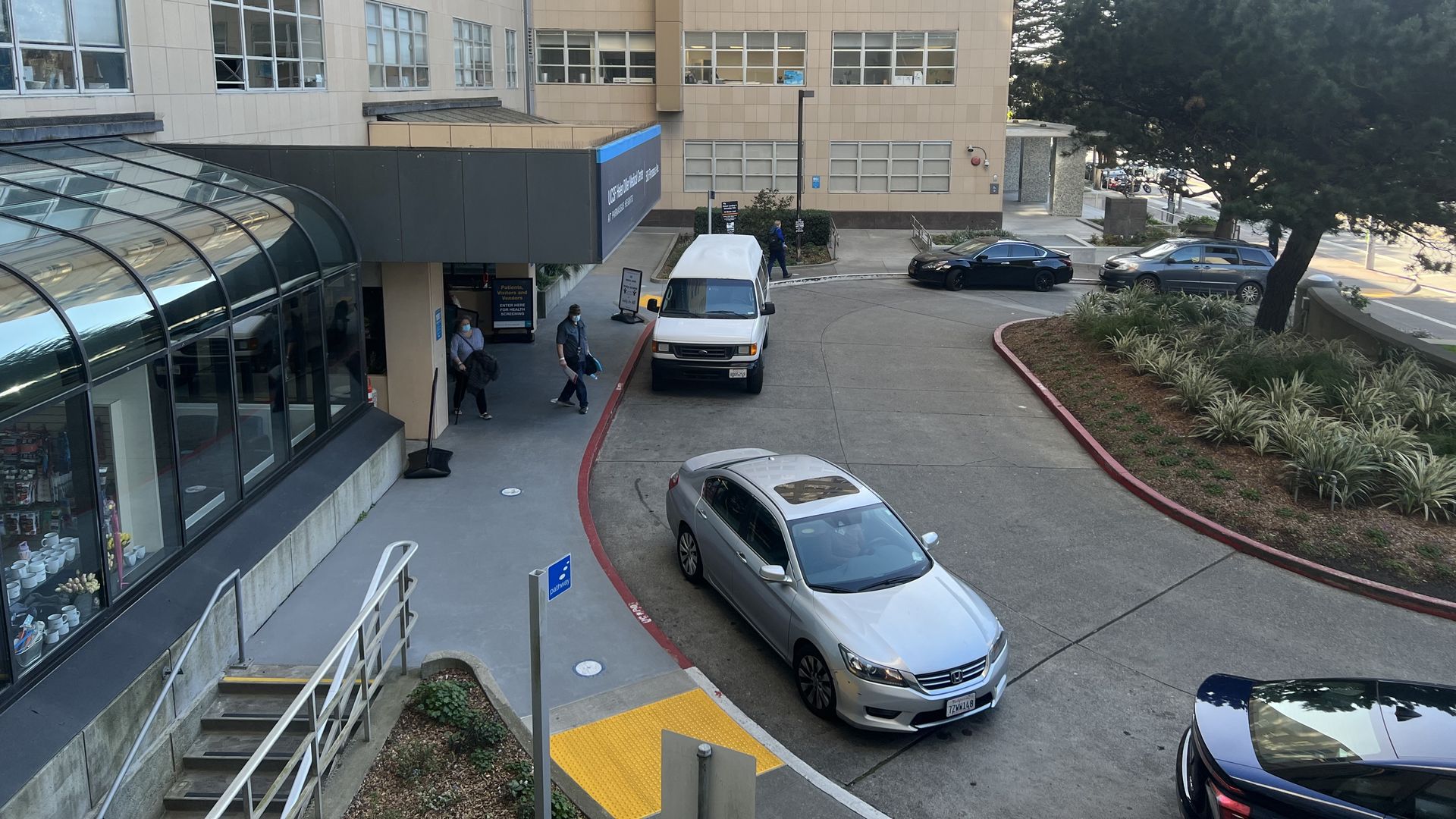
The University of California San Francisco (UCSF) medical center in San Francisco on March 16, 2022. Photo: Gado via Getty Images
Over 4,000 patient care, research and technical workers at the University of California San Francisco (UCSF) are set to go on strike over what they call unfair labor practices.
Why it matters: The pandemic led to a burnout crisis for the health care industry.
- That played out locally with the UC system, which saw a 54% turnover rate among health care workers over the last five years. That number shot up to 67% turnover among researchers, union members say.
Driving the news: The University Professional and Technical Employees (UPTE) CWA Local 9119 held a vote this week to authorize strike activity in response to the UC system's ongoing lack of transparency about its staffing crisis and the resulting impacts on patient care, union members tell Axios.
- Over 98% of union members, which range from physician assistants and pharmacists to clinical lab scientists and language interpreters, voted in favor.
Zoom in: The union is accusing UC management of neglecting their obligation to disclose critical information about systemwide vacancies and circumventing the contract bargaining process to "unilaterally increase" health care insurance costs.
- Tensions boiled over after UPTE filed charges of unfair labor practices. Their union contracts expired on Thursday.
What they're saying: The turnover has forced a lot of workers to shoulder responsibilities that aren't in their job description and stretch themselves thin to cover vacancies, UCSF staff research associate Chey Dean tells Axios.
- At the Institute for Neurodegenerative Diseases, where Dean works, the team that tests drug interactions with the brain has been cut in half with no expectation to hire, she said. "I can't help but imagine how much closer we could be to a [breakthrough] if we didn't have this recruitment and retention crisis."
Between the lines: The staffing shortage has also led to gaps in patient care, especially in cases where patients have a limited window to get treatment, UCSF physician assistant and UPTE bargaining team member Matt Stephen told Axios.
- "One of the refrains I hear from patients is, 'Hey Matt, it's great to see you but it also took 2-3 months to get an appointment,'" he said. "I have six weeks to treat you, and if I can't get you in with an accurate hearing test ... we pretty much have no shot at restoring your hearing."
Case in point: The average wait time at UCSF's emergency department is now 4 hours and 18 minutes compared to the California average of 3 hours and 28 minutes and the national average of 3 hours and 15 minutes for high-volume hospitals, per data from UPTE.
Yes, but: The union is hoping the strike authorization serves as a wake-up call for the UC system and that their next bargaining sessions will help avoid strike activity.
- "I can't stress highly enough that we do not want to go on strike ... but we are willing to take action if needed to maintain the ability to give our patients and our research the quality care that UCSF is known for," Dean said.
The other side: The UC system called UPTE's allegations "unfounded" in an emailed statement to Axios and said it has not seen or verified the turnover data cited by UPTE.
- The university recently passed an economic offer to provide 5% pay increases in 2025 and has offered expanded sick leave, health care subsidies and a process for equity requests, according to spokesperson Heather Hansen.
- "Beyond bargaining, if and when UPTE chooses to strike, the University is prepared to make every effort to ensure the critical operations ... continue at a level of excellence," Hansen added.