Our air quality score

Add Axios as your preferred source to
see more of our stories on Google.
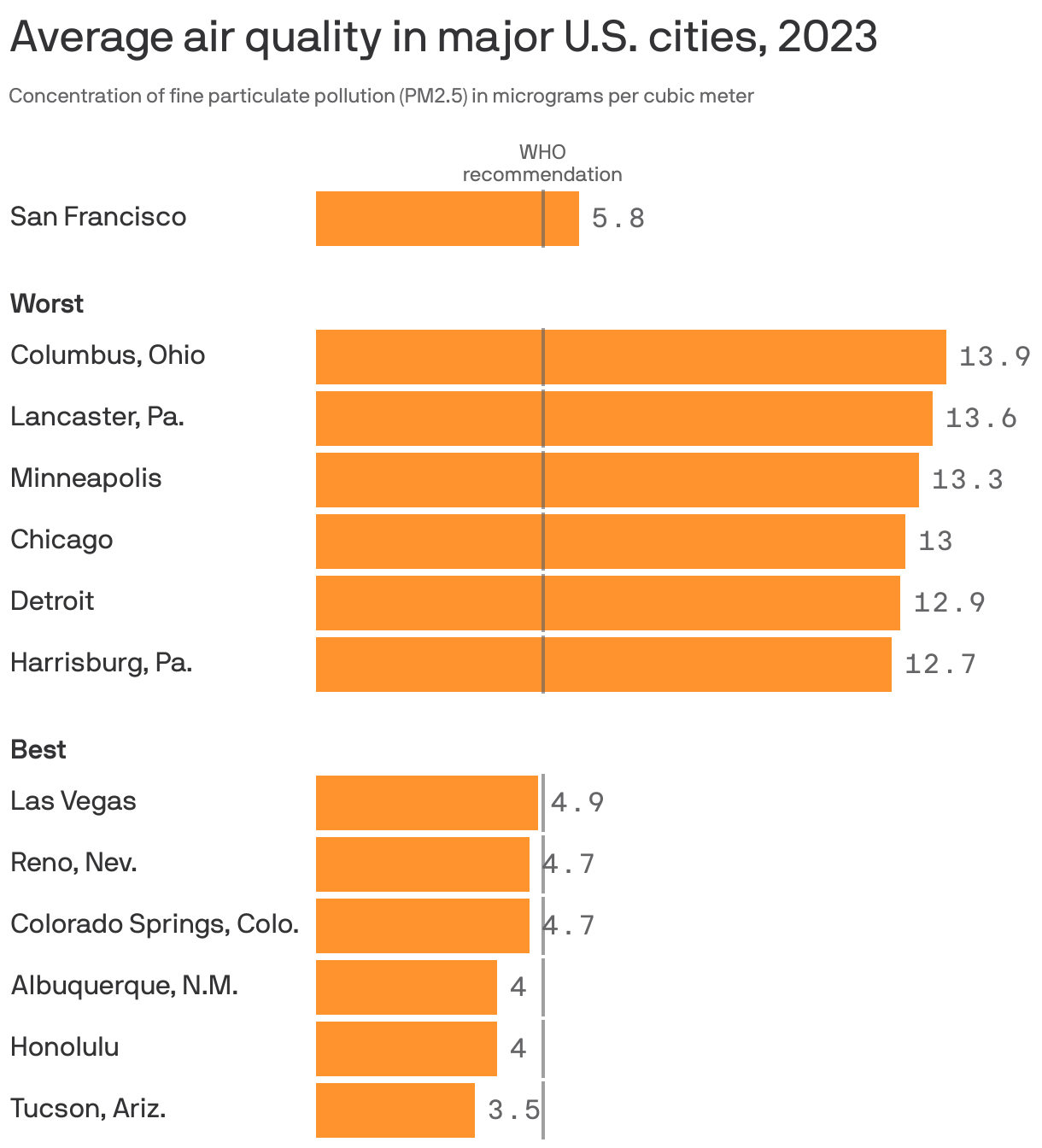
San Francisco's average air quality last year was a little higher than the World Health Organization (WHO) recommends, according to a new report.
Why it matters: Air pollution is the world's leading environmental health threat, causing 6.7 million premature deaths every year, according to WHO estimates.
How it works: The report, from air quality tech company IQAir, examines the average level of fine particles less than 2.5 microns (PM2.5) in diameter — a particularly dangerous form of air pollution because the solid and liquid specks can penetrate deep into lung passageways.
By the numbers: San Francisco's PM2.5 levels were 5.8 in 2023, one to two times higher than the WHO recommends.
- But that's an improvement from previous years: Those levels were 8.1 in 2022, 8.2 in 2021 and 9.6 in 2020.
The big picture: Most U.S. cities had levels two to three times higher than the WHO's guidelines, while pockets of the West met the guidelines, according to the report.
Threat level: Inhalation of PM2.5 can exacerbate pre-existing lung and heart conditions. Evidence suggests it can also have neurological effects.