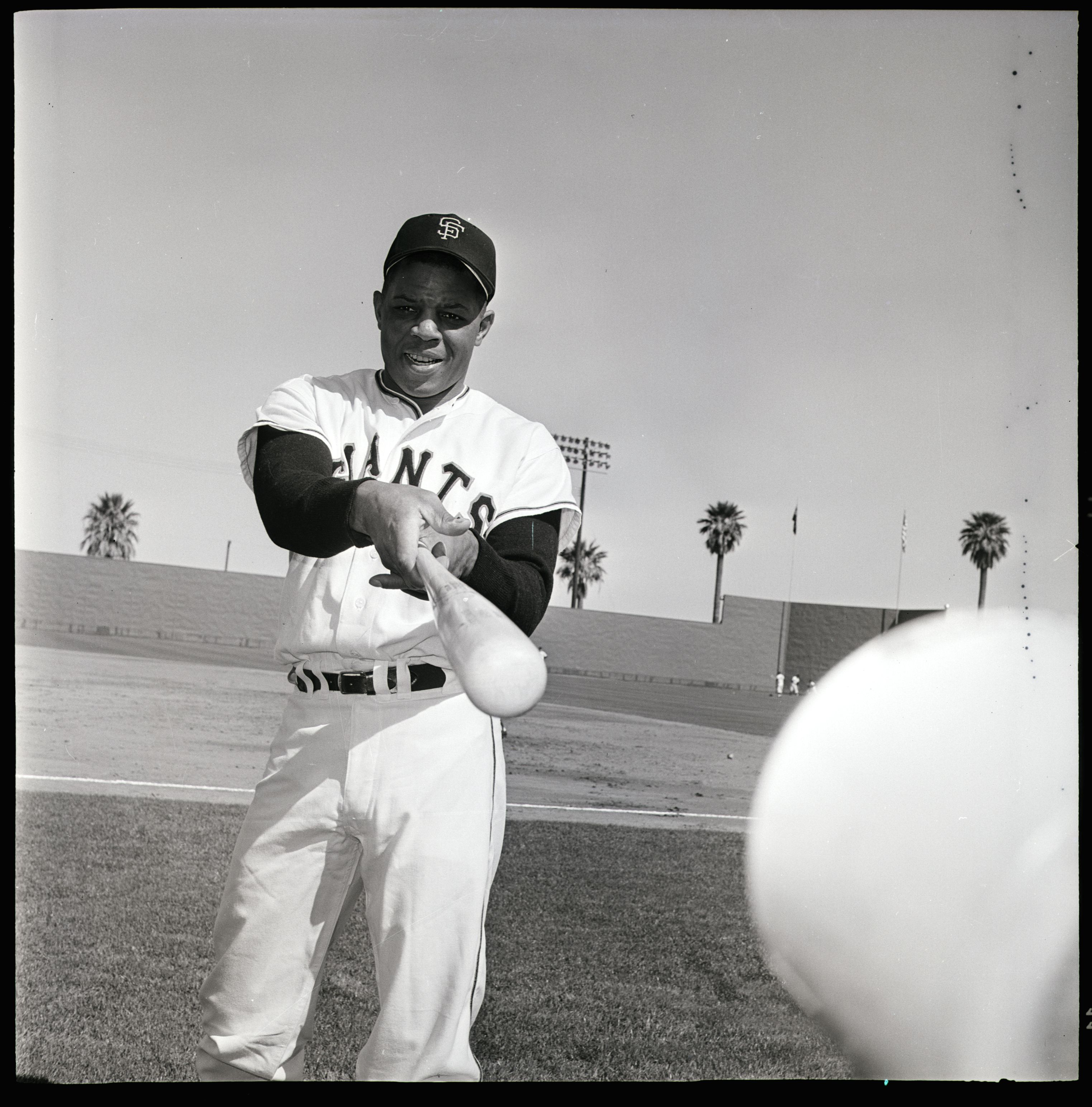
What Willie Mays' legacy means to San Francisco

Add Axios as your preferred source to
see more of our stories on Google.
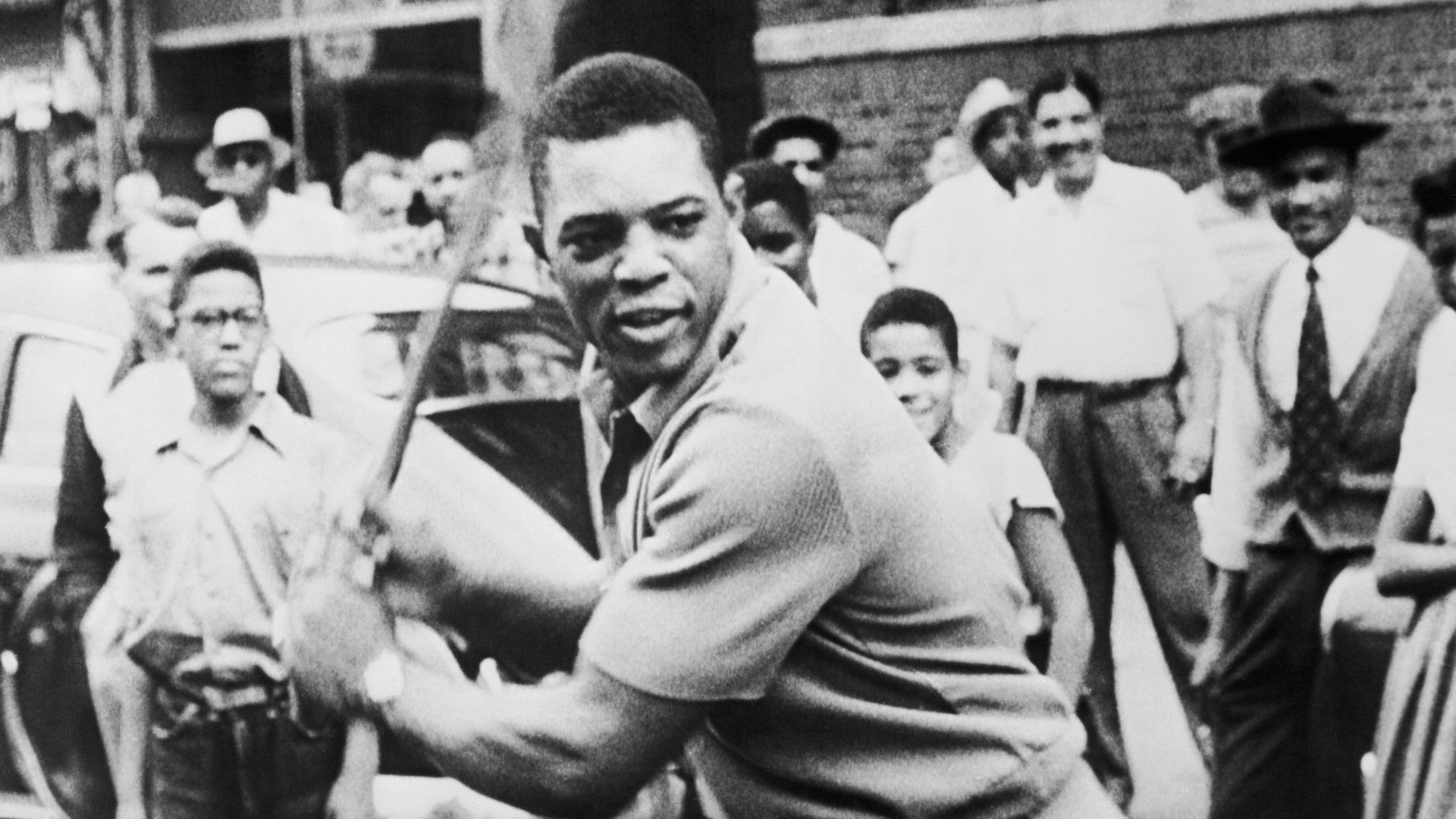
Willie Mays plays stickball with kids in New York's Harlem neighborhood. Photo: Bettmann via Getty Images
San Francisco legend Willie Mays is widely regarded as the greatest all-around player in baseball history — rivaling Babe Ruth.
Why it matters: One of the first Black players to join the MLB, he took the San Francisco Giants to new heights during his 21 seasons with the team.
The latest: San Francisco declared Feb. 4 "Willie Mays Day" this year.
- Now 92, he also has a Muni cable car dedicated to him — No. 24, his jersey number — as well as a Giants scholarship fund specifically for Black high school students named in his honor.
How it happened: Mays, an Alabama native, started his baseball career as a teenager with the Birmingham Black Barons in the Negro American League.
- In 1950, the Giants — then based out of New York — signed Mays upon his high school graduation. It was three years after Jackie Robinson first broke the color barrier.
- He went on to win the National League MVP Award in 1954 and led the Giants to a World Series title before the team moved to San Francisco.
- In San Francisco, he won another MVP Award in 1965 before joining the New York Mets.
- He later returned to the Giants as a special assistant to the president and general manager.
By the numbers: Mays led the National League in home runs four times, stolen bases four times and center field double plays five times.
- He became the first NL player to hit 30 home runs and steal 30 bases in the same season and the first to exceed both 300 home runs and 300 stolen bases.
What they said: One sportswriter once commented that Mays should "play in handcuffs to even things up."
The big picture: Despite his stellar record, Mays endured racism on and off the field.
- He was often forced to stay in separate hotels when traveling with the team due to segregation. And in 1957, his bid to purchase a home in San Francisco with his wife was denied due to their race.
- "There was a steady climb for us, and it was literally on the backs of players like Willie," Tony Clark, executive director of the Major League Baseball Players Association, told the Washington Post in 2021.