California's food waste declining amid tighter regulations


Add Axios as your preferred source to
see more of our stories on Google.
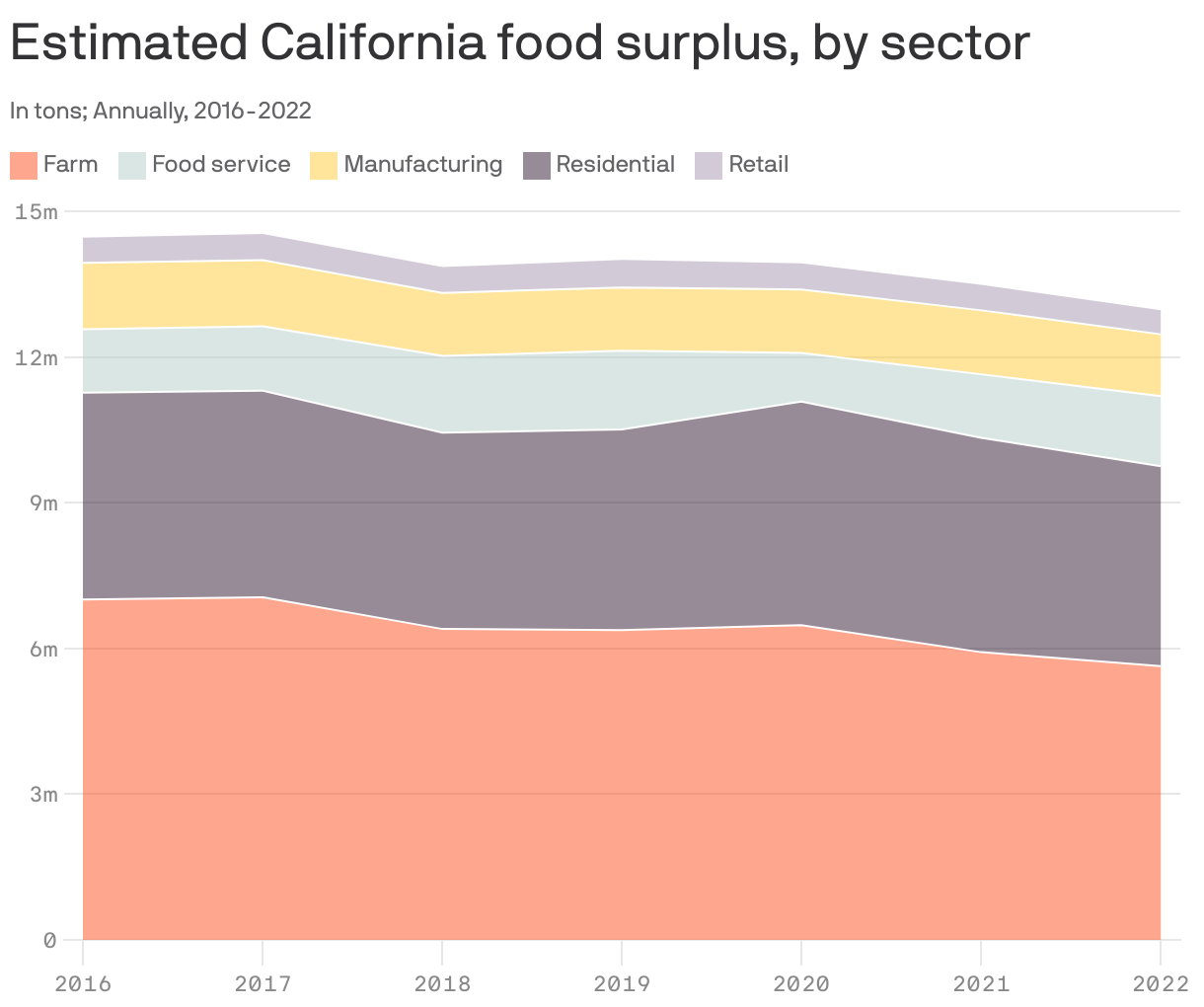
Consumers and businesses in California produced almost 13 million tons of surplus food in 2022, a 10% decrease from 2016, per data from the nonprofit ReFED.
Why it matters: The decrease indicates that the state's efforts to address food waste are making a dent.
The big picture: Wasting food wastes the resources that went into producing it, with ripple effects on climate resources and the economy.
- Food waste makes up 24% of municipal landfill input and contributes to 6.1% of U.S. greenhouse gas emissions.
- On average, a person wastes $759 on uneaten food each year.
State of play: California deposits an estimated 11.2 billion pounds of food in landfills annually, according to the California Department of Resources Recycling and Recovery.
- State law now requires residents to sort food scraps and other organic waste into a compost-specific bin after new regulations were enacted last year.
- The law also mandates that the state recover 20% of edible food otherwise disposed to landfills for use in addressing food insecurity. That's in addition to California's goal of cutting organic waste disposal by 75% by 2025.
Zoom out: Across the country, people and businesses did not eat or sell 88.7 million tons of food.
- That's equivalent to nearly 145 billion meals worth $473 billion.
- Residential waste made up 42.8 million tons, or 48%, of that total.
Be smart: ReFED suggests following the "Food Waste Five" strategies for reducing waste at home:
- Store food properly.
- Freeze food to extend its freshness.
- Dedicate a day each week for eating leftovers.
- Understand the meaning behind date "best by" labels.
- Plan your meals before buying groceries.