Birthrate on the decline in California, San Francisco


Add Axios as your preferred source to
see more of our stories on Google.


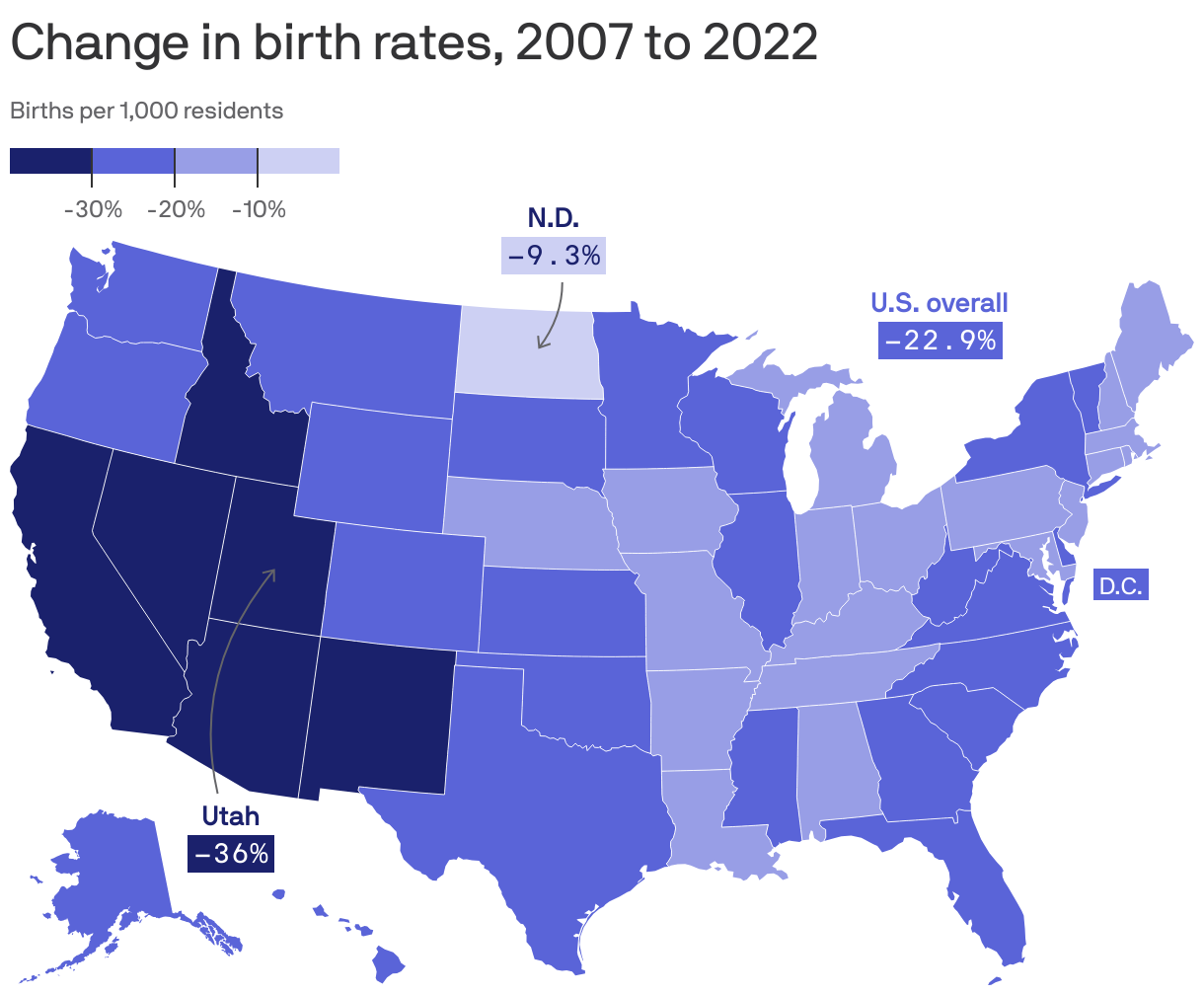
California's birthrate fell dramatically between 2007 and 2022 — and San Francisco is mirroring that trend.
Driving the news: The state's birthrate dropped 31% from approximately 15.6 births per 1,000 people in 2007 to 10.7 in 2022.
Zoom in: In San Francisco, births have similarly been on the decline, according to California's Department of Finance.
- Andres Gallardo, demographer for the state, said in an August appearance on ABC7 News that they expect births to decline to about 6,000 a year over the next four decades, down from the current 7,000 a year.
- The state projects that by 2025, there will be more San Franciscans who die due to age than babies being born.
- Local child care agencies have told Axios that San Francisco's cost of living remains an issue for many families, who are often forced to leave the city due to housing and child care costs.
- The average cost of raising a single child in San Francisco is about $35,647 per year — almost double the overall U.S. average, per a July analysis by financial advice platform SmartAsset.
Why it matters: Birthrates tend to fall as income rises, meaning lower birthrates can be a reflection of greater prosperity at both the national and individual levels.
- Yet the opposite can also be true, as people who feel they can't afford children choose not to have them.
Plus, lower birthrates can also be an indication of better access to contraception, family planning and abortion.
- They tend to be lower in societies with higher rates of women in the workforce — though that relationship is becoming increasingly complicated (it doesn't hold up as well in places with stronger parental leave laws, for example).
Yes, and: Some fear that if the birthrate dips too low, it will bring about a crisis in whiche there are too few young people to care for an aging populace.
- This is a particularly salient issue in Japan, which has among the world's oldest populations and where the birthrate fell to a record low last year.
Of note: Births are only one side of the equation; deaths and immigration/emigration also play key roles.
The big picture: The nationwide birthrate declined by nearly 23% between 2007 and 2022 from 14.3 births per 1,000 people to 11.1.