San Francisco seeks to document historical Latino enclaves


Add Axios as your preferred source to
see more of our stories on Google.
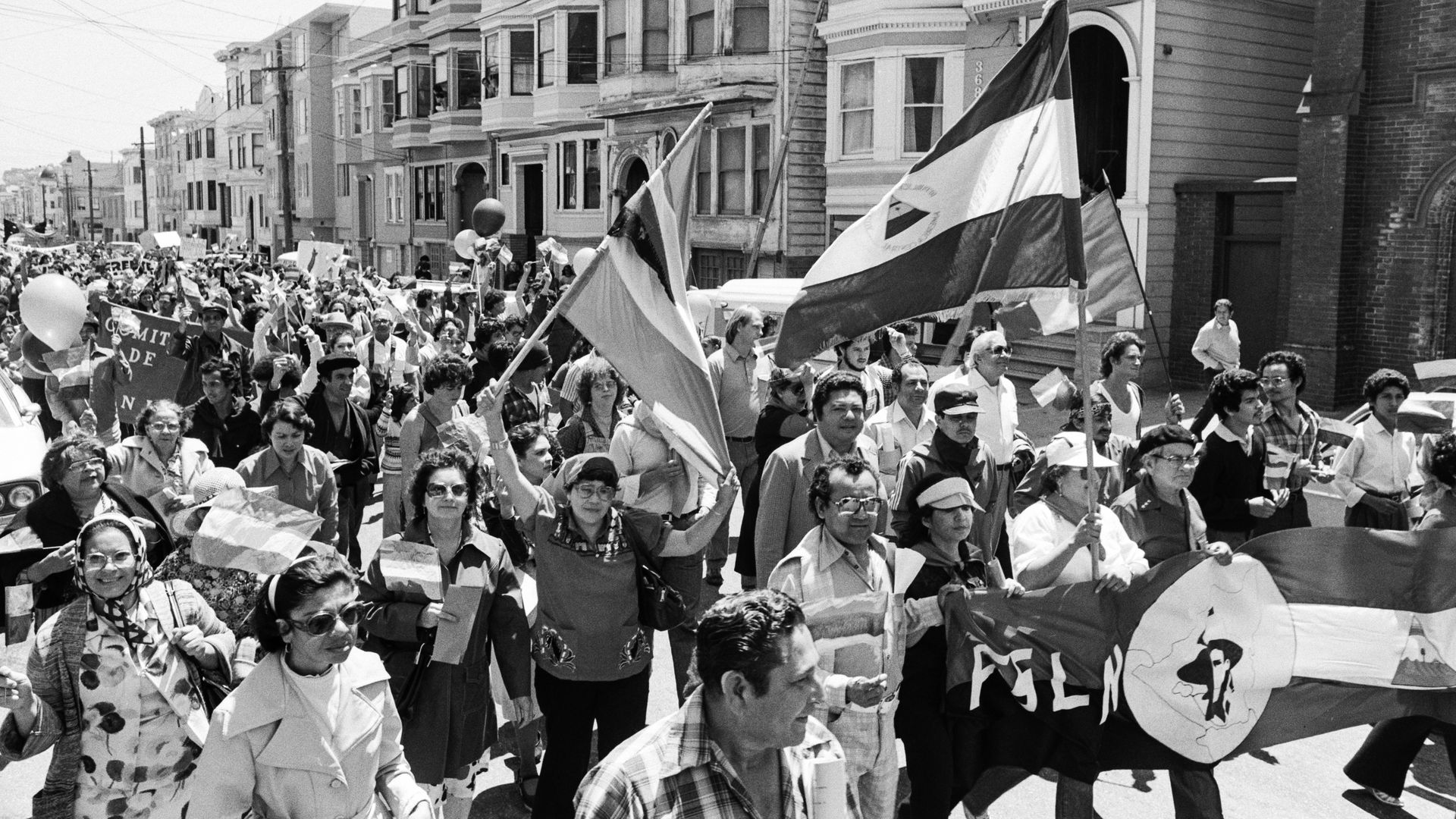
People celebrate Nicaraguan independence in San Francisco's Mission District on July 19, 1980. Photo: Janet Fries via Getty Images
Latinos were some of the earliest settlers in San Francisco following Spanish colonization — yet their history and contributions remain largely unknown.
State of play: The San Francisco Latino Historical Society (SFLHS) is working to document Latino enclaves not previously recorded in the city's historical records. It's part of a larger effort to recognize, correct and preserve Latino history in the Bay Area.
Catch up quick: Though Latinos settled in the Bay Area as early as the 1800s, the 20th century saw a rapid development of Latino ethnic enclaves amid an influx of people from Latin America.
- The Mission district soon emerged as a hub for Latinos — who now account for almost 16% of the city's population and made the community their own despite redlining and racist lending policies that prevented them from moving to other neighborhoods.
- Many rallied in the 1960s to fight the city's plans for the Mission's redevelopment following the urban renewal of the Fillmore neighborhood, which decimated the Black population.
That spirit of organizing remained, whether it involved their neighborhoods, working conditions or civil rights.
- Cesar Chavez, one of America's most famous labor organizers, later led multiple demonstrations in the Bay — including a march for farm migrant workers in San Francisco in 1988.
Of note: Today, the National Park Service lists more than 200 sites on its website that reflect American Latino heritage across the U.S.
- Many of the sites listed are connected to Spanish colonial history, but in recent years, the agency has been adding landmarks about the Latino experience in the 19th and 20th centuries.
- Those include San Francisco's Fort Point National Historic Site, which served as a Spanish and Mexican military installation in the 1800s, and "The Forty Acres," a parcel of land in Delano, California, that became the headquarters for the United Farm Workers of America in 1966.
Yes, but: An Axios review last year of public monuments and historic sites in the U.S. found few honoring Latinas outside of religious figures like La Virgen de Guadalupe or Virgen de la Divina Providencia.
The big picture: The NPS today lists more sites connected to civil rights than in the past, and the agency is exploring how to save landmarks linked to Black and Latino civil rights.
What's next: The San Francisco Planning Department and SFLHS will finalize the historical context document and bring it before the Historic Preservation Commission to be adopted.
- In the meantime, you can plan your own visit to Latino sites, courtesy of this NPS map, or check out the Latino Leaders Coalition of the Bay Area's ongoing speaker series, aimed at highlighting Latino issues and voices during Hispanic Heritage Month, which ends Oct. 15.