Stanford medical residents call for better pay in first contract since unionizing

Add Axios as your preferred source to
see more of our stories on Google.
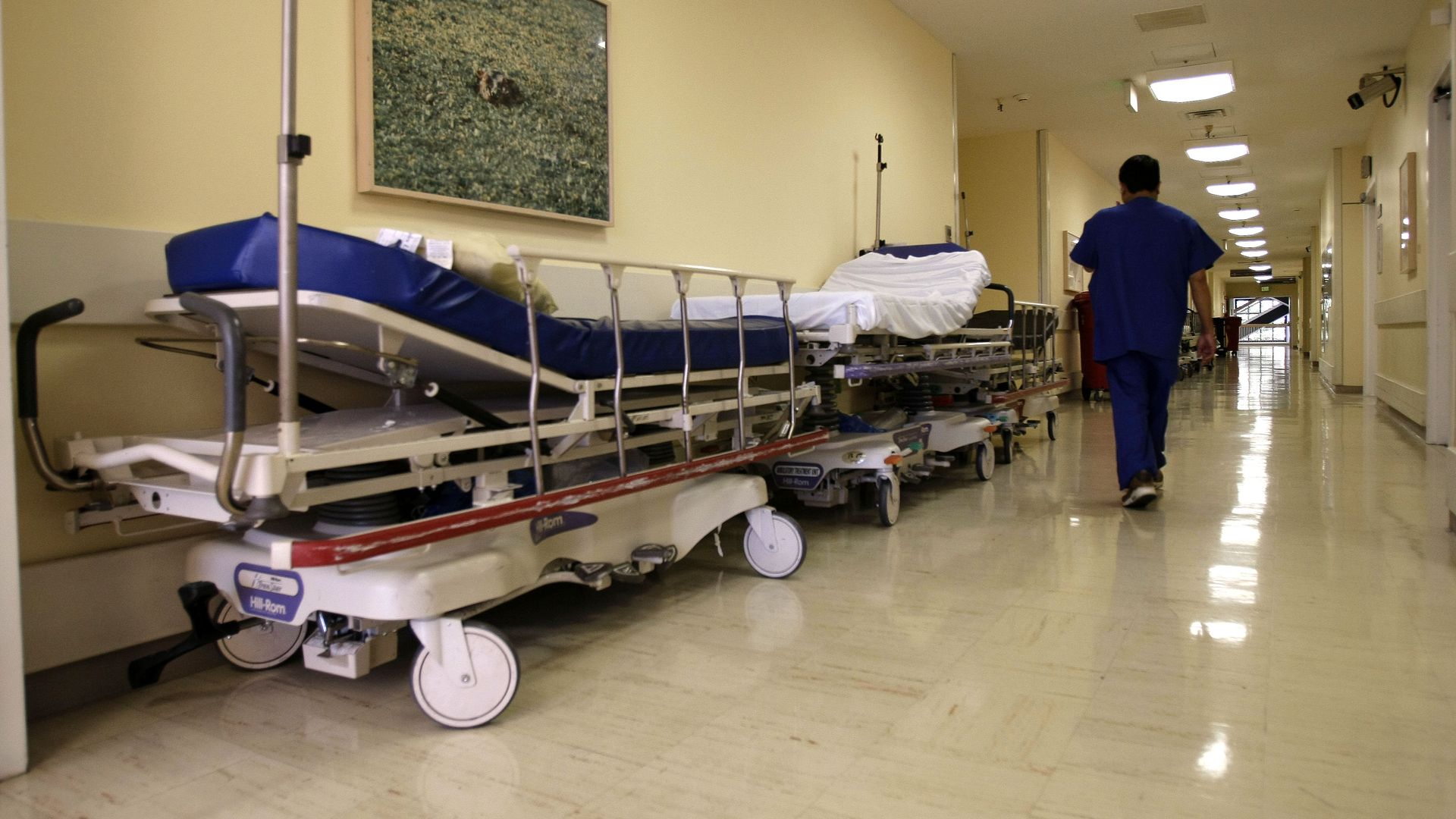
Stanford Hospital in Palo Alto as seen in June 2008. Photo: Michael Macor/San Francisco Chronicle via Getty Images
Stanford Health Care's resident physicians — who unionized last year — have scheduled a rally in front of the hospital Wednesday to demand improved pay, working conditions and care standards as they continue to negotiate their first contract.
Why it matters: The Bay Area's high cost of living have left residents struggling to afford basic necessities, said Simran Kaur, an OB/GYN who served her residency at Stanford.
Zoom in: As of last year, Stanford Health Care paid first-year residents an annual salary of around $71,860, or about $5,990 per month.
- Salary increased to around $75,500 or about $6,290 per month in year two and around $81,220 or about $6,770 per month in year three. All residents were given a $600 monthly housing stipend.
- But median rent in the Bay Area ($4,800) would require a large bulk of that monthly pay, per figures from Zillow.
Driving the news: The physicians, represented by the Committee of Interns and Residents, say Stanford Health Care prioritizes profit over patient and physician well-being and is using stalling tactics in the negotiations process, which started last November.
- "What's deeply disappointing though is that residents occupy this weird gray zone," David Dupee, a psychiatry resident, told Axios. "We do as much work or more than the average hospital employee, but our status as trainee allows people to justify paying us very little."
- Stanford Health Care said in a statement that it respects residents' rights to rally and remains committed to "reaching an agreement that supports our [residents] and their continued education and clinical training," including competitive wages.
State of play: Medical residents who work up to 80 hours a week are having to make difficult choices like delaying car repairs or deciding between child care and housing, Kaur said.
- Other concerns include longstanding accessibility issues like lack of elevators, an insufficient supply of call rooms where people can get some rest and neglect of "fatigue mitigation" for people who are at higher risk of car accidents after 24-hour shifts, according to Dupee.
- "It just doesn't have to be this way," Kaur said.
The big picture: Early in the pandemic, Stanford faced backlash for allocating the first wave of vaccines to many senior faculty members but not residents who were providing day-to-day clinical care for people with COVID-19.
- It was a catalyst and led residents and fellows to unionize last May.
What they're saying: "For a long time we've seen the weaponization of professionalism in that most folks who go into health care do feel this innate call to serve," Dupee said.
- "It's been treated as an infinitely renewable resource ... and that is just no longer sustainable with how expensive it is to be alive these days."