Fire weather trends show decades of changing risks in San Francisco

Add Axios as your preferred source to
see more of our stories on Google.
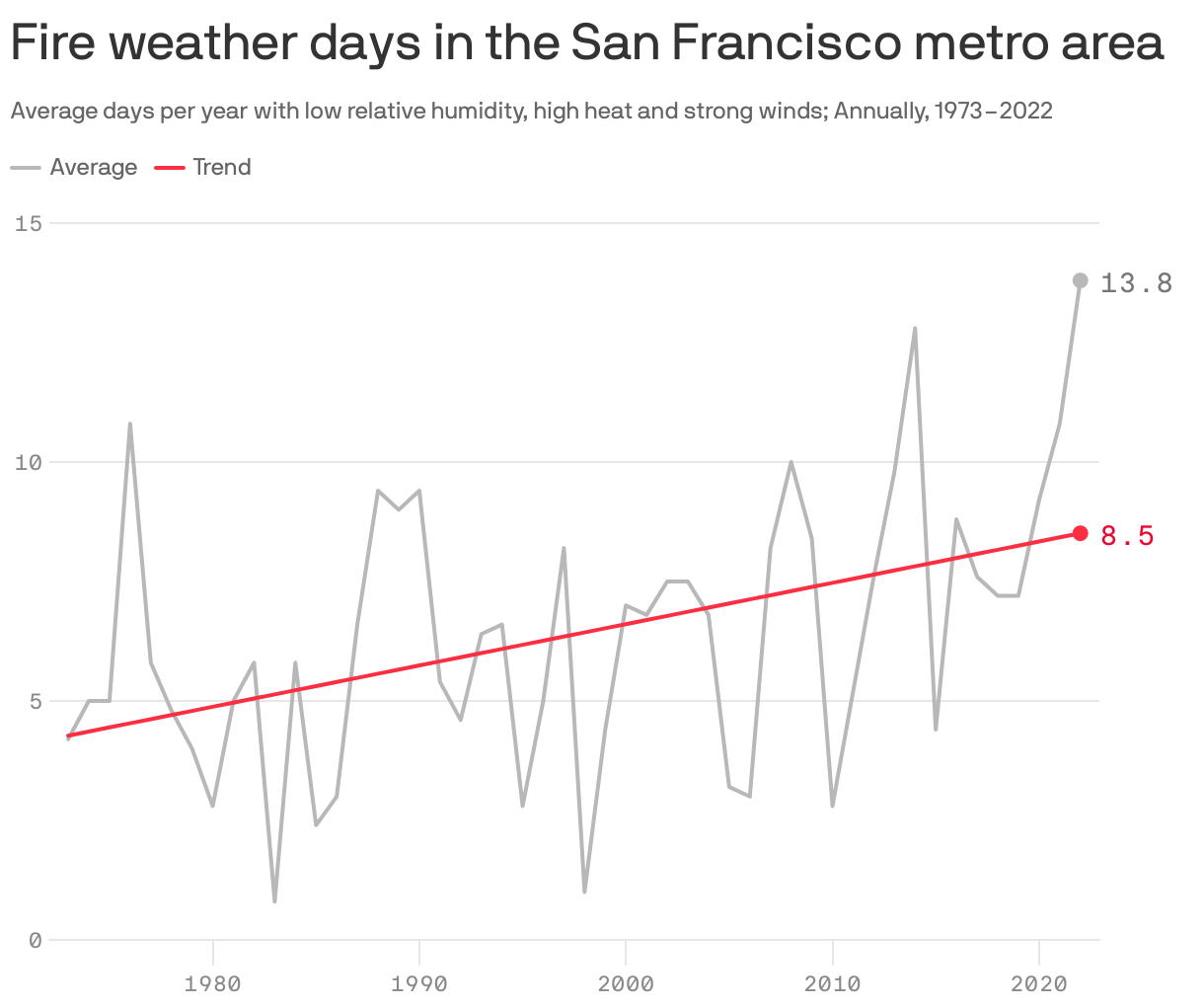
Fire weather days in San Francisco's metro area increased by 4.2 days annually on average between 1973 and 2022, per an analysis from Climate Central, a nonprofit climate science research organization, Andrew Freedman and Kavya Beheraj report.
The big picture: The report found that wildfire seasons are getting longer and more intense, especially in the West and Southwest.
Why it matters: The trend in fire weather days is tied to human-caused climate change, per Climate Central. This is because climate change is resulting in higher temperatures and drier conditions in many areas, which is leading to more frequent and larger fires.
Of note: The report defines fire weather days as having particular combinations of low humidity, high temperatures and strong winds.
Zoom out: Southern California, Texas and New Mexico have experienced some of the greatest upticks in fire weather days each year.
- Some spots now see two more months of fire weather conditions compared to a half-century ago.
- This matches climate studies that show a significant lengthening of the California wildfire season, for example.
Yes, but: Changes in fire weather days were smaller for coastal cities where humidity levels are typically higher.
- Still, even in the San Francisco region, there are days that met Climate Central's criteria for a fire weather day, and an increase in those conditions.
What's next: As climate change continues, it is expected that fire weather days will continue to spike, particularly across the West and Southwest.
Go deeper: Vegetation boosted by record rain could fuel California wildfires