Uber, Lyft competitor offers a high-end experience

Add Axios as your preferred source to
see more of our stories on Google.
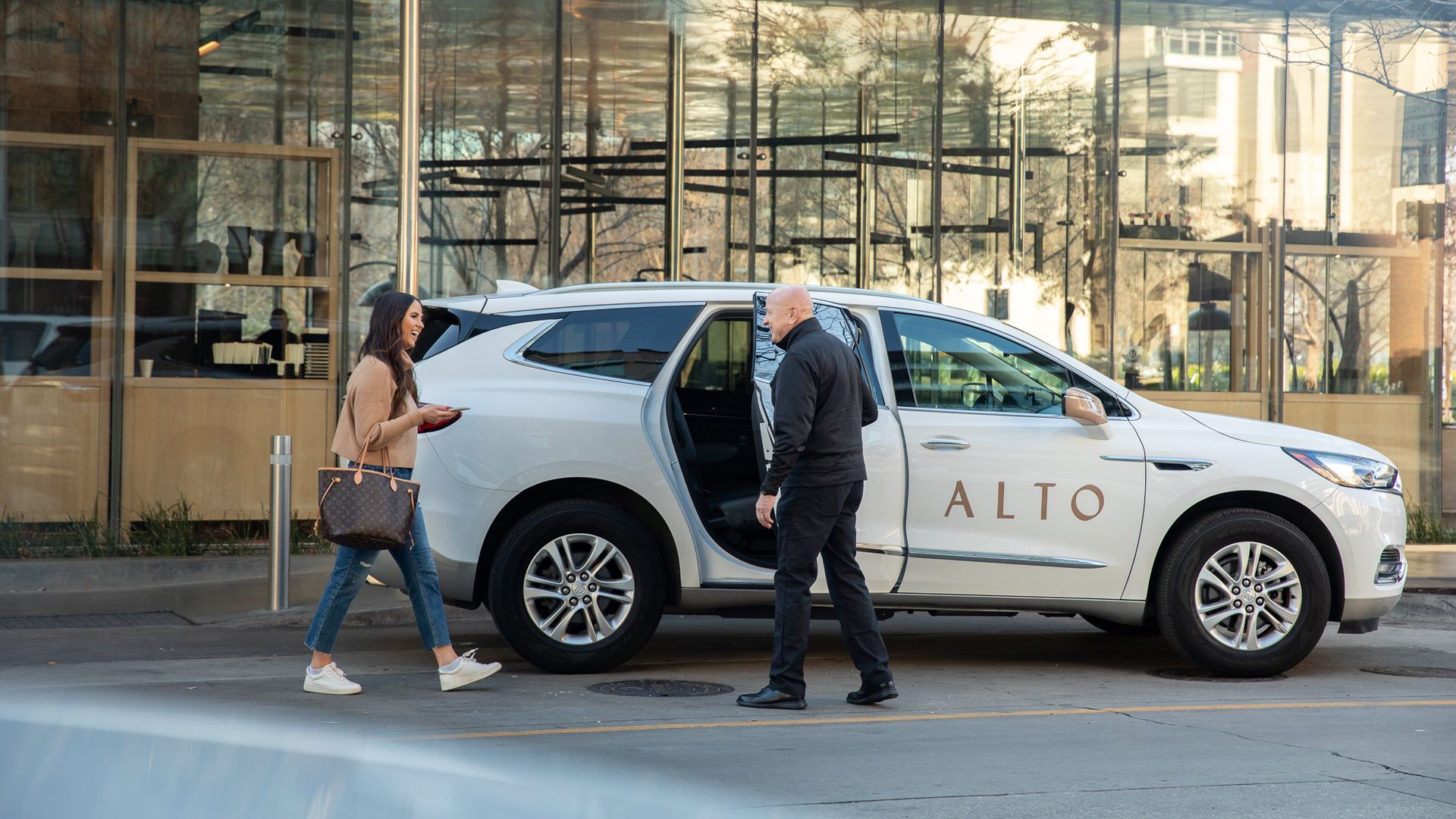
Photo: courtesy of Alto
I finally got around to trying out Alto, the Uber and Lyft rideshare competitor that launched in San Francisco in July.
Details: Alto aims to offer a high-end rideshare experience, its co-founder and CEO Will Coleman explained to Axios.
- The startup has a fleet of midsize SUVs that are five-star crash rated.
- Meanwhile, the app acts as a remote control to change music, set the lighting and indicate whether you're interested in chatting with your driver.
- Each car has a plethora of chargers for a variety of phones and laptops.
Alto rides are more expensive than the cheapest rideshare options available, but less costly than the priciest, Coleman said.
- It aims to offer its services at 30-50% less than an Uber Black or a black car.
- The $12.95 monthly membership gets you a 30% discount on rides and access during peak periods like nights and weekends. But you don't have to be a member to use the service.
Of note: Alto's average wait times are about 11.5 minutes, much longer than what we've come to expect from other rideshare companies.
What they're saying: "But we do that on purpose," Coleman said. "Because we think that shorter wait times are really unsustainable for drivers and the companies."
- Shorter wait times, Coleman said, create more congestion and greenhouse gas emissions.
- "If you can get an Uber or a car faster than you can get an ambulance, then something's really broken," he said.
The intrigue: Unlike Uber and Lyft drivers, Alto drivers are hourly, W-2 employees and receive health insurance from the company.
- In California, rideshare drivers who meet minimum hourly requirements are eligible for health care stipends, but do not receive full health insurance via Uber and Lyft.
- Alto also owns its fleet of vehicles, which means drivers don't have to worry about vehicle maintenance or gas costs.
My thought bubble: Alto undoubtedly provides a higher-end experience than Uber and Lyft. It's not, however, a luxury I need on any regular basis, but I can see the appeal.
- The driver opened the door for me like you'd expect from a black car service.
- It cost $37.13 to ride from Russian Hill to the Castro. It was pricey, but my soul did feel better knowing Alto's drivers are W-2 employees with benefits.
What's next: Alto, which also operates in cities like Dallas, Houston and Miami, eventually plans to expand into the East Bay and Marin County.
- Over the next several years, Alto plans to transition its vehicles to electric.