California National Guard to assist food banks during shutdown

Add Axios as your preferred source to
see more of our stories on Google.
Illustration: Shoshana Gordon/Axios
Gov. Gavin Newsom is planning to deploy the California National Guard to assist local food banks as the federal government shutdown threatens the CalFresh (SNAP) food aid program.
Why it matters: Millions of families in California — and hundreds of thousands in San Diego County — rely on CalFresh to buy groceries, but they likely won't get money on their benefits cards next month.
- Losing those federally funded payments will make food insecurity even more prevalent, and strain local food banks that are already facing a surge in demand.
Driving the news: The state plans to send National Guard service members and volunteers to assist food banks around the state, Newsom's office announced Wednesday. They'll be serving and distributing free meals, as they did during the pandemic, not acting as law enforcement.
- Newsom said he's also expediting about $80 million in state funding for food banks to increase their supply.
- He warned earlier this week that CalFresh benefits will be delayed in November if the federal government doesn't reopen and provide additional funding.
Between the lines: Residents needing immediate food assistance can get free meals from the San Diego Food Bank and Feeding San Diego, which are preparing for the heightened demand.
- Those organizations have already been in overdrive during the shutdown, serving thousands of military families, TSA workers and other federal employees going without paychecks.
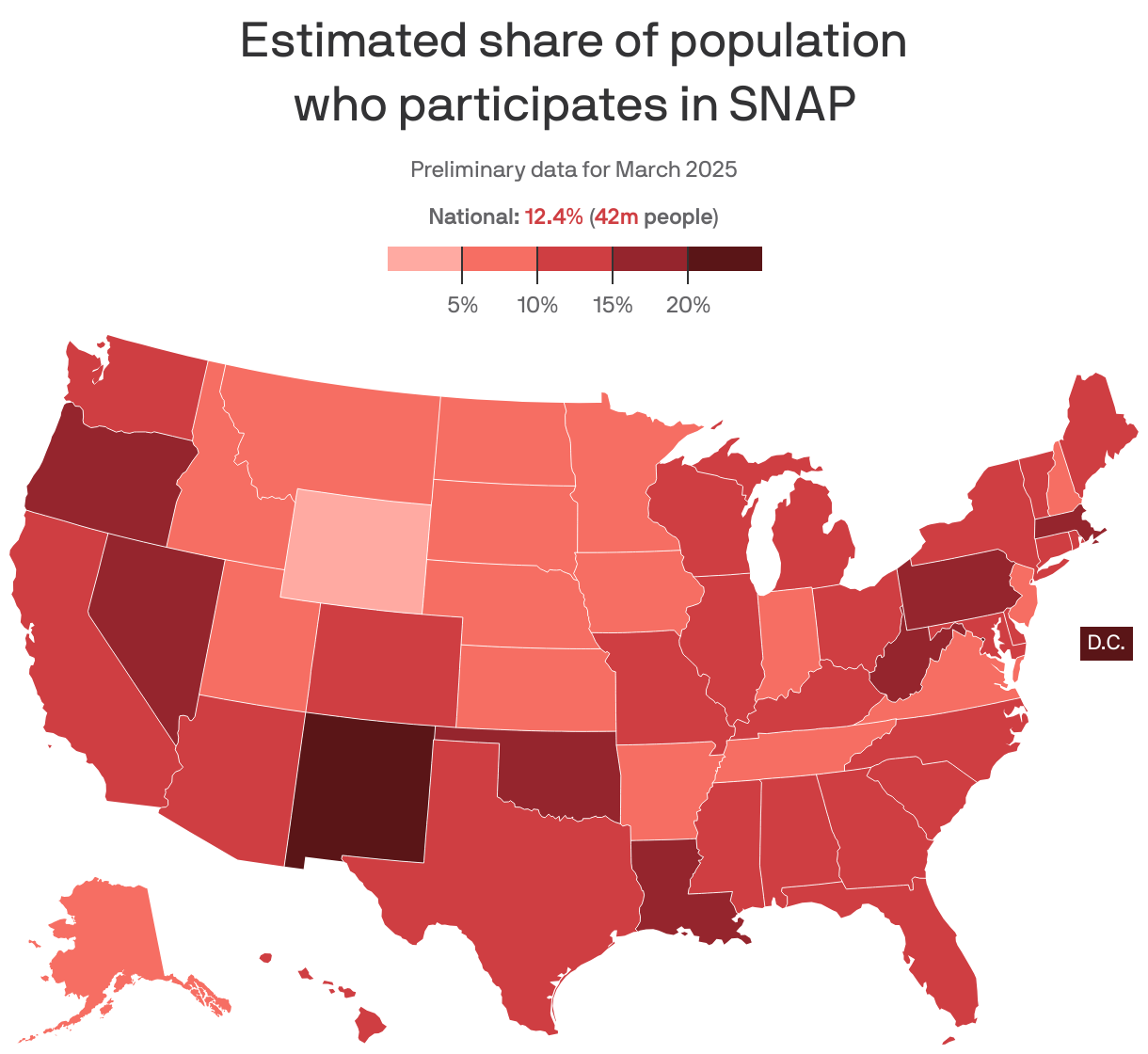
By the numbers: Nearly 5.5 million Californians, about 14% of the state, were enrolled in CalFresh as of March, per federal data.
- More than 63% of California's SNAP participants are children or elderly.
- In San Diego County, about 400,000 people receive CalFresh benefits.
- All CalFresh recipients will be affected if the shutdown extends past Thursday, according to Newsom's office.
Zoom in: The San Diego Food Bank estimates it will cost $500,000 to prepare and respond to the increased need, which it plans to temporarily cover using reserves.
- The organization does not anticipate needing the National Guard support currently, but "can't meet this crisis alone," it said in a statement.
The big picture: SNAP is the nation's largest domestic food assistance program, and the Trump administration warned state agencies earlier this month that there would be "insufficient funds" to pay full November benefits for some 42 million people.
- On top of the funding lapse, state agencies were already gearing up for sweeping Nov. 1 changes to SNAP, including expanded work requirements, under the One Big Beautiful Bill Act, Axios' Avery Lotz reports.
Go deeper: "Stretched to the breaking point": SNAP cuts spook food banks