Thousands of children in San Diego are going hungry


Add Axios as your preferred source to
see more of our stories on Google.
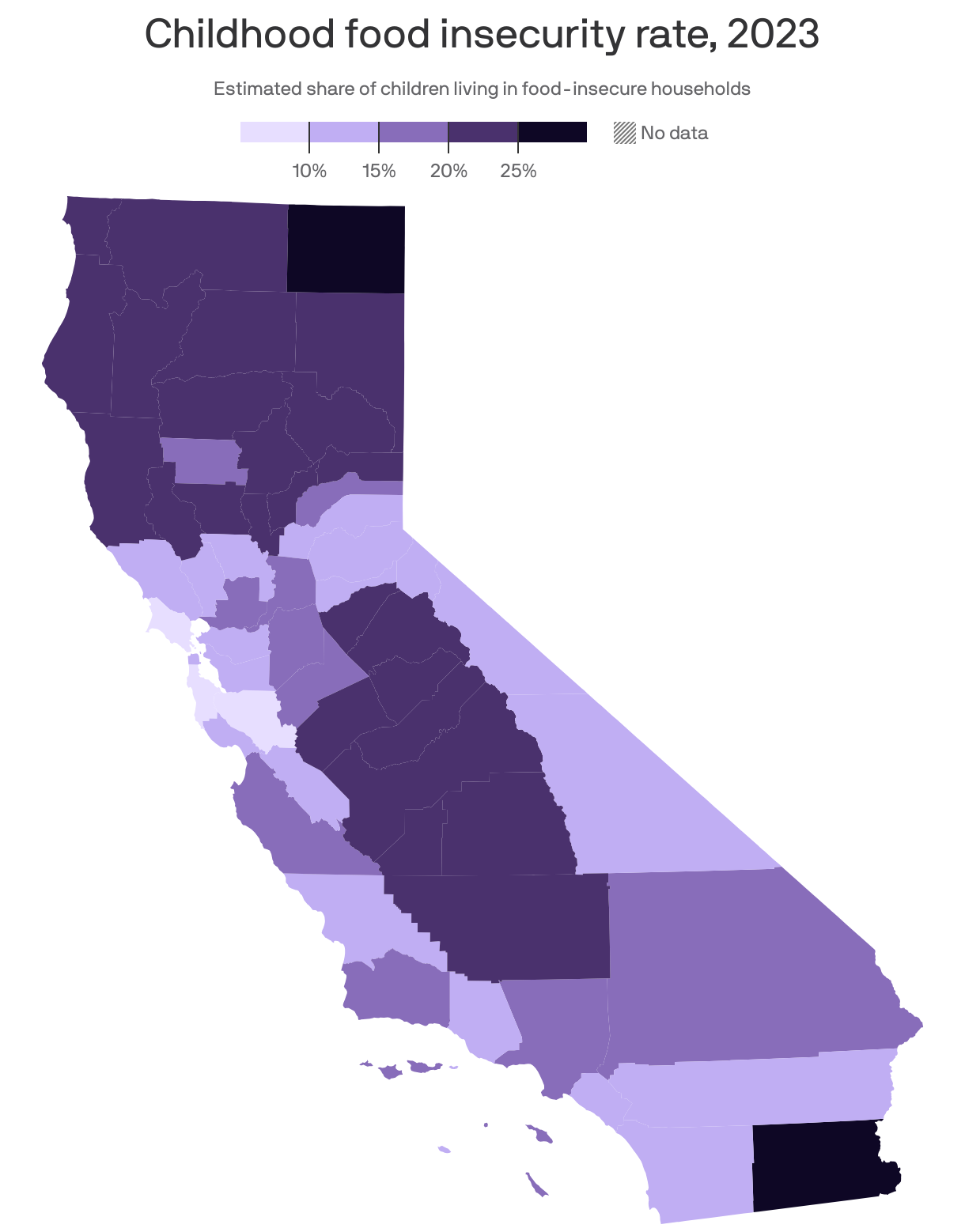
About 1 in 7 children in San Diego County (14.5%) live in food-insecure households, per new estimates shared first with Axios from Feeding America, a nationwide network of food banks.
- That's more than 100,000 kids who don't have enough to eat or don't know where their next meal will come from.
Why it matters: Potential cuts or changes to federal food aid programs like SNAP — or CalFresh in California — and tariffs on imported foods could affect millions of Americans and exacerbate the childhood hunger crisis.
- These federal cuts would also impact local farmers whose produce helps fuel food banks and school meal programs.
Between the lines: Jewish Family Services of San Diego has seen a growing demand for its nutrition services over the past year with the number of clients accessing food pantries up 20% from April 2024 to March 2025.
- One of the most effective ways to address food insecurity is through CalFresh, which directly gives eligible families money to buy groceries, according to Kaley Levitt, JFS vice president of government affairs.
Zoom out: Nationally, an estimated 14 million or 1 in 5 children live in food-insecure homes, per Feeding America's new Map the Meal Gap report.
- In California, about 17% or 1.4 million children are food insecure.
- Imperial County has the highest rate in the state at about 26%, while Marin and San Mateo counties in the Bay Area had the lowest at about 8%.
- 14 U.S. counties, all in the South, had rates over 40%.
How it works: Map the Meal Gap is an annual effort to make local estimates about food insecurity among different groups, in part by using government data.
- The childhood food insecurity rate represents the share of children who live in food-insecure households, which lack or have uncertain access to adequate food.
- See more about the methodology here.
The big picture: Childhood food insecurity is one piece of a broader hunger problem exacerbated by rising food costs.
- The annual aggregate national food budget shortfall — meaning, the total amount of money people in food-insecure U.S. households need to buy enough food — rose from $28.5 billion in 2022 to $32.2 billion in 2023, up 8.4% inflation-adjusted.
What they're saying: "What we saw in 2023 was that for the third consecutive year, this reported need increased," Adam Dewey, research director at Feeding America, tells Axios of the food budget figures.
- "It didn't increase by as much as we saw in 2022, but the fact that the level of need among the food-insecure population is increasing alongside the number of individuals who are experiencing food insecurity is a double whammy that is a concern."
What's next: As the school year nears its end, the perennial threat of "summer hunger" will once again be an issue for kids who rely on school meals to get enough to eat.