Childhood food insecurity across America, mapped

Add Axios as your preferred source to
see more of our stories on Google.
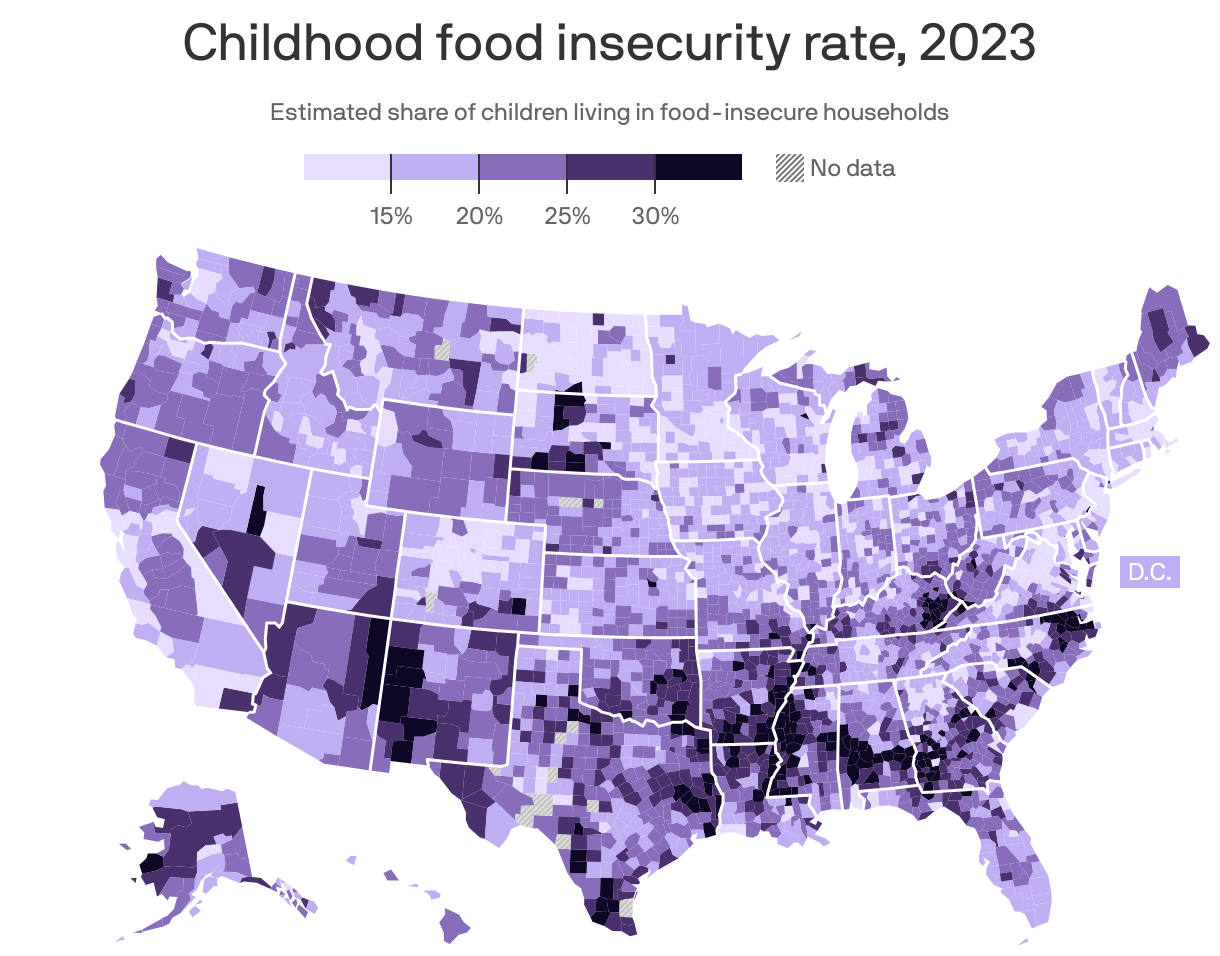
Over 40% of children in some U.S. counties live in food-insecure households, per new estimates shared first with Axios from Feeding America, a nationwide network of food banks.
Why it matters: Potential cuts or changes to federal food aid programs like SNAP and tariffs on imported foods could affect millions of Americans and exacerbate the childhood hunger crisis.
By the numbers: Hancock County, Georgia (46.9%), Perry County, Alabama (46.8%), and Holmes County, Mississippi (46.2%) had the highest estimated childhood food insecurity rates as of 2023, per Feeding America's new Map the Meal Gap report.
- The rate tends to be higher in relatively poor, rural counties — but there are urban areas with high rates as well, like New York's Bronx County (33.1%).
- An estimated 14 million U.S. children overall live in food-insecure homes. That's about one out of every five kids.
How it works: Map the Meal Gap is an annual effort to make local estimates about food insecurity among different groups, in part by using government data.
- The childhood food insecurity rate represents the share of children who live in food-insecure households, which lack or have uncertain access to adequate food.
- See more about the methodology here.
The big picture: Childhood food insecurity is one piece of a broader hunger problem exacerbated by rising food costs.
- The annual aggregate national food budget shortfall — meaning, the total amount of money people in food-insecure U.S. households need to buy enough food — rose from $28.5 billion in 2022 to $32.2 billion in 2023, up 8.4% inflation-adjusted.
What they're saying: "What we saw in 2023 was that for the third consecutive year, this reported need increased," Adam Dewey, research director at Feeding America, tells Axios of the food budget figures.
- "It didn't increase by as much as we saw in 2022, but the fact that the level of need among the food-insecure population is increasing alongside the number of individuals who are experiencing food insecurity is a double whammy that is a concern."
What's next: As the school year nears its end, the perennial threat of "summer hunger" will once again be an issue for kids who rely on school meals to get enough to eat.
