How San Diego police are using AI-powered drones


Add Axios as your preferred source to
see more of our stories on Google.
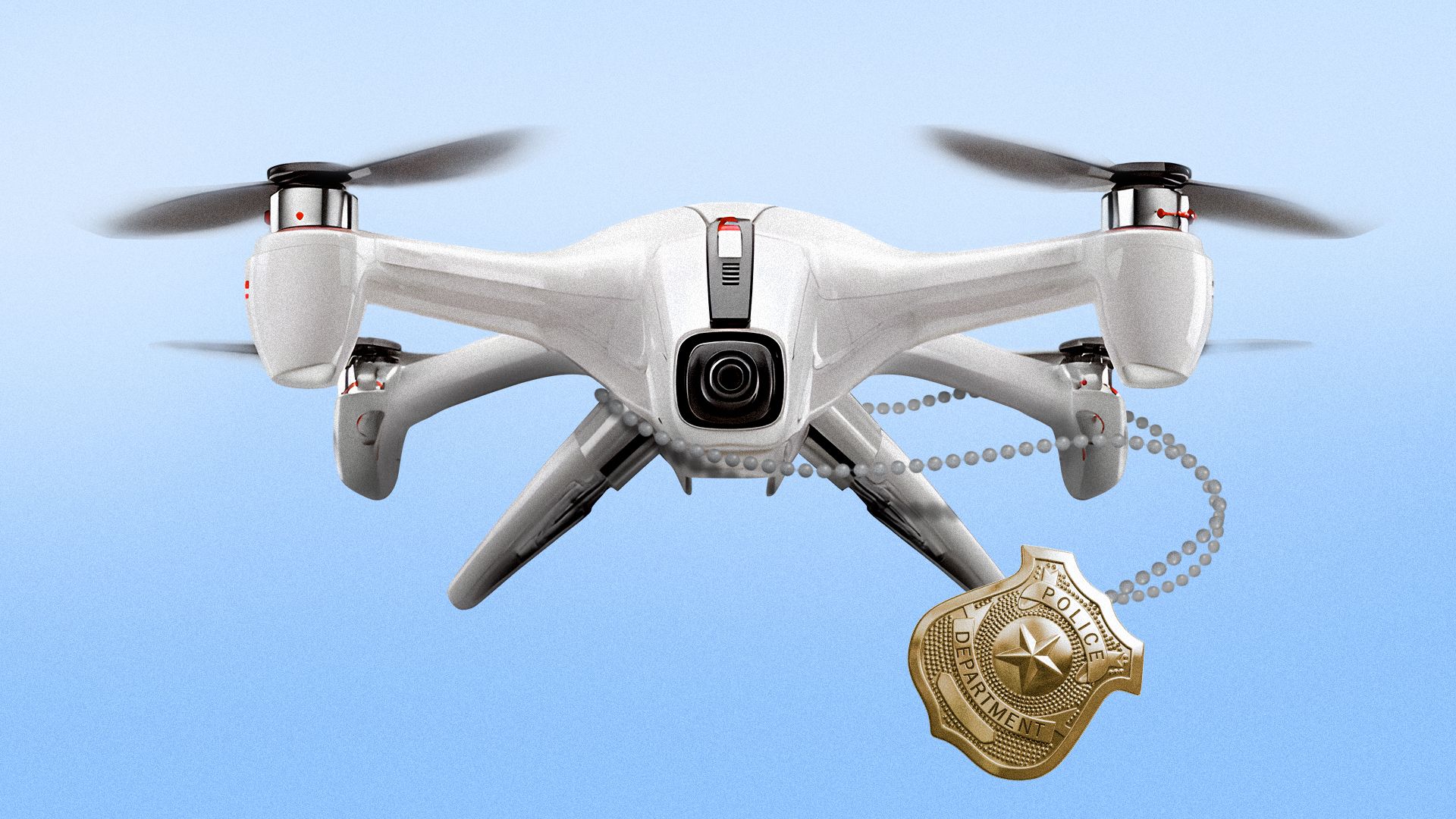
Illustration: Lindsey Bailey/Axios
Law enforcement agencies across the country are increasingly using AI-powered drones for pursuits, investigations and emergencies — following San Diego County's lead.
Why it matters: Local police and sheriffs departments are facing chronic staffing shortages amid pressures to reduce violent crime. Drones can do some police work, but using them raises questions about surveillance and privacy.
State of play: Departments across San Diego County have been using drones for several years, with dozens in their fleets, and some are looking to expand.
- Nationally, 1,500 police and sheriff's departments were flying drones by late 2024 — a 150% jump since 2018.
- An Axios analysis found that almost every major metropolitan area in the U.S. has a law enforcement agency with a drone system.
Zoom in: In 2018, Chula Vista became the first city in the country to launch a drone first responder program, and it has become a model locally and nationwide.
- Chula Vista PD's drones have assisted in thousands of arrests, can have eyes on the scene within 90 seconds, and take dispatches for officers to free them up for other work. The drones' average response time for 911 calls is four to five minutes compared with six to nine minutes for officers, data shows.
- El Cajon and Oceanside police recently started using drones as first responders as well, and Carlsbad police are testing it.
- San Diego Mayor Todd Gloria wants to expand the city's use of the technology to enhance its understaffed police force and increase response times.
What they're saying: "We've never stopped expanding the program," Chula Vista police sergeant Tony Molina told Axios. That includes adding drones to the fleet, updating the cameras and software, and flying more often, he said.
- Department leaders are also shopping around for new technology at police conferences.
How it works: Police deploy drones for surveillance, search and rescue, incident documentation, and crime scene investigations — giving them real-time aerial views and data.
- Locally, they help police locate suspects and missing persons, photograph crime scenes, monitor crowds, support SWAT teams and reconstruct accidents, and they recently assisted with a plane crash investigation.
Between the lines: Police departments must report how they use drones. But it's unclear what police (and private companies) are doing with the data, Beryl Lipton, senior investigative researcher at the Electronic Frontier Foundation, told Axios.
- Police could be violating laws by gathering images from private property without a warrant, and laws haven't kept pace with the technology's capabilities to collect and store data, Lipton said.
The latest: Police departments across California are now required to release drone footage not directly tied to investigations, following a four-year legal battle between a local media outlet and Chula Vista that was resolved in August.
- The ACLU Foundation of Northern California is going after Sonoma County in a lawsuit being closely monitored as a test case that could set limits of police drone use.