California faces highest wildfire smoke death count in U.S.



Add Axios as your preferred source to
see more of our stories on Google.
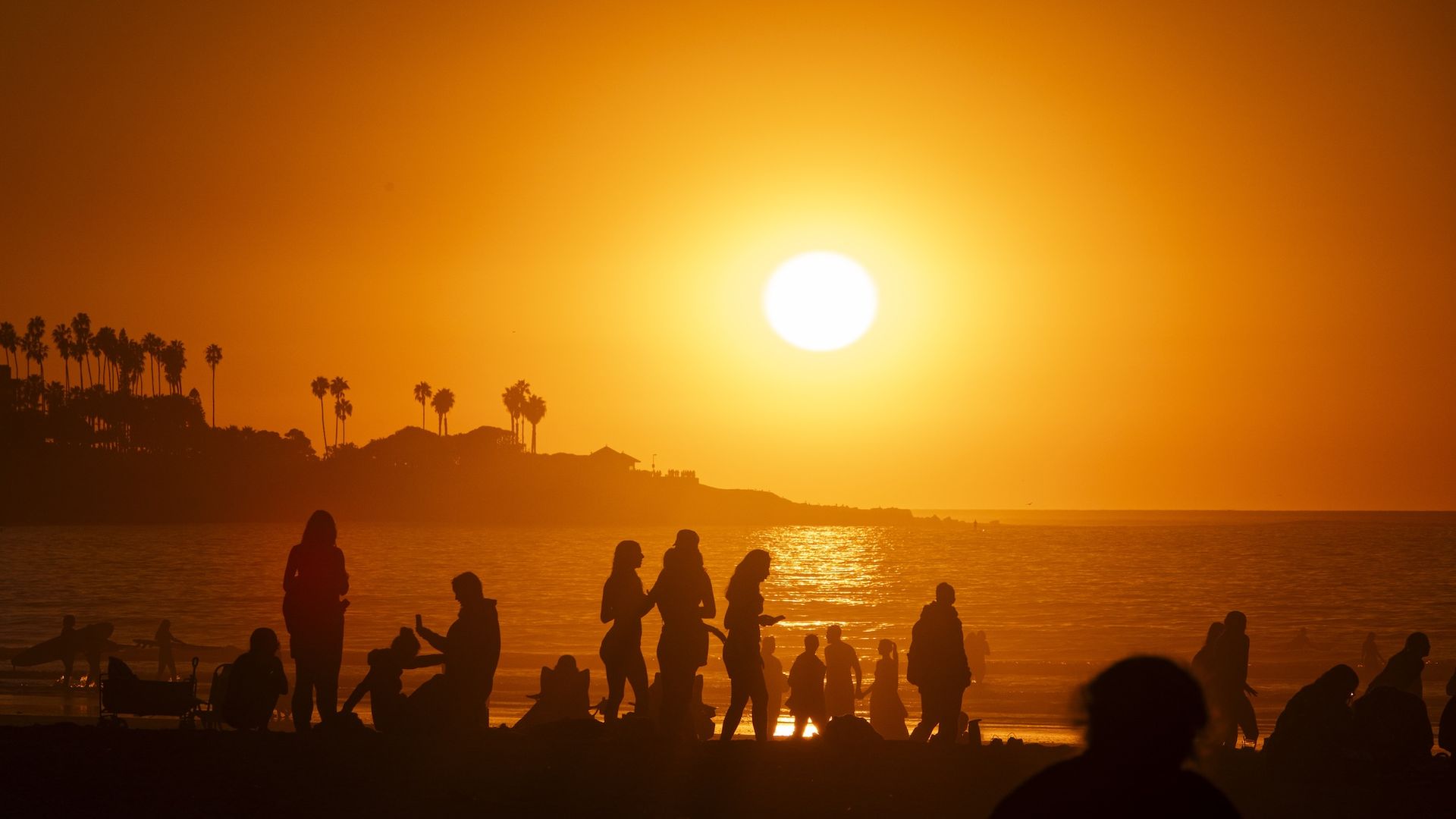
California is projected to see more deaths than any other state due to wildfire smoke by midcentury — part of a nationwide surge that could claim tens of thousands of lives annually without protective measures, a new study warns.
Why it matters: The grim findings are among the strongest evidence on record of the harmful effects of climate change, the study's authors say.
- In San Diego, the hot, dry windy weather that fuels wildfires is becoming more common. Just this year, the smoke that's degrading our air quality hung over parts of the county during the Border 2 Fire and the Santa Ana winds blew the LA fires smoke offshore.
Threat level: Under the worst climate scenarios, wildfire smoke could cause more than 70,000 excess deaths per year by 2050, per the study.
- "The impacts are much larger than anything else that has been measured," Marshall Burke, an environmental economist at Stanford University who contributed to the study, told the New York Times.
What they did: The research team used 20 years' worth of death records, satellite and ground data and climate models to study the relationship between exposure to wildfire smoke and mortality.
Zoom in: California alone could see up to 4,551 excess deaths per year by midcentury, according to the research.
- This year's wildfire season in California is proving more severe than last — and wildfires have evolved into a year-round threat.
What they're saying: "Our research suggests that the health impacts of climate-driven wildfire smoke could be among the most important and costly consequences of a warming climate in the U.S.," the study authors wrote.
Between the lines: Fine particulate matter (PM2.5) in wildfire smoke poses significant health risks considered more hazardous than other types of air pollution.
- PM2.5 can increase the risk of lung irritation, asthma, respiratory infections, heart attacks, strokes and more, and can be especially harmful to vulnerable populations like children, seniors and immunocompromised individuals.
Yes, but: There are ways to mitigate the health impacts.
- Better forest management could help reduce the severity of wildfires.
- Air filters and protective masks can help shield people from wildfire smoke.
- Cutting climate pollution can lower the risk of large, deadly fires.
The bottom line: "These are projections. They are not what's going to happen, necessarily," Burke told the New York Times.
- "But what happens is a choice, and so these don't have to be an inevitability."