San Diego is seeing more weather that fuels wildfires


Add Axios as your preferred source to
see more of our stories on Google.
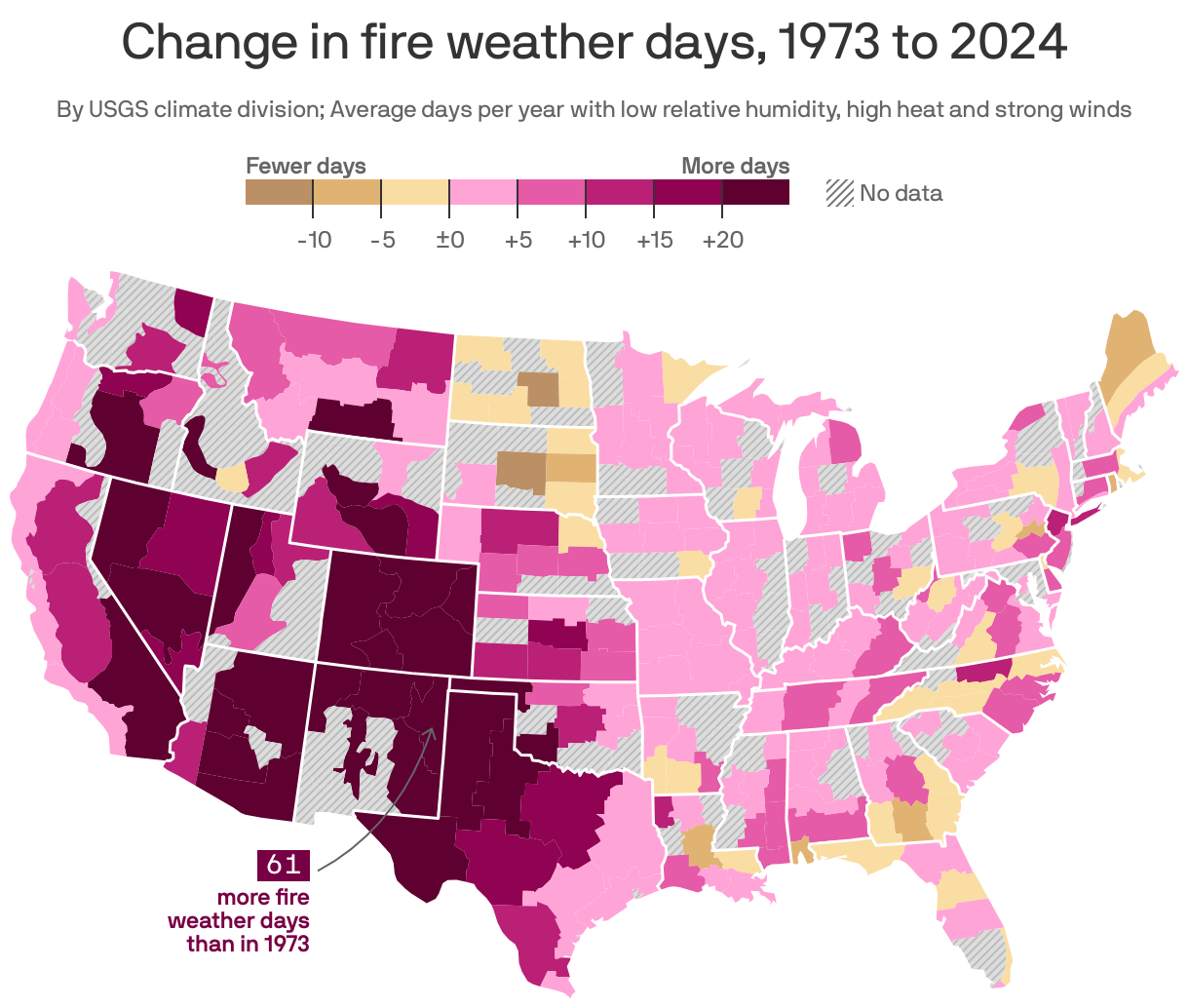
Hot, dry and windy weather that fuels wildfires is becoming more common in San Diego County and much of the western U.S. amid climate change, a new analysis finds.
Why it matters: What used to be several months of fire season is stretching in some places into a yearlong phenomenon, straining fire departments and others tasked with controlling or containing blazes.
Driving the news: The number of hot, dry and windy — fire weather — days rose by 37 in the Southwest and 21 in the West on average between 1973 and 2024, per an analysis from Climate Central, a climate research group.
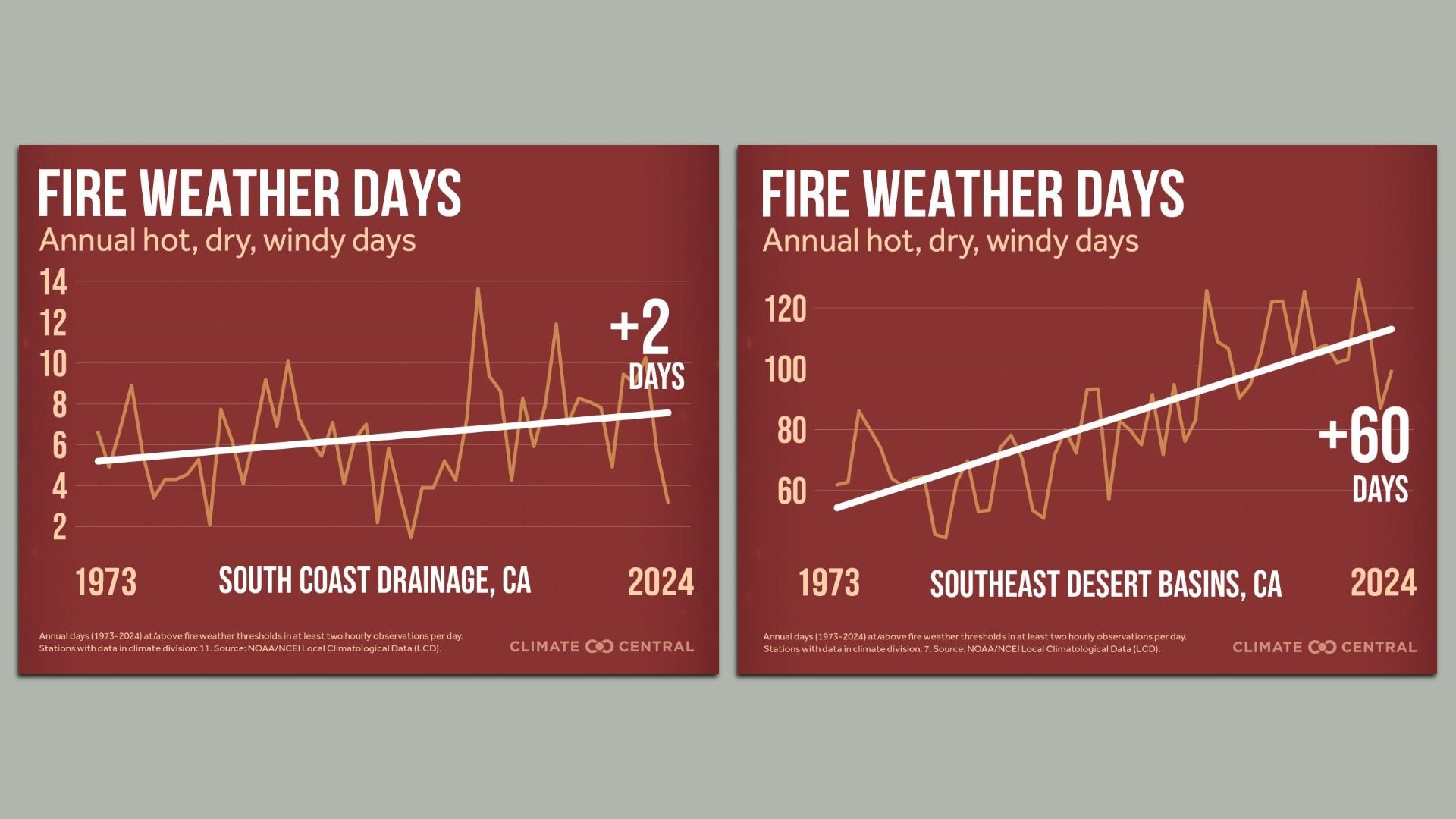
- The climate division that covers San Diego saw an increase of two days on average.
- California's southeastern desert zones, which include parts of San Diego and Imperial counties, are now experiencing as much as two more months of annual fire weather compared with 1973.
The big picture: California is preparing for what could be a challenging fire season as higher temperatures and faster winds risk turning even the smallest sparks into massive conflagrations.
- Wildfires have been growing worse with each passing year this century, according to a separate UC Irvine study.
Between the lines: The disastrous consequences of intensified fire behavior — resulting from weather conditions exacerbated by climate change — are evident in the aftermath of the LA fires, which became one of the state's most destructive and expensive fire disasters on record.
How it works: Climate Central's analysis, based on data from 476 nationwide weather stations, is broken down by 245 climate divisions across the continental U.S.
Stunning stats: Human activities, including unattended campfires and sparks from power lines, start 87% of wildfires, the group notes, citing the National Interagency Fire Center.
- The vast majority of the more than 250,000 wildfires in California over the past three decades were caused by people.
- Regardless of how a fire starts, fire weather can give them the push they need to spread and grow.
Zoom out: Extreme wildfire events have more than doubled in frequency and magnitude globally over the past two decades.