Jun 25, 2025 - News
San Diego's summer nights are getting slightly warmer


Add Axios as your preferred source to
see more of our stories on Google.
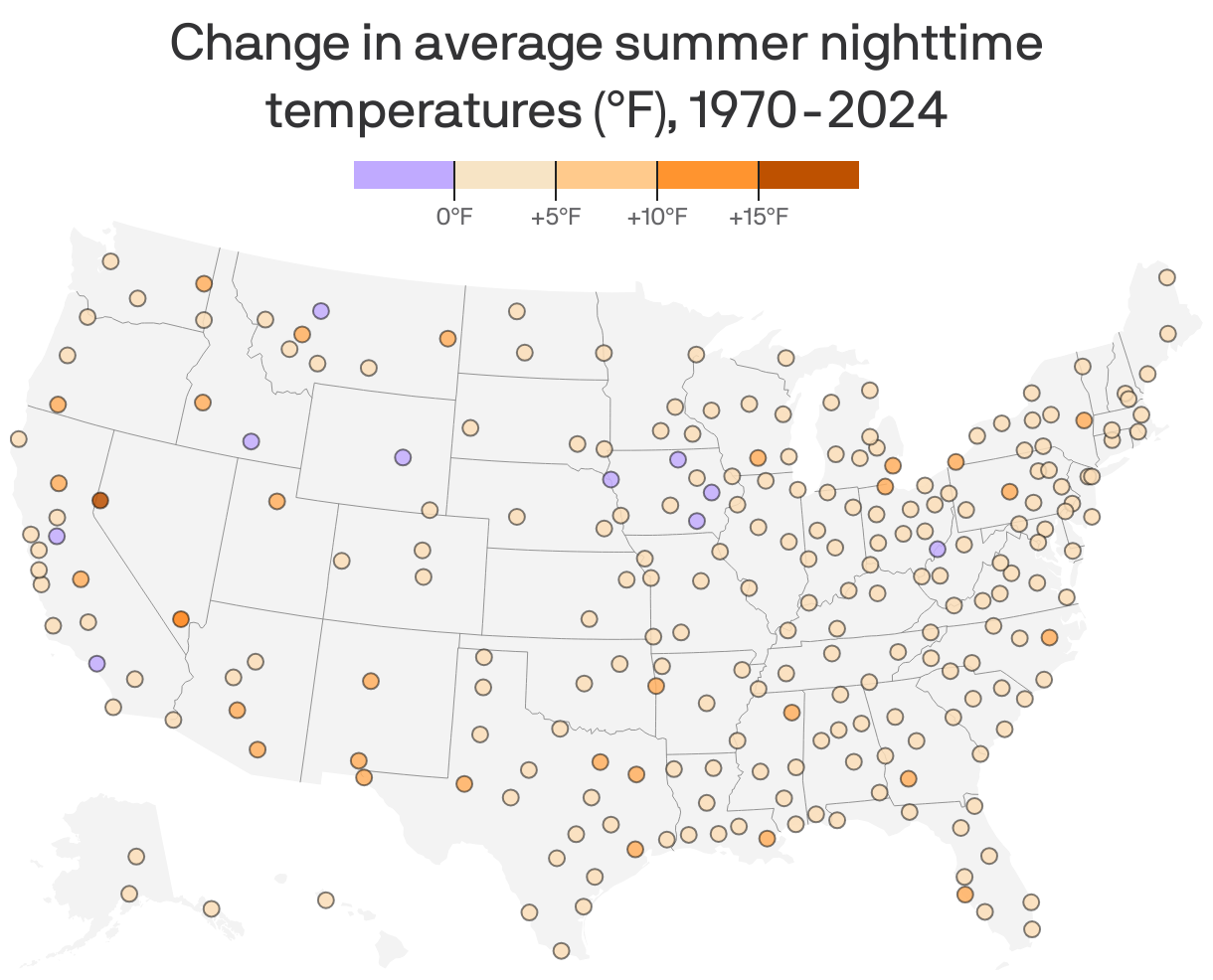
Summer nights are getting slightly warmer in San Diego, and we're seeing more of them, a new analysis shows.
The big picture: Average nighttime temperatures are going up across much of the U.S. amid climate change, per a new report from Climate Central.
- That can have health consequences for vulnerable groups, strain electrical grids and increase energy demand, fueling a vicious cycle with more greenhouse gas emissions.
By the numbers: Locally, the average lows rose 0.2°F between 1970 and 2024 — the smallest increase among the 241 cities analyzed.
- Temperatures rose by 3.1°F on average among the cities with an increase.
- Reno, Nevada (+17.7°F), Las Vegas (+10°F), El Paso, Texas (+8.9°F) and Salt Lake City (+8.2°F) saw the biggest jumps.
Between the lines: San Diego is one of hundreds of U.S. cities experiencing more frequent warmer-than-average summer nights "with a strong climate change fingerprint," Climate Central says.
- That's based on the group's "Climate Shift Index" — a method of measuring climate change's impact on local daily temperatures — and the 1991-2020 climate normals.