Urban development trendsetter Woodbury School of Architecture is closing

Add Axios as your preferred source to
see more of our stories on Google.
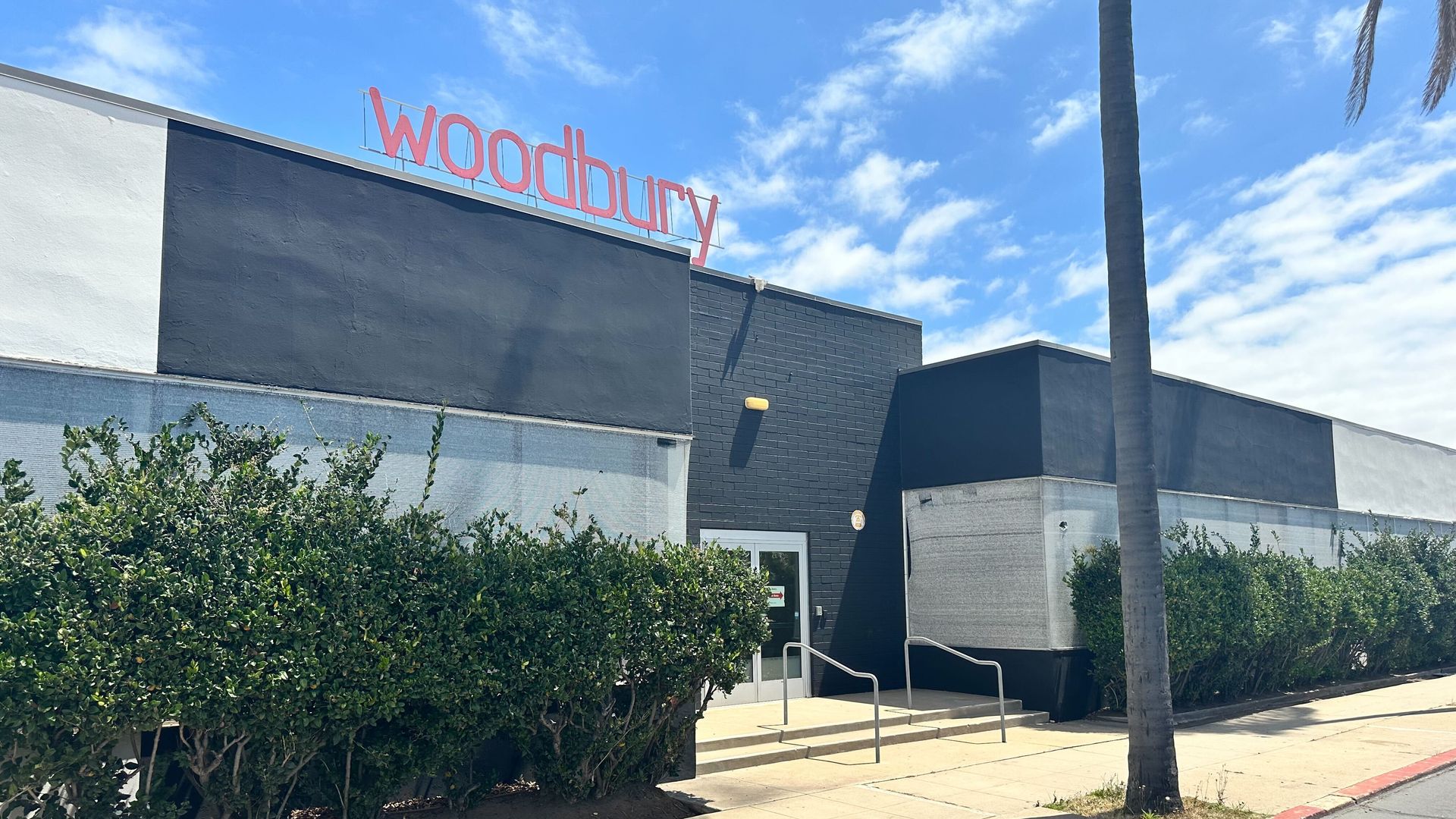
Woodbury University's Barrio Logan campus is shutting down at the end of the semester. Photo: Andrew Keatts/Axios
The San Diego outpost of the Woodbury School of Architecture will close permanently at the end of this semester.
Why it matters: Faculty and alumni built notable projects and influenced development across urban San Diego over the school's 26-year run.
Driving the news: Los Angeles-based Woodbury University this year announced a merger with the University of Redlands that includes shutting down the San Diego campus that opened in 1998.
- Catherine Herbst, chair of the Barrio Logan school, said the university started winding down operations three years ago, letting students and faculty transfer to the LA campus in preparation for this spring's formal end, once the last 11 students finish.
By the numbers: Since its first class graduated in 2001, the school has turned out nearly 500 students from its bachelor's of architecture program.
- It issued 170 graduate degrees and minted 74 state-licensed architects.
The intrigue: Woodbury was especially influential because of its master's in real estate development (MRED) program, which gained notoriety by creating a model that taught architects to pursue their own projects rather than work for others.
- Typically, developers make decisions about how a project should look and feel based on financial and zoning constraints, and then hire architects to execute those needs.
- Alumni and faculty from the MRED program instead are in charge of the entire project, and their architectural decision making dictates the end result.
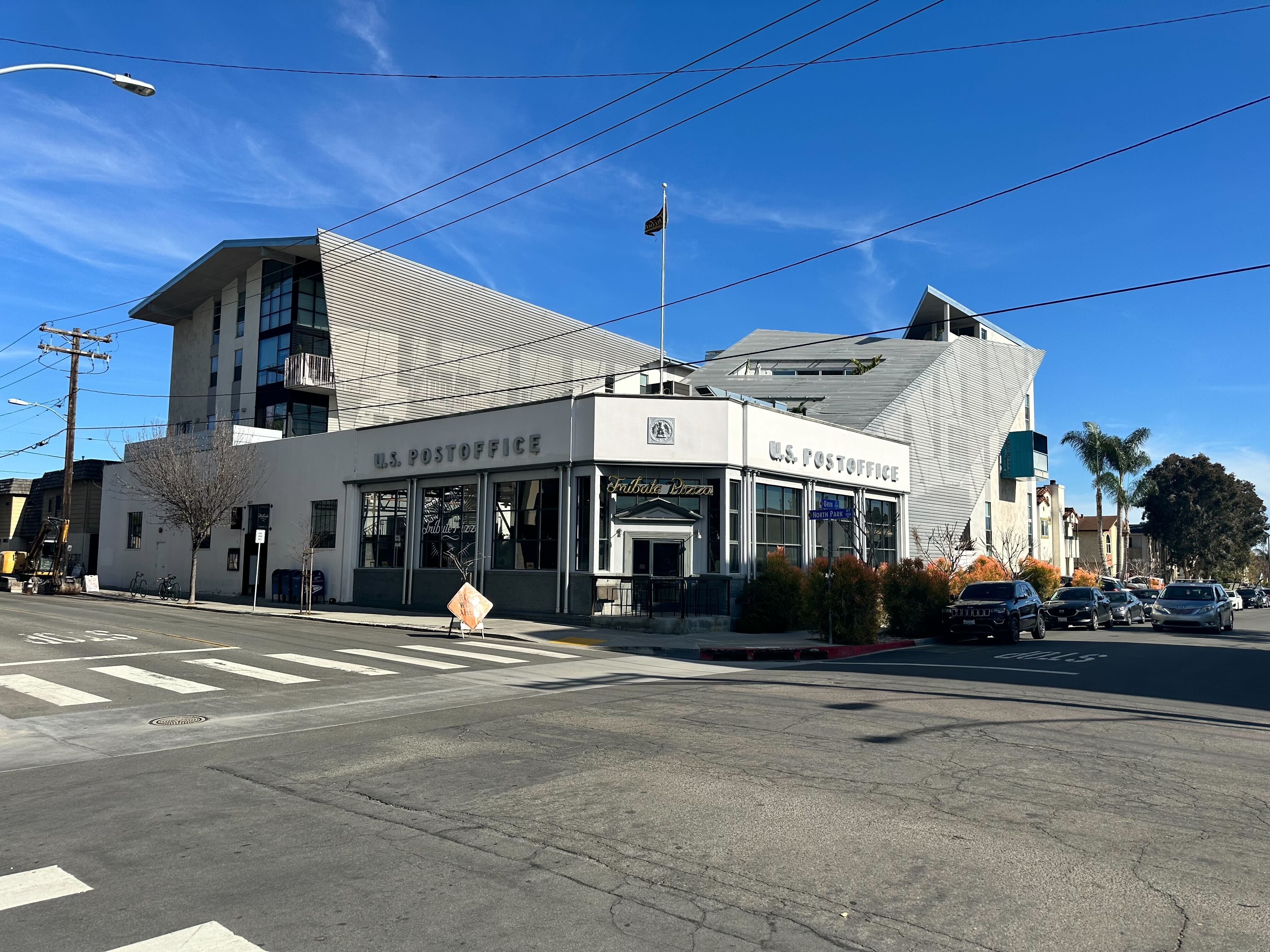
What they're saying: "The program was a critique of the way we build buildings in the United States," said Andrew Malick, an MRED graduate who has become a prolific developer around the region.
- "Our critique was, when an architect empowered in the business of development makes decisions, better buildings and better lifestyles are the result," he said.
Between the lines: Buildings from Woodbury-affiliated architects are linked by "an approach, not an aesthetic," said Tyler Hanson, a graduate and professor who has built projects in Golden Hill, North Park and Azalea Park.
- Woodbury architect-developers pursued small or odd lots in vibrant neighborhoods, while institutional developers chased simple, big projects downtown or on the outskirts of the city.
- They mastered zoning laws to maximize what they could build without triggering community hearings or approvals.
- "[Faculty member Ted Smith] calls it civil disobedience — I just call it being smart," Herbst said. "Navigating zoning and procedural democracy is something we all get really good at."
The other side: The freedom Woodbury architects celebrate has also riled residents, especially over the lack of parking for many projects.
The big picture: For a decade, city leaders have slashed parking mandates, increased allowed housing density and removed development restrictions — all part of Woodbury's legacy, Malick says.
- "The shadow of the MRED program is a re-envisioning of how we develop infill neighborhoods," he said.
Yes, but: Those reforms — especially Complete Communities, which dramatically slashed development restrictions — eventually enticed institutional players into those neighborhoods, diminishing small developers' competitive edge.
What's next: Relaxed rules on building multiunit projects on single-family lots are creating new advantages for architects and developers, Hanson said.