San Diego closes in on passing mayor's housing reforms

Add Axios as your preferred source to
see more of our stories on Google.
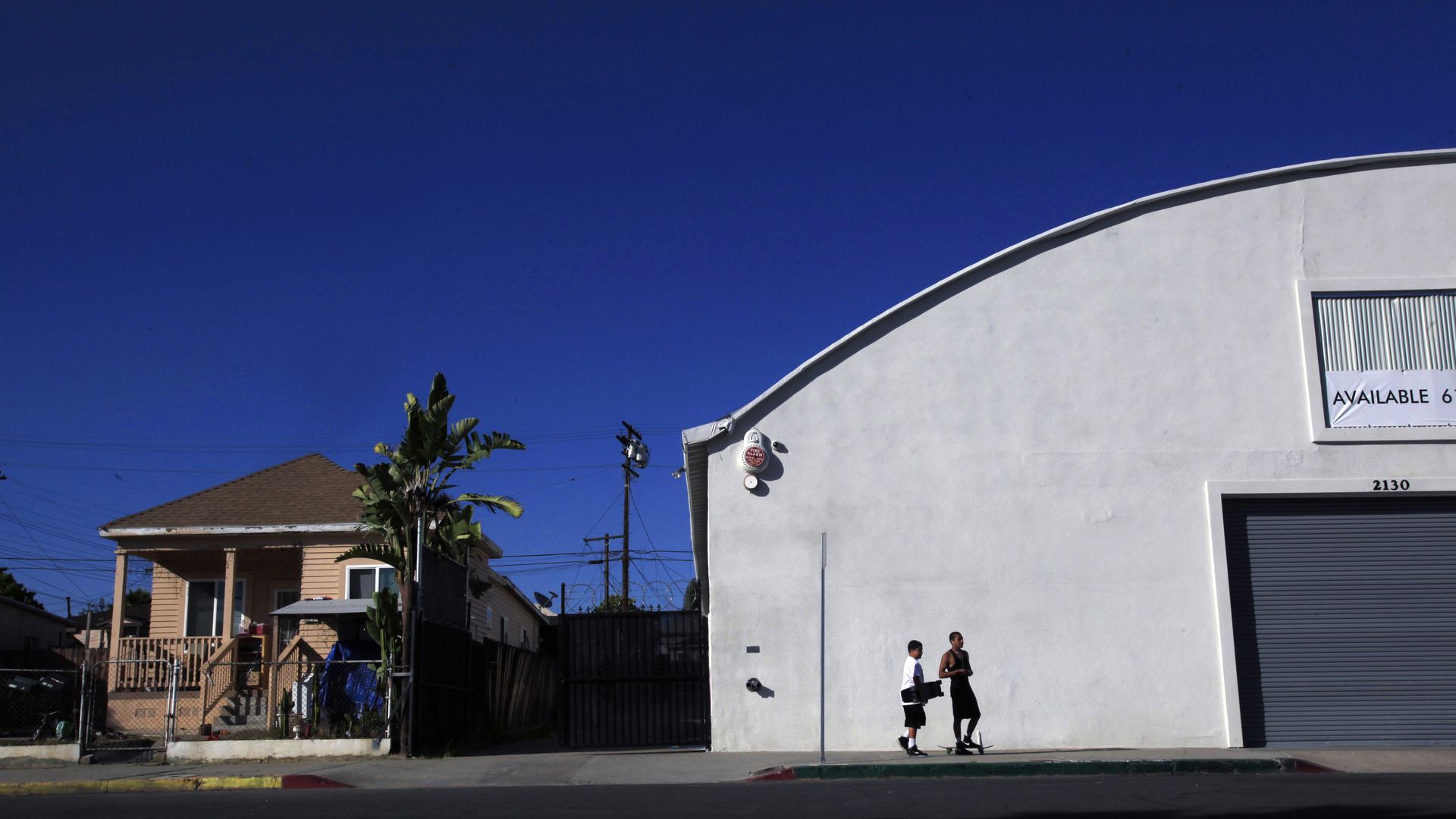
An industrial building on Newton Avenue in Barrio Logan. Photo: Bob Chamberlin/Los Angeles Times via Getty Images
San Diego is one step closer to adopting Mayor Todd Gloria's package of reforms intended to increase homebuilding in the city.
Driving the news: The City Council's committee on housing approved Thursday a package of 10 reforms including moves to:
- Remove parking requirements on properties within a half-mile of transit;
- Increase how many homes developers can build on commercial properties near transit that have been rezoned to allow homes, but which haven't redeveloped;
- Let developers build more homes in projects if they provide additional three-bedroom units geared toward families;
- Make it easier to build housing for students in projects within one mile of a university.
- Allow developers using an optional program that lets them build more homes than zoning allows in exchange for building low-income homes to build those low-income homes at a different property.
Yes, but: The controversial proposal to nix single-family zoning near transit, which the mayor's office agreed to strip from the package following hours of public opposition during a Planning Commission meeting last month, was not part of the committee's vote.
- City staff said it is continuing to work with community members to bring a revised version of the proposal back sometime in the future.
Why it matters: Housing continues to dominate local politics, as a new report found San Diego is now the most competitive rental market in southern California. Neighborhood groups oppose regulatory changes and regional development shows no signs of increasing in spite of highly publicized state and local actions.
Zoom out: One overlooked piece of the package would take another step in resolving environmental justice concerns in and around Barrio Logan.
- The city re-zoned Barrio last year to outlaw new industrial businesses in residential areas, but city law lets existing businesses continue operating in perpetuity.
- Junk yards, car wrecking shops, recycling facilities and other heavy industry within 50 feet of homes would lose their right to operate after 15 years under the new proposal.
- Activists asked to expand the change from 50 feet to 1,000 feet, to force closures in 11 years, to add more industrial uses to the provision, and to impose the shift near schools, parks and medical facilities. The committee told staff to study the effects of those changes.
What's next: The full City Council will vote on the package in the next few months.