Trump's "big, beautiful bill" puts SNAP at risk


Add Axios as your preferred source to
see more of our stories on Google.
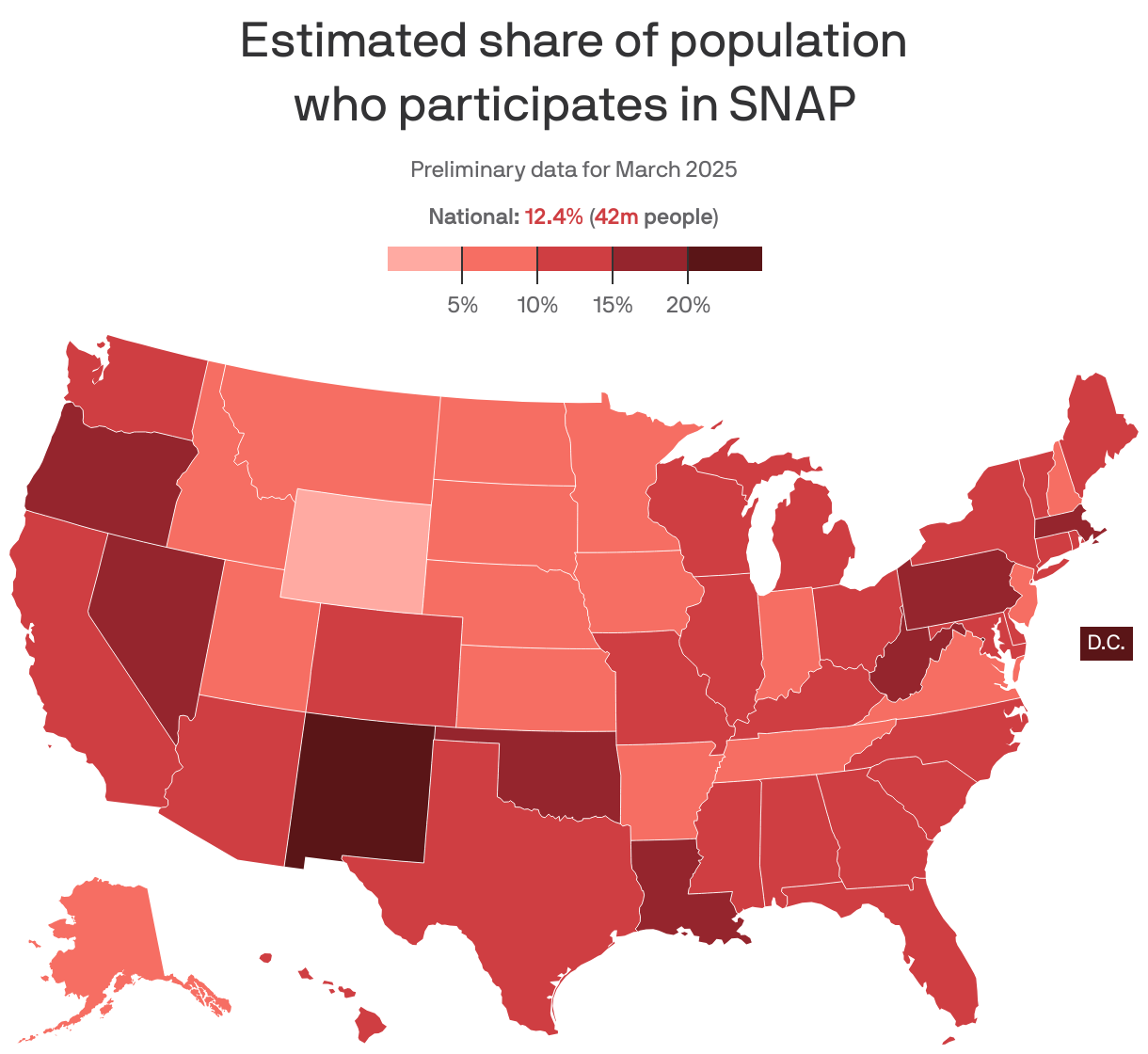
President Trump's massive tax and spending bill could have a dire impact on food benefits for low-income Pennsylvanians.
The big picture: The "big, beautiful bill," signed July 4, makes deep cuts to the social safety net, including the Supplemental Nutrition Assistance Program (SNAP, commonly known as food stamps) and health benefits for the poorest Americans.
- Republicans claim the bill weeds out waste, fraud and abuse — but experts say the restructuring of assistance programs could leave more people hungry and uninsured.
State of play: Pennsylvania may need hundreds of millions of dollars to keep SNAP benefits intact in the next fiscal year.
- The additional costs could range from $125 million to $800 million, per Spotlight PA.
Context: In addition to funding cuts, Trump's plan adjusts work requirements for SNAP.
- In order to keep their benefits, parents of children aged 14 or older would have to meet new work requirements. The bill also bumps the work requirement age up to 64.
- Currently, SNAP's requirements for able-bodied adults without dependents apply to those between 18 and 54.
By the numbers: About 2 million residents — or 15% of the state's population — receive SNAP benefits.
Threat level: Nearly 144,000 Pennsylvanians could lose SNAP benefits, per Feeding Pennsylvania and Gov. Josh Shapiro.
- Tens of thousands are likely to lose SNAP benefits in Southwestern Pennsylvania, per Shapiro.
What they're saying: Advocates say funding cuts will devastate Pennsylvania families and put pressure on the state budget.
- "Food insecurity in Pennsylvania increased over 40% in the last two years," said Feeding Pennsylvania CEO Julie Bancroft, adding that rural communities and children will be hit hardest.
- The Greater Pittsburgh Community Food Bank said it's "profoundly disappointed" by the bill's passage and is working with partners to brace for higher demand.
The bottom line: State lawmakers would likely have to pass a tax hike or make a major policy change in order to fill the funding gap — which is especially hard heading into an election year.