Childhood hunger rises in Pa. amid proposed SNAP cuts


Add Axios as your preferred source to
see more of our stories on Google.
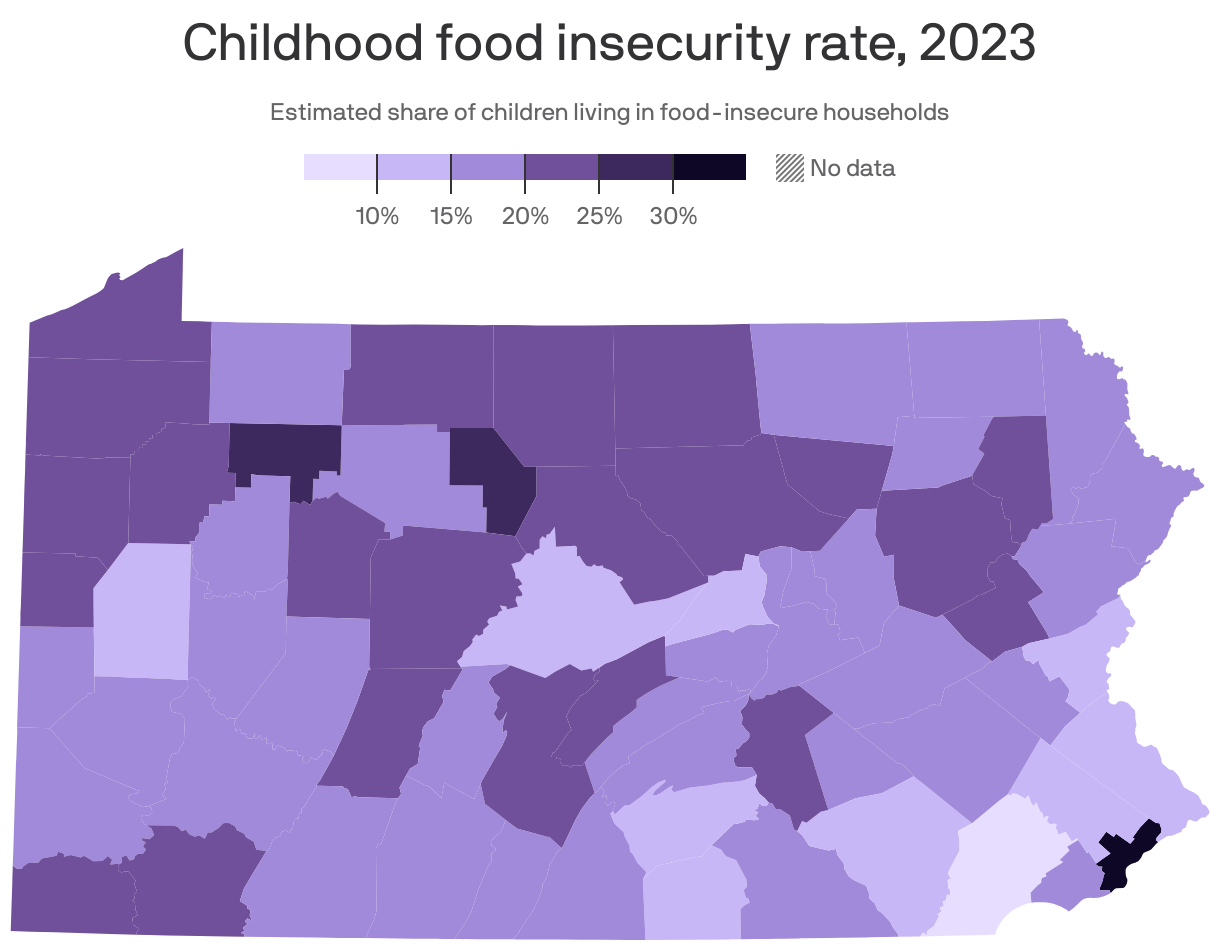
About 1 in 5 children in Southwestern Pennsylvania is food insecure, per new estimates from Feeding America.
The big picture: Federal funding cuts to food aid programs, rising costs, tariffs and potential Supplemental Nutrition Assistance Program (SNAP) changes could squeeze food banks and exacerbate the childhood hunger crisis.
- "For the third consecutive year, the reported need increased," says Adam Dewey, research director at Feeding America.
By the numbers: Childhood food insecurity in Allegheny County jumped to 18.2% in 2023, up from 16.6% in 2022, per Feeding America's latest Map the Meal Gap report published last week.
- Lawrence (20.5%), Fayette (24.1%) and Greene (20.2%) counties had the highest rates in Southwestern Pennsylvania, while Butler had the lowest (12.3%).
- In Allegheny County, 13% of the population is enrolled in SNAP, including more than 60,000 people under age 21.
Between the lines: Proposed federal SNAP cuts would shift more administrative costs and program funding to states, expand work requirements, and likely force states like Pennsylvania to cut benefits, per a Center on Budget and Policy Priorities report.
What they're saying: "The food bank saw a more than 50% increase in pounds distributed through our child nutrition agency programs this fiscal year," said Greater Pittsburgh Community Food Bank director of child nutrition programs Kelsey Gross.
- The food bank says it has added 21 child nutrition partners to combat hunger in its 11-county region in the past year.
Greater Pittsburgh Community Food Bank on Tuesday urged Congress to protect SNAP and Medicaid, calling the proposals the largest rollback of food assistance in the nation's history.
- "With the sustained high cost of food and health care, this is not the time to scale back essential programs that help families stay afloat," said food bank president and CEO Lisa Scales. "Families, seniors, veterans, and children in our community work hard every day to build better lives – but they need a strong foundation to succeed."
Friction point: All public school students in the U.S. received free breakfast and lunch during the pandemic, but Pennsylvania kept only free breakfast after the program ended in 2022. Now, students pay lunch fees based on income, leaving nearly 50,000 kids just above the cutoff without help, Spotlight PA reports.
- State Sen. Lindsey Williams (D-Allegheny County) and state Rep. Emily Kinkead (D-Allegheny County) have for years pushed to make lunch free for all students and wipe out school meal debt, arguing the programs slash food insecurity and boost academic performance.
- Kinkead, co-chair of the Pennsylvania Legislative Hunger Caucus, in February slammed proposed Trump-era SNAP cuts, calling SNAP "the single most effective program when it comes to combating hunger in this, the wealthiest nation on Earth."
Zoom out: Childhood food insecurity is one piece of a broader hunger problem worsened by rising food costs.
- The annual aggregate national food budget shortfall — meaning, the total amount of money people in food-insecure U.S. households need to buy enough food — rose from $28.5 billion in 2022 to $32.2 billion in 2023, up 8.4% inflation-adjusted, Axios' Alex Fitzpatrick reports.
- More than 475,000 children in Pennsylvania — 18.1% — lived in food-insecure households in 2023.
- Philadelphia County (30.5%) had the highest rate statewide.
The bottom line: The Greater Pittsburgh Community Food Bank urges public support through donations and volunteer efforts as federal aid remains uncertain.