Watchdog: Alligator Alcatraz had bug-infested showers, tiny holding cells

Add Axios as your preferred source to
see more of our stories on Google.
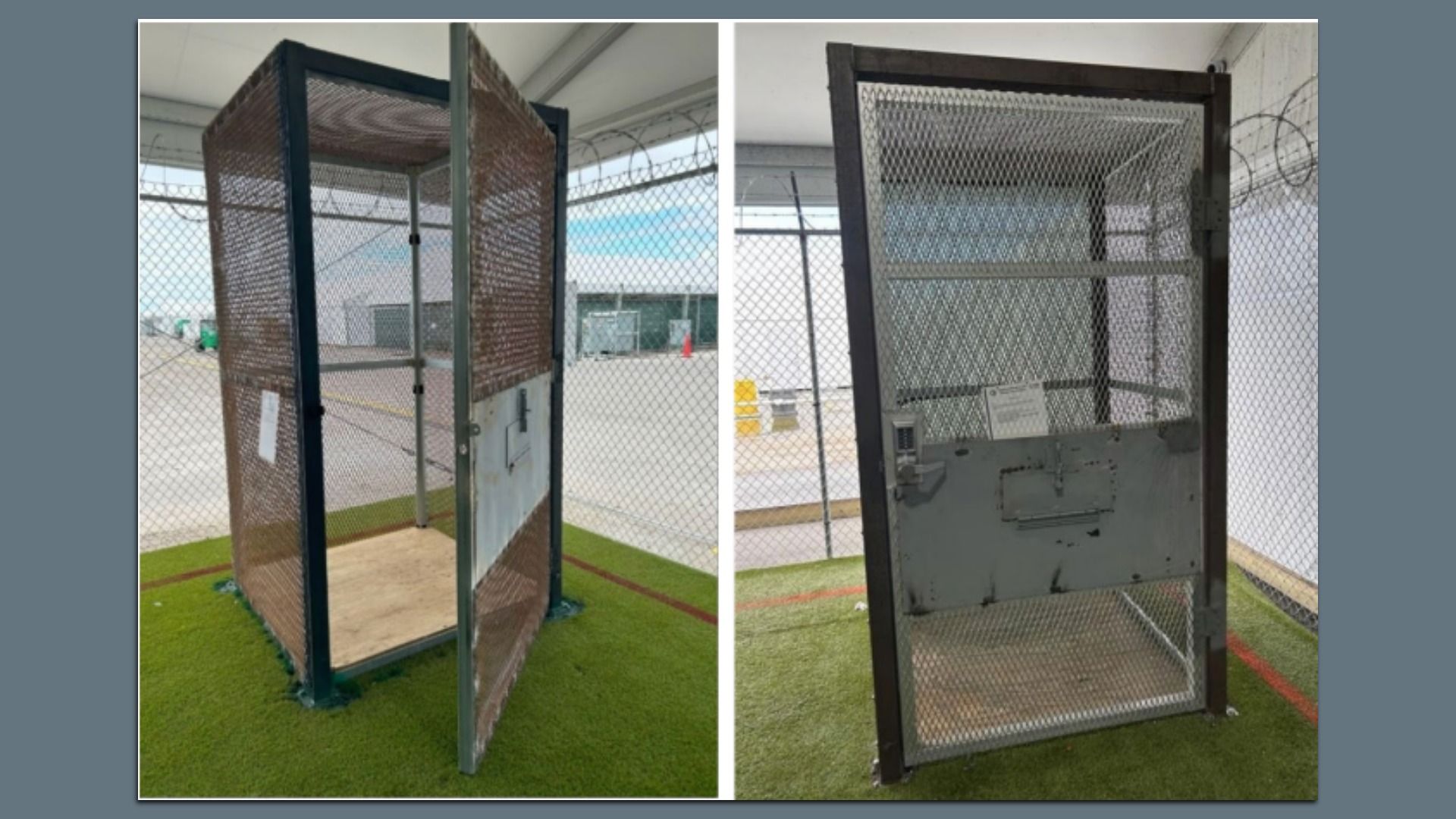
Small metal enclosures dubbed "calming areas," according to OIG report. Photo: Courtesy of DHS OIG
Alligator Alcatraz, the former immigration detention center in the Everglades, improperly confined detainees in small metal holding cells staff described as "calming areas," a new federal report found.
The big picture: The hastily constructed detention facility — a centerpiece of Gov. Ron DeSantis' immigration policy praised by President Trump — violated several detention standards, according to the Department of Homeland Security's Office of the Inspector General.
- The facility, which opened in 2025 and closed in June, was operated by the state and funded by state and federal dollars.
- It has been the subject of multiple lawsuits and complaints from legal advocates and Democratic members of Congress.
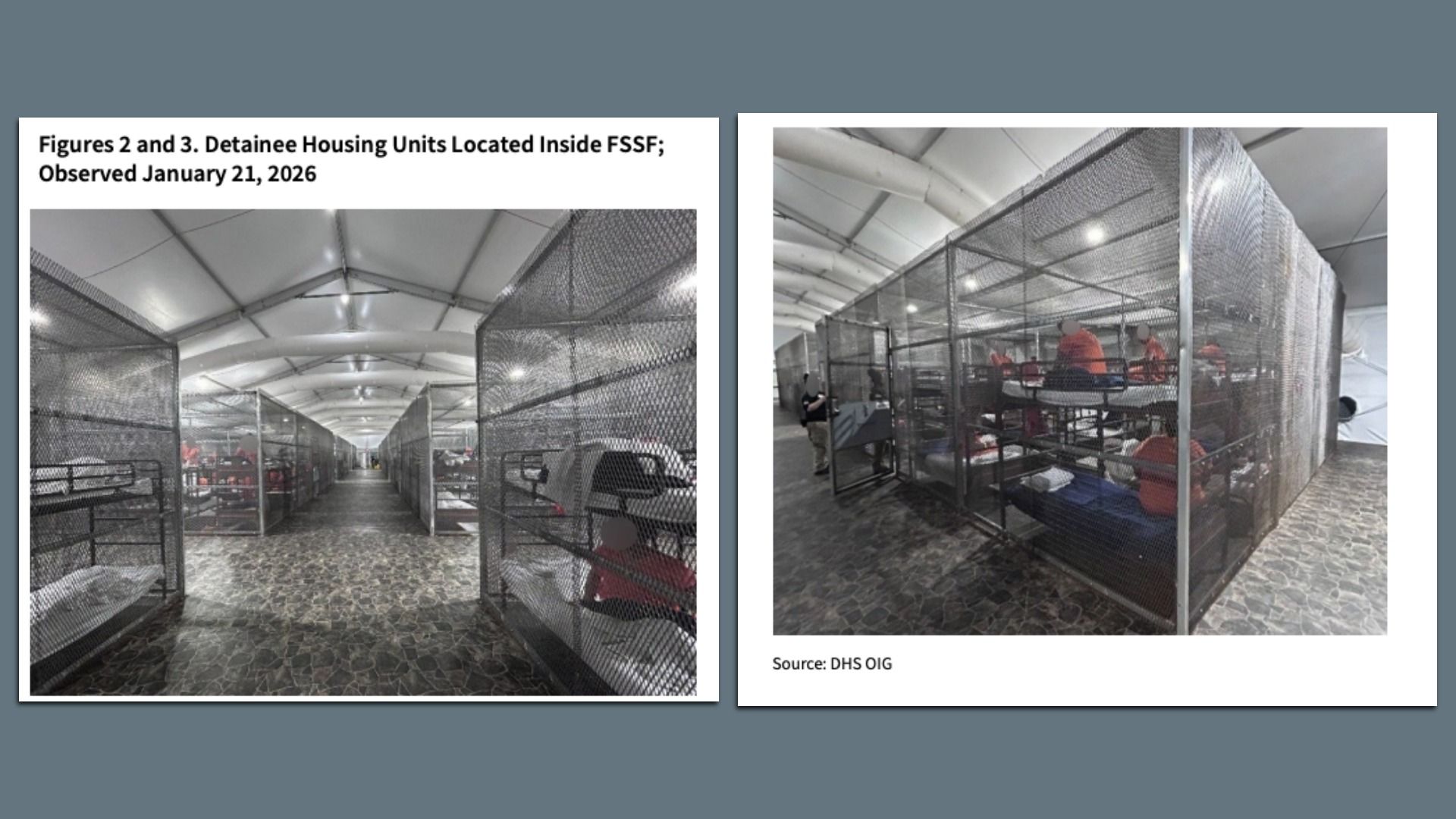
What the OIG found: During an unannounced inspection in January, the OIG staff found that Alligator Alcatraz housed detainees in cramped, windowless living spaces.
- Detainees lacked adequate recreation time, hygienic showers or access to legal materials.
- DeSantis spokesperson Alex Lanfranconi, in a statement, said the holding cells flagged by the OIG met federal standards, adding, "we'd make it even smaller if we could."
Zoom in: The OIG report took particular issue with the individual metal enclosures that Alligator Alcatraz staff said served to calm detainees.
- The holding cells, which measured about 18 square feet, were described as "unprecedented among ICE facilities inspected by OIG" and not in alignment "with standards for humane treatment."
Between July 2025 and January 2026, detention staff confined 79 detainees in the cells, which were placed in outdoor recreation areas, per the report.
- Staff told the OIG that detainees asked to go into the cells, and the policy stated that they could leave whenever they wanted to and stay for a maximum of two hours.
However, ICE officials told the OIG the enclosures were also used for disciplinary issues, along with crisis intervention, housing changes, and conflicts among detainees.
What else: The OIG documented several key findings, including:
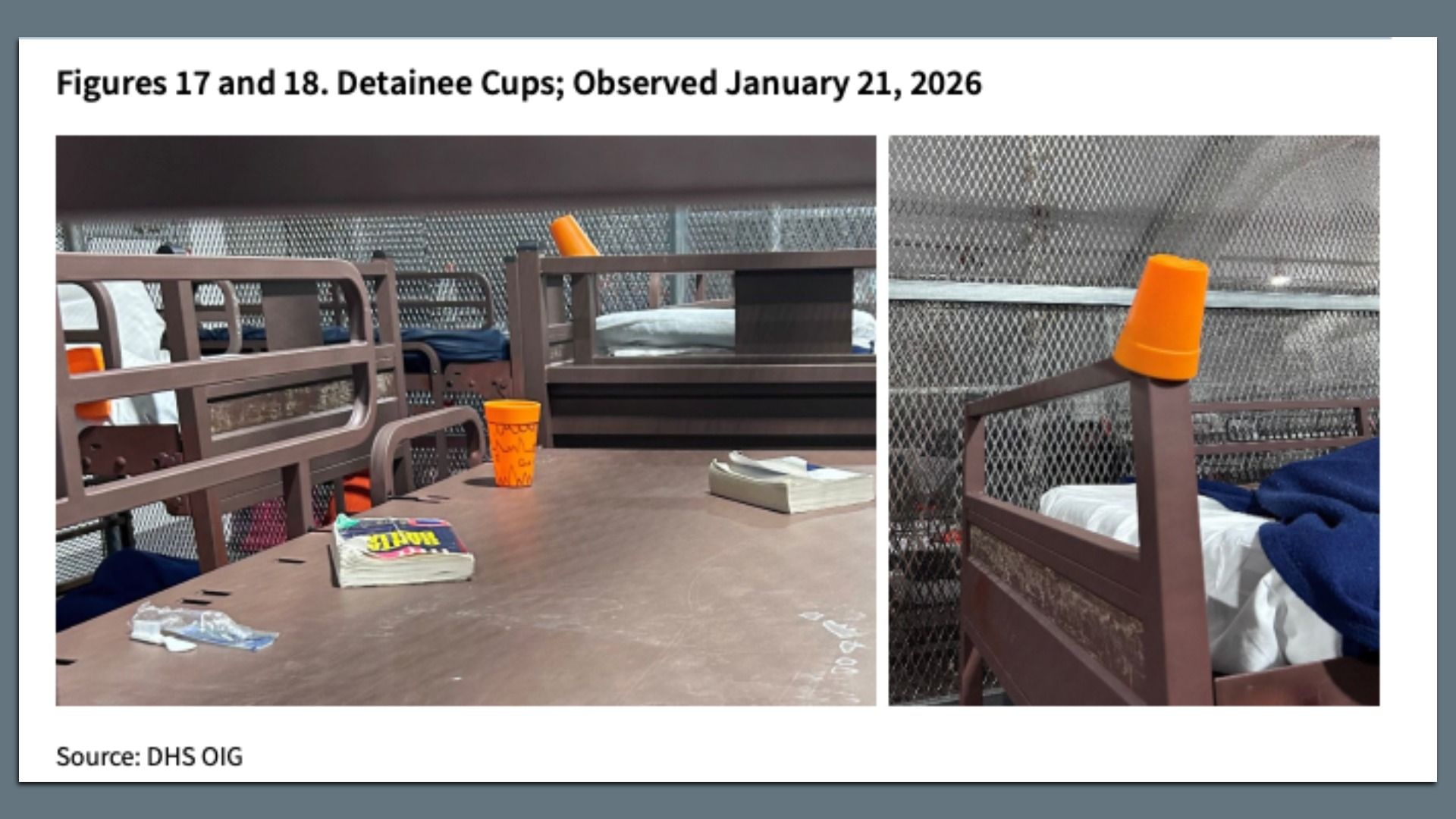
- Cramped housing units offered less than half the minimum living space required. Detainees said they were given dirty water in communal jugs and couldn't wash the reusable plastic drinking cups they were given.
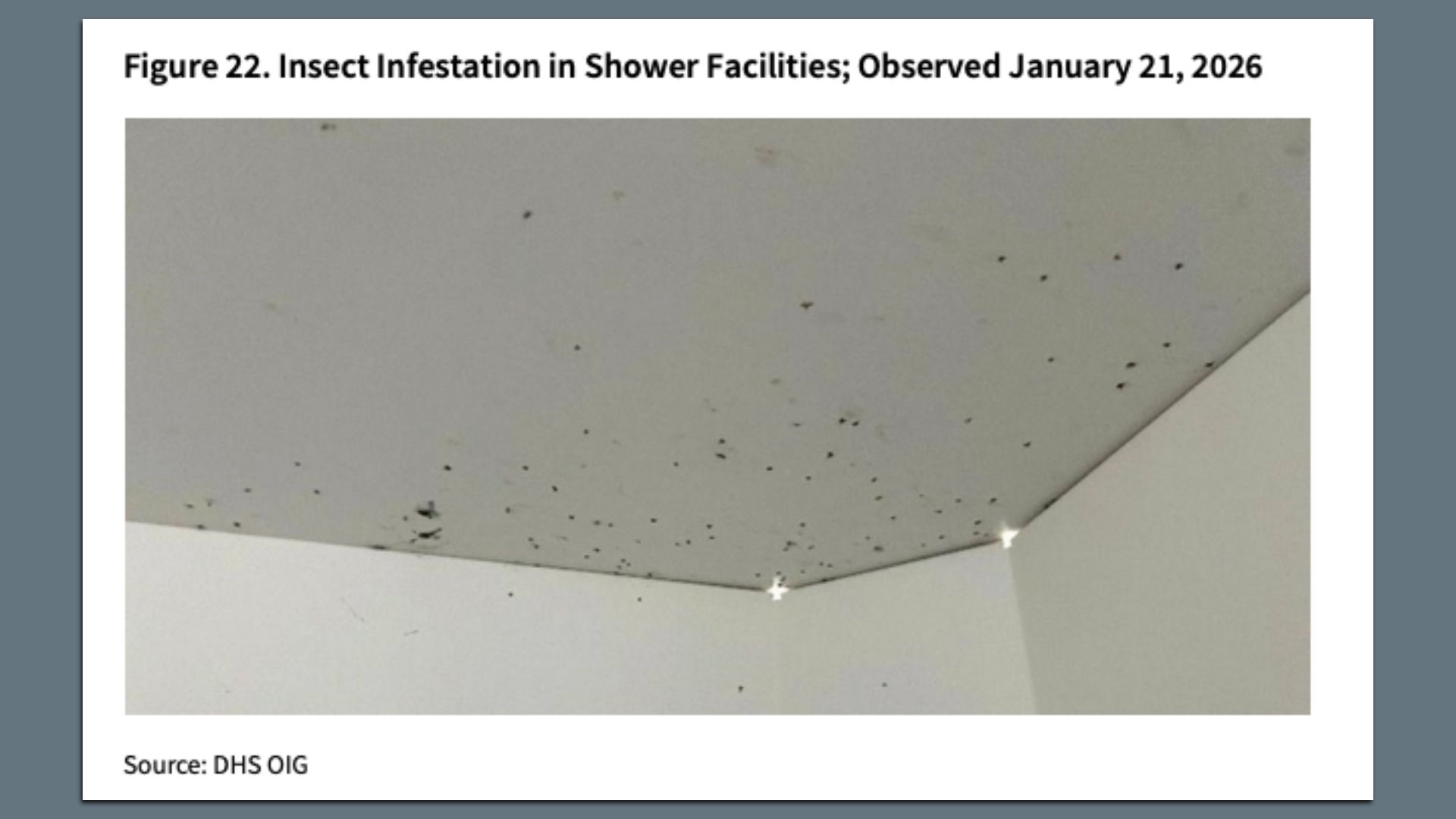
- Showers were infested with small bugs, violating hygiene standards, and detainees were allowed three showers per week, instead of the recommended five.
- Detainees were offered an hour of recreation time three days a week, instead of the recommended five hours per week.
- One of the facility's food-storage freezers was operating above the recommended temperature for food safety.
- In special management units — detention areas separated from the general population, where detainees lacked legal materials and working phones — only low-risk detainees were offered recreation time.