Florida spent more than $200 million to set up Alligator Alcatraz, records show

Add Axios as your preferred source to
see more of our stories on Google.
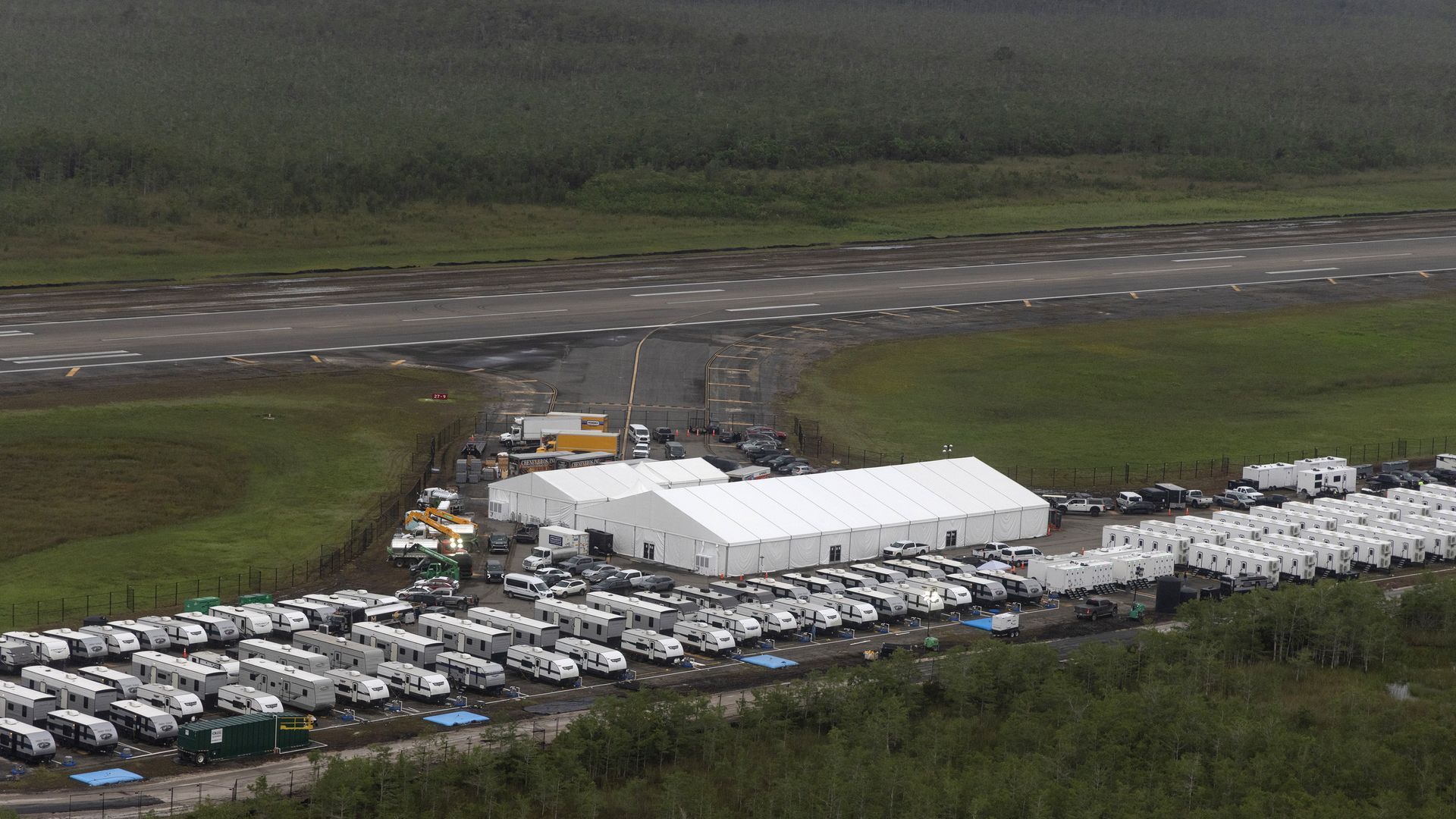
An aerial view of Alligator Alcatraz" on July 4. Photo: Alon Skuy/Getty Images
State contracts recently shared with Axios show how millions of taxpayer dollars were used to build Alligator Alcatraz, an immigration detention center in the middle of the Everglades, in just eight days.
Why it matters: Despite officials saying the site was selected because infrastructure was already in place and that no land has been disturbed, records indicate millions were set aside to ready the former airstrip for the facility.
The big picture: The records show the DeSantis administration has spent, thus far, more than $200 million to build and oversee the detention center.
- The more than two dozen contracts show purchase orders ranging from small items, such as personal radios, laptops and batteries, to larger expenses, like the site buildout and staffing.
- It spent more than $2 million on 400 radios, which were "needed for onsite communication," a purchase order to Gothams, LLC, shows.
The intrigue: After at least two dozen contracts were removed from the state's public database, State Rep. Anna Eskamani (D) posted to social media, saying officials are now reposting "incomplete" records to the site.
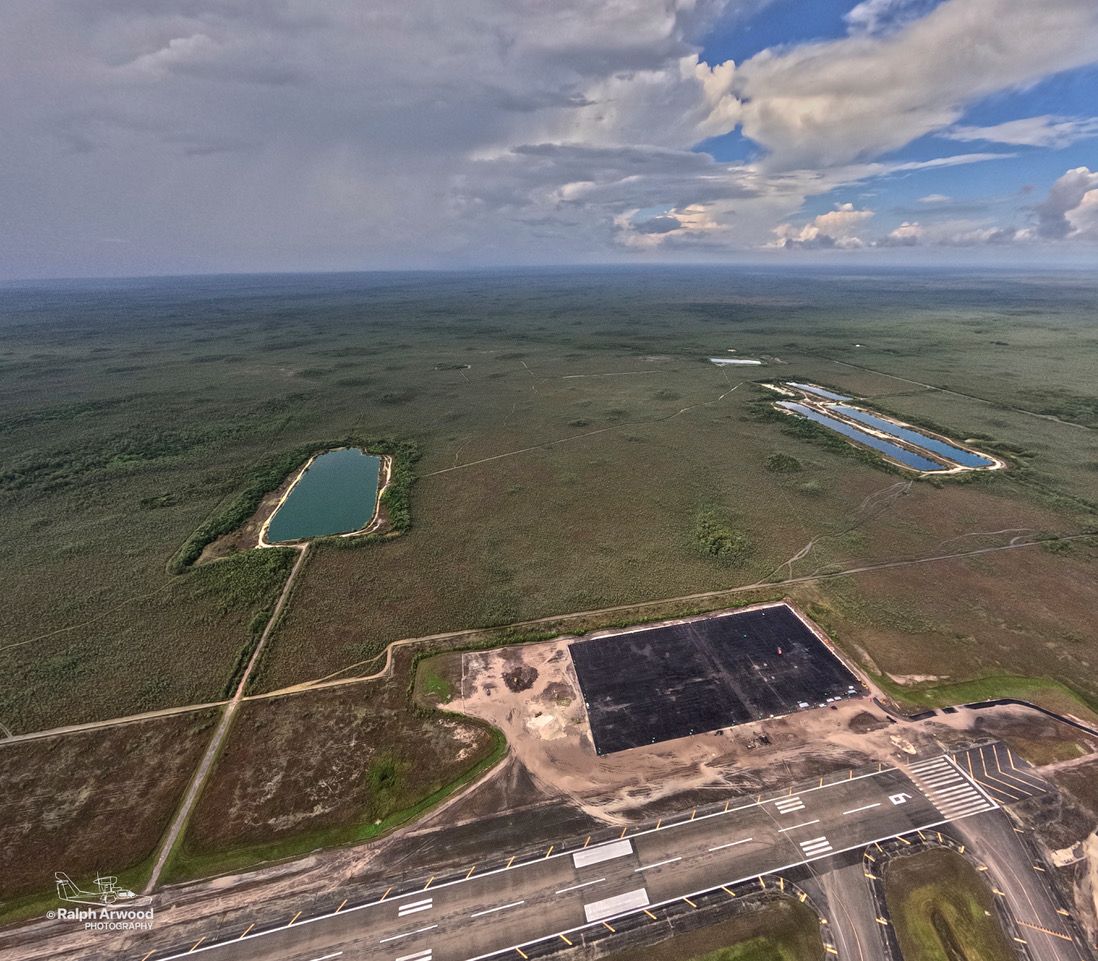
Follow the money: The state spent more than $5 million on "Land Clearance As Required" in a contract with Lemoine CDR Logistics.
- The "mission title" on the purchase order refers to "site preparation," but it's unclear what areas or portions of the site the line items reference.
What they're saying: A spokesperson for the DeSantis administration said the areas "all reflect previously paved or concrete portions of the airport, including the asphalt pictured."
The other side: Aerial photos and analysis of the landing strip shared with Axios by Friends of the Everglades, one of the environmental groups that sued over the project, appear to show a newly-constructed asphalt pad.
- In the group's analysis, Christopher McVoy, an ecohydrologist and Everglades expert, said that while the area was likely cleared in the 1970s, "there is no indication that such a pad was ever installed" at the time — contrary to what officials have said.