Activists push for bill to help Venezuelan, Haitian TPS holders facing deportation

Add Axios as your preferred source to
see more of our stories on Google.
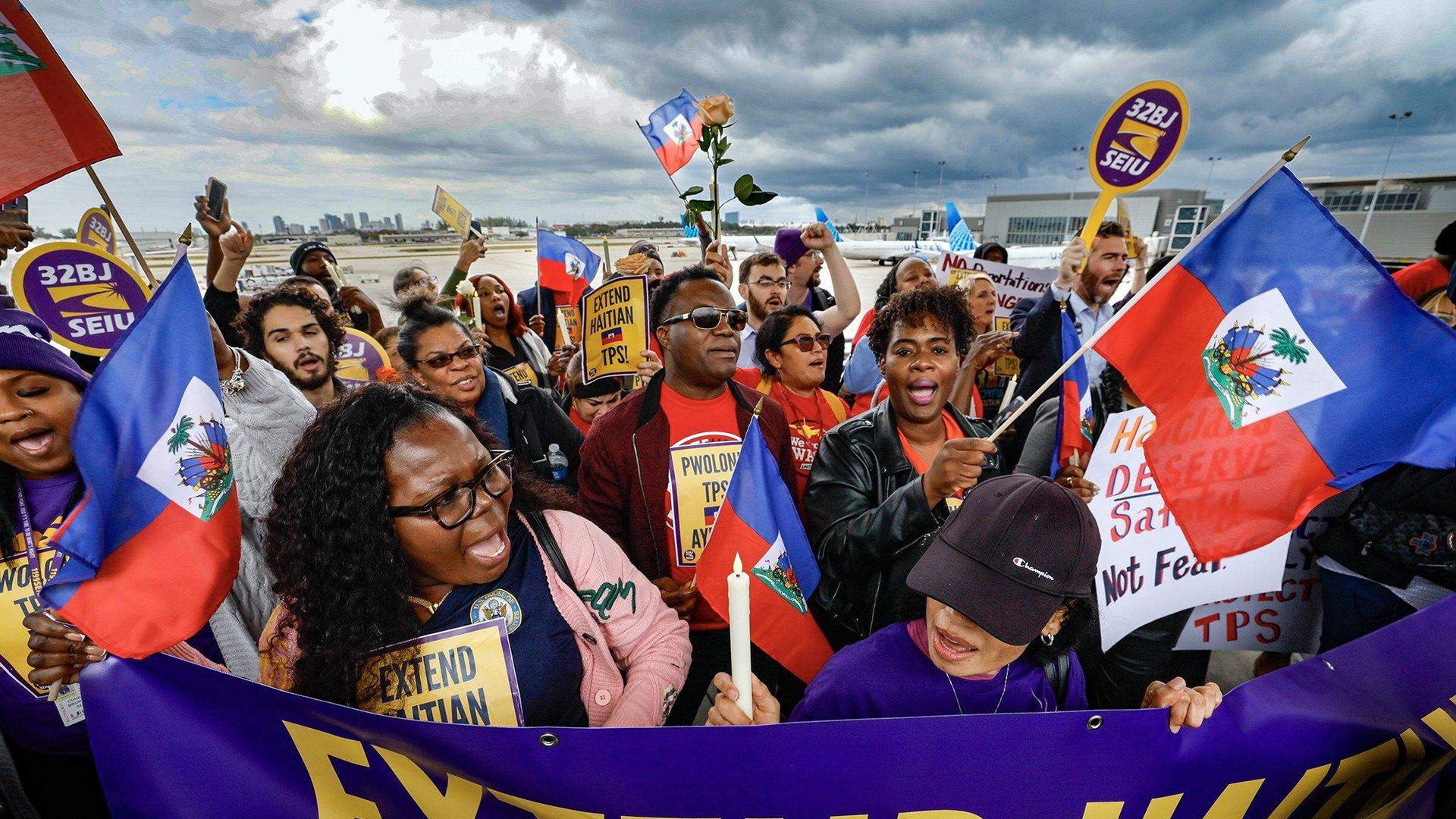
Protesters in Fort Lauderdale in January demanded an extension for Temporary Protected Status for Haiti. Photo: Al Diaz/Miami Herald/Tribune News Service via Getty Images
As Miami's Haitian and Venezuelan communities grapple with the end of Temporary Protected Status, immigration activists hope that a bipartisan House bill could help those who lost their legal status.
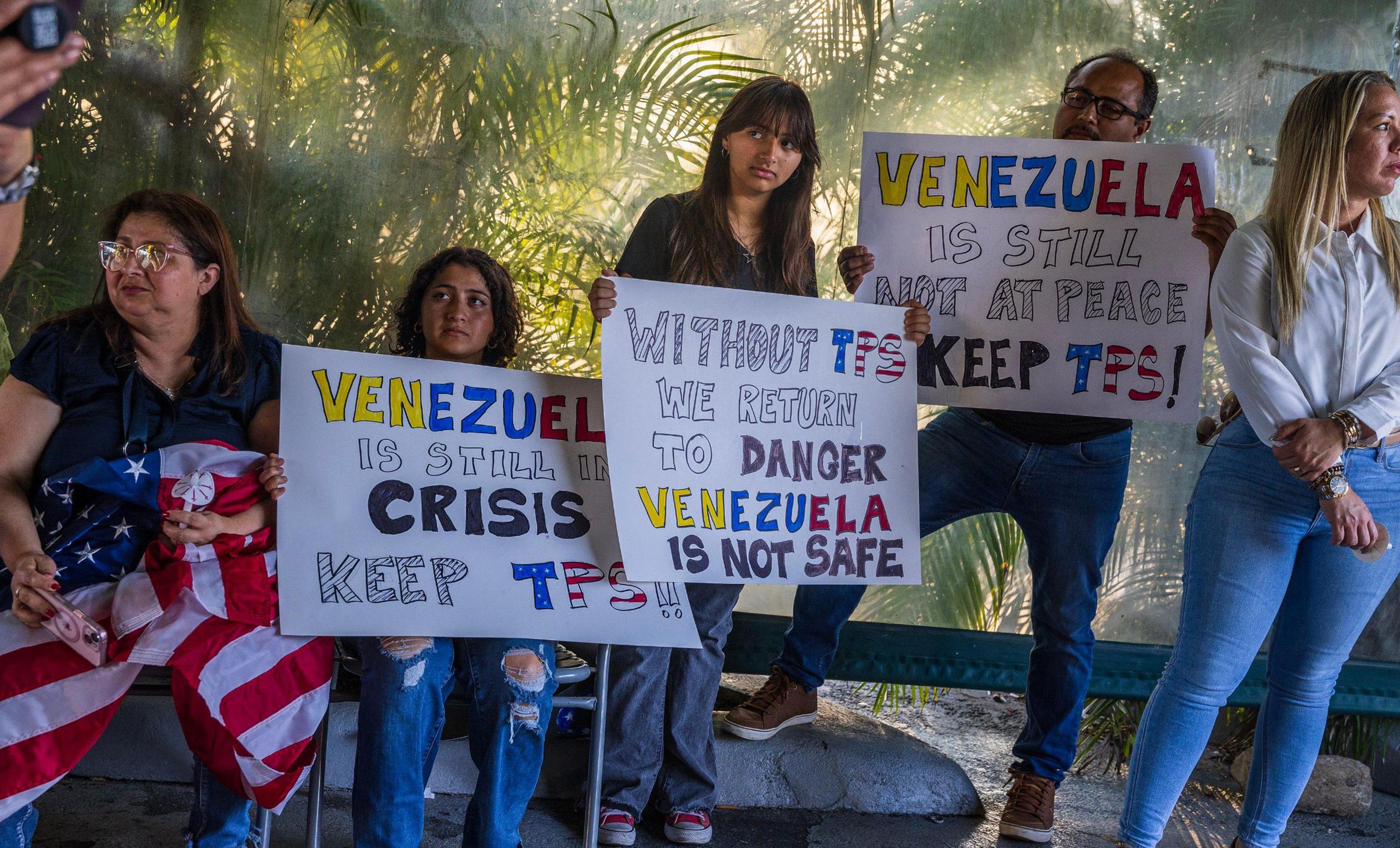
The big picture: In South Florida, which has the largest concentration of Haitian and Venezuelan immigrants in the U.S., those with expired TPS now live in fear of deportation.
- Last year, the Trump administration ended TPS for about 650,000 Venezuelans.
- This summer, an estimated 350,000 Haitians lost their TPS.
Driving the news: The American Dream and Promise Act would give permanent residency to eligible TPS holders, along with certain immigrants brought to the U.S. as children.
- Miami Republican Congresswoman María Elvira Salazar and other co-sponsors of the bill are trying to force a vote in the House through a discharge petition, which currently has 210 of the needed 218 signatures to call a vote.
How it works: The bill would give permanent residency to TPS beneficiaries who were eligible for TPS in 2017, have lived three years in the U.S. and follow other requirements.
- It would also give residency to eligible immigrants brought to the country as children who have been living in the U.S. since 2021 and pursued their education here.
What they're saying: Salazar tells Axios she signed the discharge petition "because the situation is dire, and we cannot allow Congress to keep avoiding the issue."
- She said conditions remain unsafe in Venezuela and Haiti for TPS recipients to return.
Zoom in: Adelys Ferro, executive director of the South Florida-based Venezuelan American Caucus, said in a video posted to Instagram that the bill is the best current legislative path for TPS holders to stay in the country.
- She tells Axios that Venezuelan TPS holders in Miami are living in hiding because they no longer have legal status.
- Many have stopped working, sold their businesses and houses, and now live with friends and family members, she said.
- "People are terrified to leave their houses, people are terrified to open the doors to their houses."
Meanwhile, Haitian TPS holders are living a similar reality.
- Farah Larrieux, a South Florida TPS recipient, told NPR last month that she had stopped working and planned to live off her savings while applying for asylum.
Isaias Guerrero, director of advocacy and mobilization at the Center for Popular Democracy, tells Axios that he's heard cases of Haitian TPS beneficiaries skipping medical appointments and not sending their kids to school.
- "The situation is one of complete desperation and uncertainty."
What we're watching: Even if the bill passes the House, it would then head to a Senate that recently blocked a proposed extension of Haitian TPS.
- "We're gonna fight, we're not giving up until we find a way to help them," Ferro says.