"A lot of fear." South Florida Haitians brace for end of Temporary Protected Status

Add Axios as your preferred source to
see more of our stories on Google.
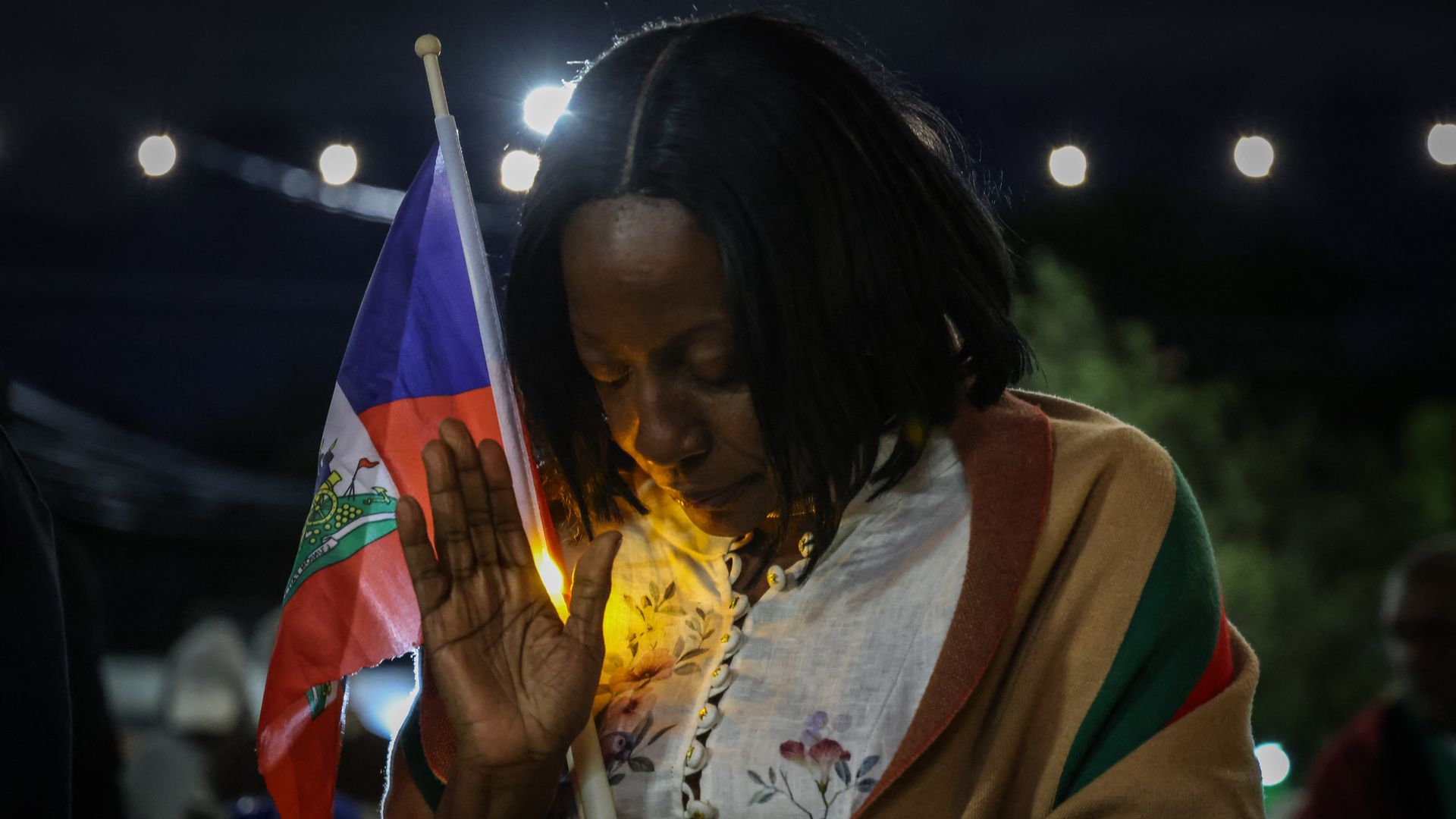
A woman prays during a vigil for Haitians living under Temporary Protected Status in Miami. Photo: Giorgio Viera / AFP via Getty Images
Many South Florida Haitians are living in fear as an estimated 350,000 Haitian immigrants across the U.S. brace for their Temporary Protected Status to end Monday.
The big picture: The Trump administration's decision to end TPS will separate families and hurt Florida's health care, hospitality and tourism industries, advocates and business leaders say.
- TPS has protected Haitians and provided them work authorization since 2010.
Zoom in: In South Florida — home to the largest Haitian diaspora in the U.S. — TPS holders are being told to stay home and not risk exposing themselves to immigration enforcement, says Carline Paul, executive director of Good Samaritan Relief Inc.
- "They feel like their life is shut down; they don't know what to do," she said, adding that some have stopped driving.
Paul says she has been advising parents to consider homeschooling so they don't have to pick up kids from school and risk getting detained.
- Families are also being encouraged to consider alternative custody for their U.S.-born children, via guardianship or power of attorney.
- An estimated 50,000 children have been born in the U.S. to Haitian parents with TPS, according to one researcher.
Vanessa Joseph, an immigration attorney at Catholic Legal Services, tells Axios that Haitian TPS holders should speak with a lawyer to explore possible legal paths for their particular situations.
- Those include asylum, employer-sponsored visas, family-sponsored visas and visas for victims of certain crimes, she says.
- Catholic Legal Services, which has seen tens of thousands of TPS cases in recent years, offers pro bono or "low bono" assistance, she says.
Threat level: Starting Monday, TPS holders could be susceptible to deportation depending on the specifics of their case, Joseph says.
- "On a general basis, there is a lot of fear, a lot of concern."
- Paul, whose nonprofit has been helping TPS holders apply for asylum and delivering food to people's homes, says she doesn't want to panic people but "work around their fears and give them options."
What they're saying: Farah Larrieux, a South Florida TPS recipient, tells Axios that returning to Haiti would put her in danger because of her past criticism of the government as a media personality.
- She applied for asylum and hopes it will protect her from deportation, but she can't be sure.
- "We live with anxiety about what the future will hold."