World Cup boosted Miami businesses, showcased its diversity


Add Axios as your preferred source to
see more of our stories on Google.
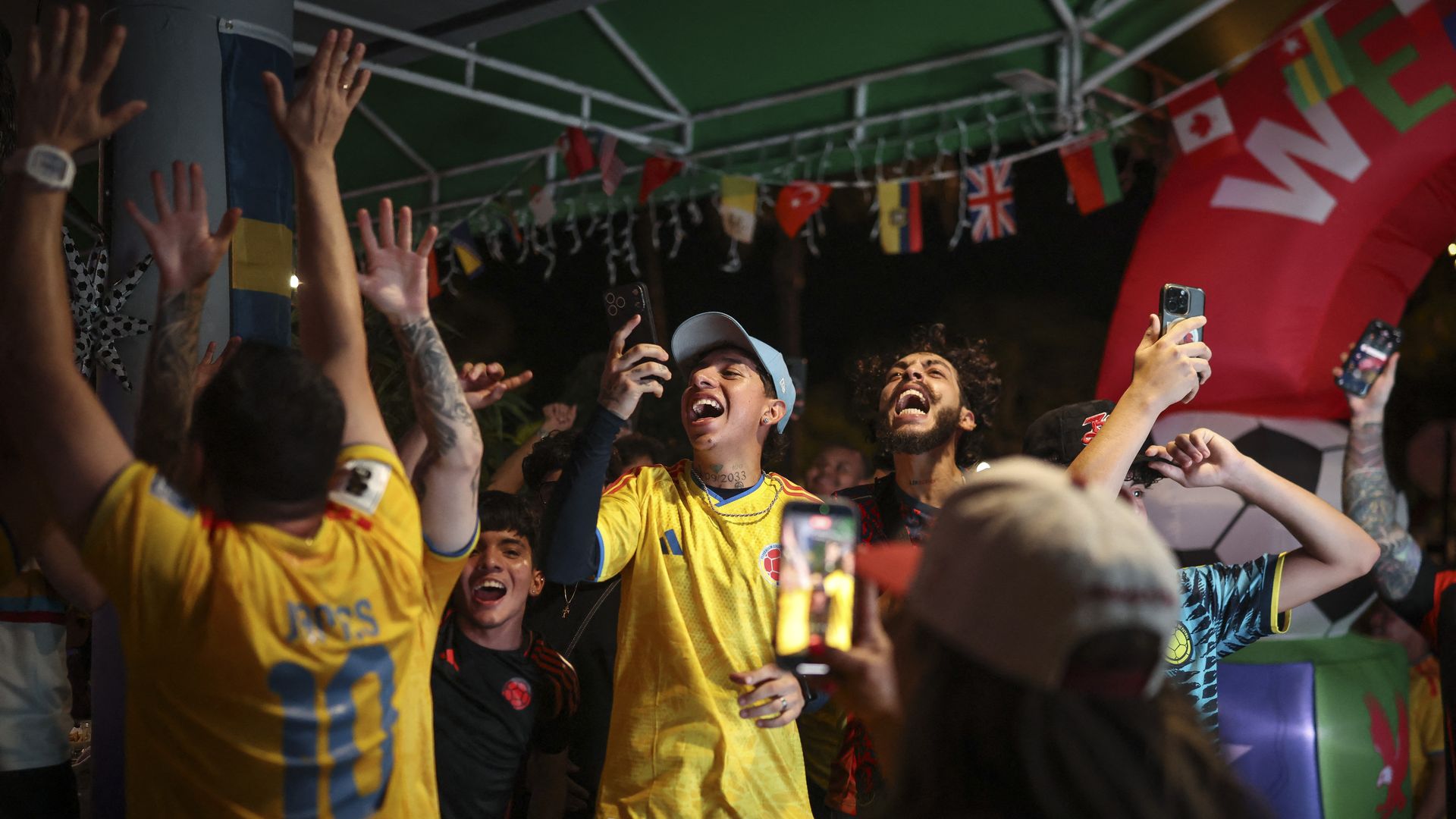
Colombian supporters watch the World Cup at a Miami sports bar. Photo: Patricia De Melo Moreira/ AFP via Getty Images
The World Cup is over, but Miami will never be over it.
Why it mattered: Locals with roots from all over the world came together to cheer for their home countries, welcome international visitors and drive business to bars and restaurants.
What they're saying: At Grails in Wynwood, general manager Lea Stevenson says she was surprised that every World Cup nation had "such a solid turnout" for the sports bar's daily watch parties.
- Miami's multicultural population and tourist appeal helped Grails break its single-day revenue record, previously achieved during a Super Bowl.
- Stevenson wouldn't say how much money they made on a single day, but said it was in the five figures. She called it "insanity."
- "We beat out that record four times over during June."
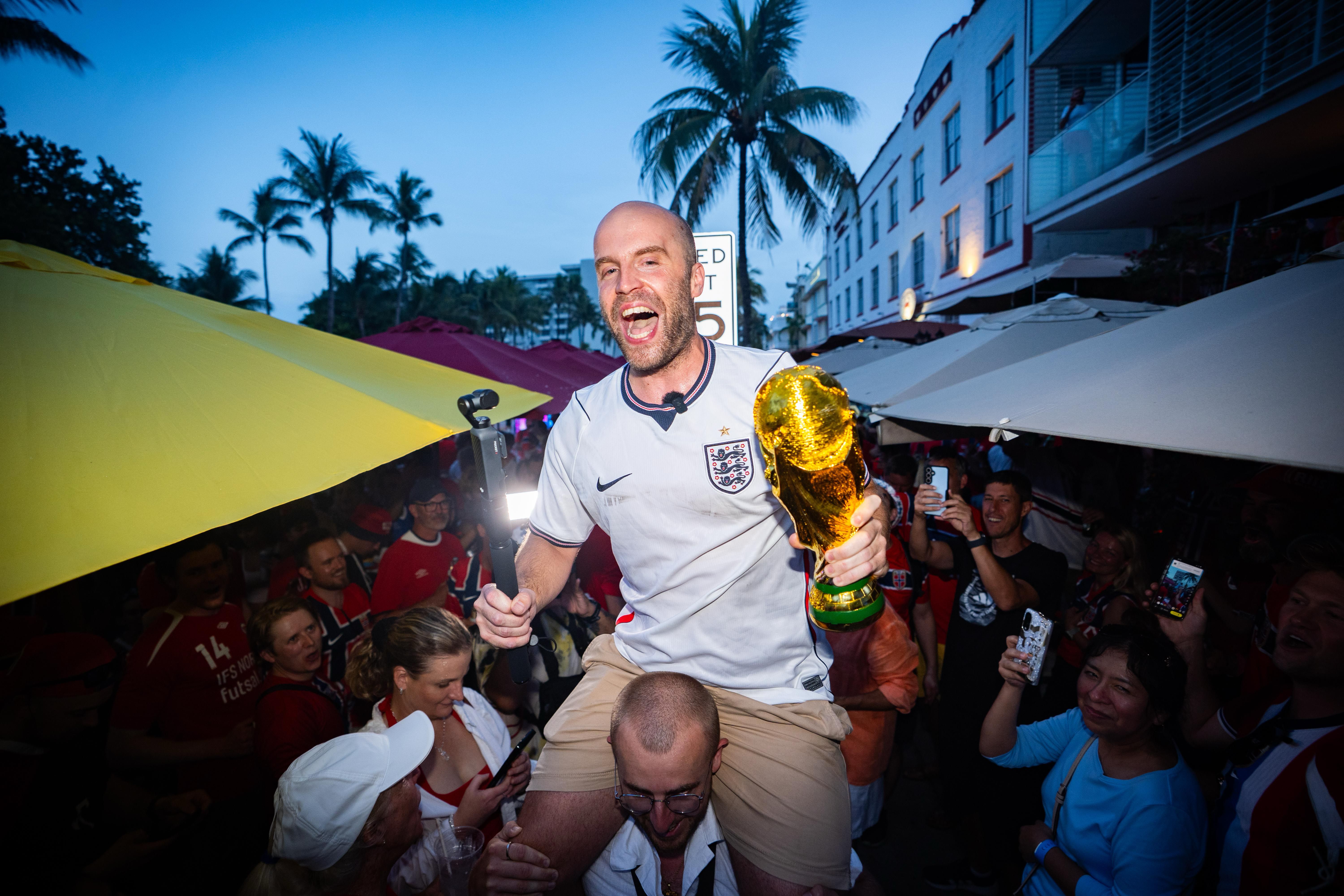
How they did it: With match tickets being too expensive for most, Stevenson said she wanted Grails to be the next best thing.
- That meant hosting halftime shows with traditional music, selling collectible souvenirs and running around the bar with a traffic cone on her head for the Scottish fans.
- "You can't get a shot poured in your mouth at the stadium," she said.
- The sports bar is known for its sneaker-shaped cocktail glasses, but for the World Cup, it debuted $100 soccer cleat glasses with each country's flag. (Purchase came with three cleat drinks.)
Downtown, Lost Boy Dry Goods expanded its business to add an outdoor tented "clubhouse" for watch parties.
- For almost every game, the line to get into both the clubhouse and bar stretched down the block.
- Miami resident Erik Vargas, who watched the Colombia-Ghana game from Lost Boy's main bar, told Axios he'd watched almost every game out with friends.
"I wish I could've gone [to the stadium], but everywhere I've gone has had a good vibe," Vargas said, adding that he went to La Rubia for the Portugal-Colombia game.
- "It's still extremely fun, so I don't feel like I'm missing out," he said.
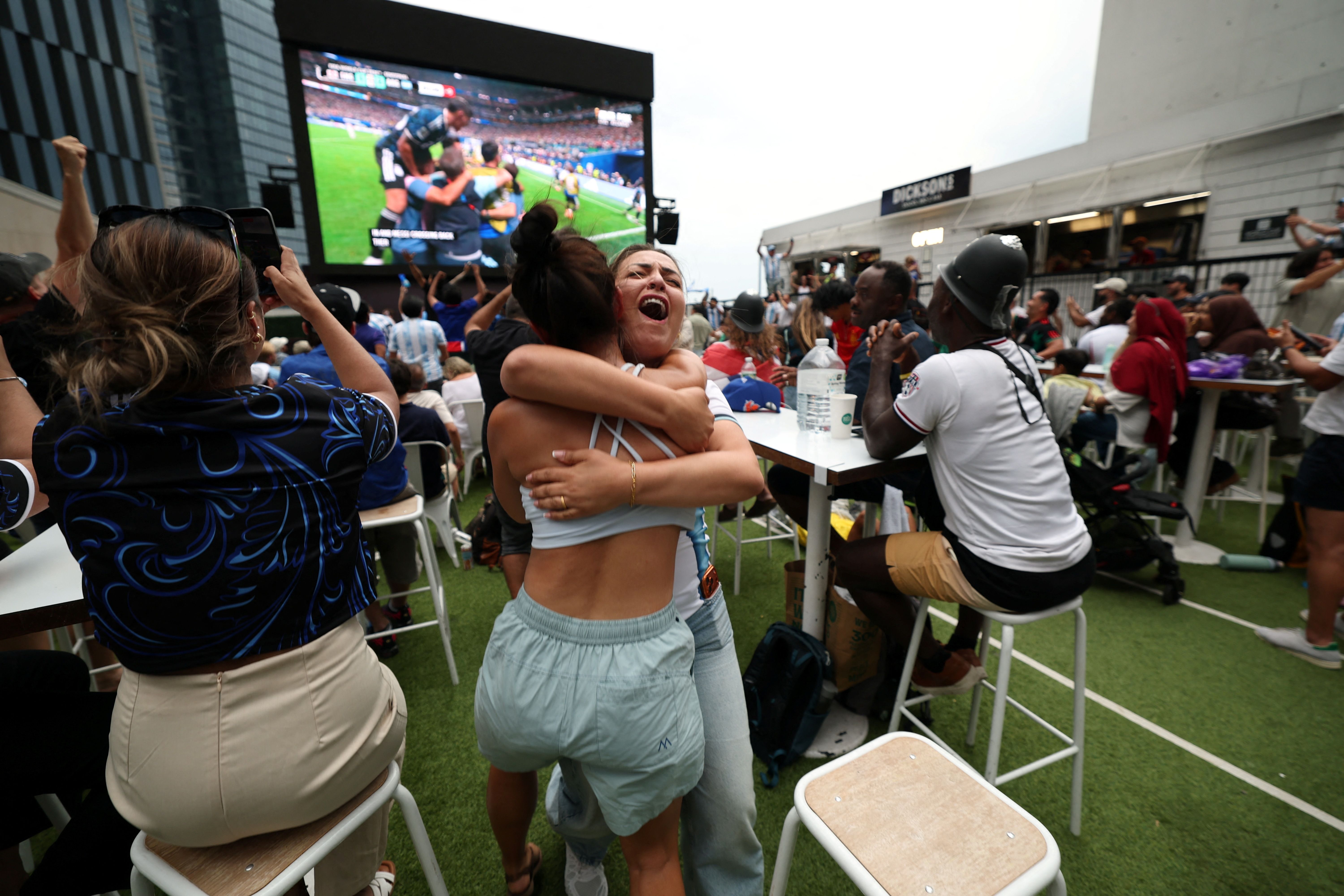
The big picture: Miami-area hotels also cashed in on World Cup tourists even when rooms weren't fully booked, primarily by jacking up room rates, the Miami Herald reported, using figures from CoStar.
Case in point: For the Brazil-Scotland match at Hard Rock Stadium on June 24, Miami hotels' revenue per room increased 90% compared to the same date one year prior.
- Yet hotel occupancy on June 24 was about 77%, a 12% increase from the same date in 2025, the Herald reported.
The intrigue: For the first two matches at Hard Rock Stadium, hotel occupancy was actually down up to 13% compared to June 2025, but those hotels still increased their revenue per room by up to 19%, the Herald reported.
State of play: Recent figures by Bank of America showed consumer spending in host cities was up 5.3% during the first three weeks at restaurants and bars.
- During the same period, ending June 27, spending was up just 3.8% in non-host cities, per the report.
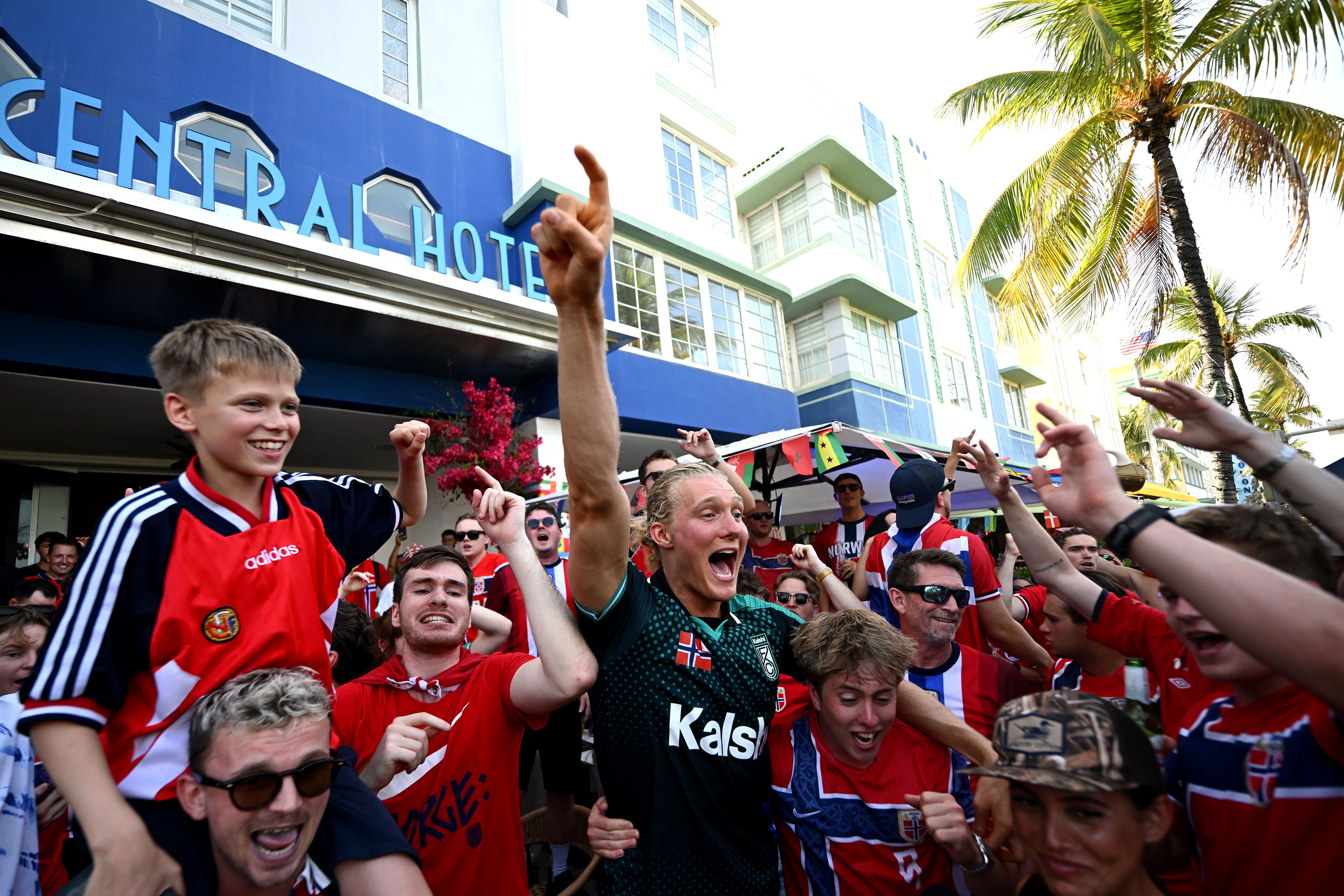
Meanwhile, a separate Bank of America analysis showed Miami was among the leading host cities in consumer spending, up more than 6%.
What we're watching: The tournament's full economic impact won't be known for some time.
- The city of Miami Beach and the Greater Miami Convention & Visitors Bureau told Axios that resort tax numbers aren't yet available, while Miami-Dade County reps did not respond.